
China stays one of the top spots worldwide when you’re sourcing kitchens from China or other kitchen products. It’s all thanks to huge manufacturing setups, modern production lines, and prices that are tough to beat. Whether you need basic kitchen cabinets or completely tailored setups, factories here handle everything from everyday home use to big commercial jobs.
The supplier network is well-established, and the export setup runs smoothly, so you can count on steady supply without sacrificing standards. That said, getting it right comes down to knowing how to pick partners, follow production steps, handle rules, and manage shipping. This guide lays out a clear path for importers, distributors, and anyone in procurement who wants a solid, reliable strategy for kitchen sourcing.
Understanding the Sourcing Kitchens Supply Chain in China
Kitchen production here runs on a tightly connected chain that starts with grabbing raw materials and runs all the way to making, finishing, checking, and shipping out. Key areas like Guangdong, Zhejiang, and Shandong are packed with cabinet factories, hardware outfits, and finishing shops all sitting close to major ports for easy export.
That setup lets factories ramp up fast, jump on trends quickly, and keep prices low. The usual steps cover buying materials, cutting panels, applying finishes, putting things together, inspecting, and packing for export. For B2B folks, getting a handle on this layout really helps with planning ahead, figuring costs, and sizing up potential kitchen suppliers.
Types of Kitchens Available from China
Factories turn out plenty of options that work great for homes, hotels, restaurants, and office spaces.
Modular kitchens come built for quick setup and easy scaling perfect when you’re doing apartment blocks or other big developments. Custom kitchens get made exactly to your specs: exact layouts, chosen finishes, smart storage ideas, even spots for specific appliances.
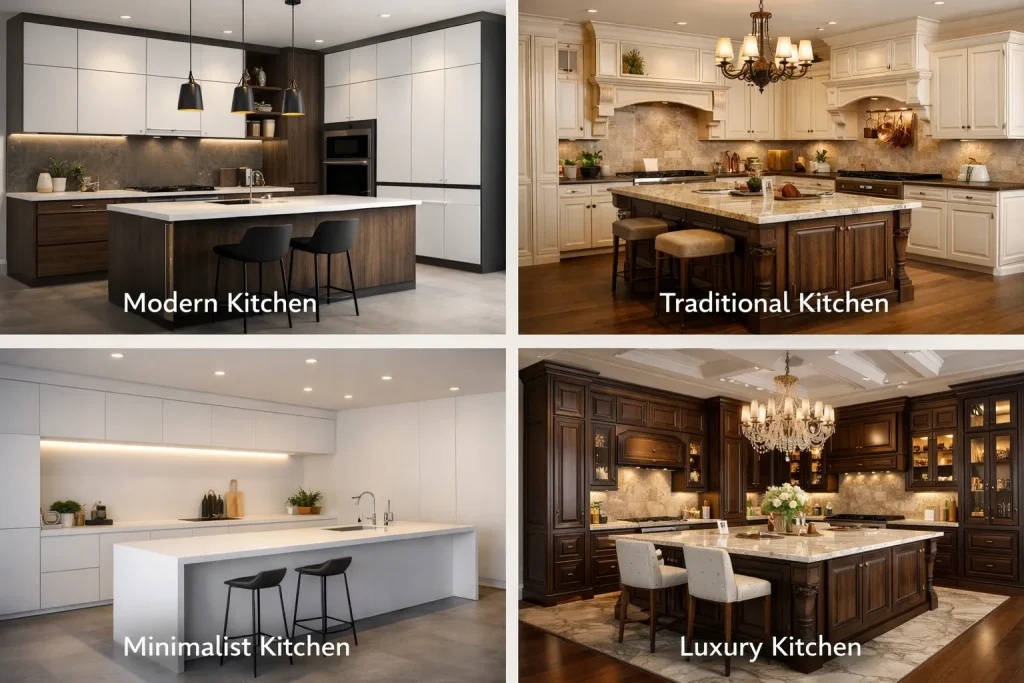
Then there’s OEM and private-label work, where you stamp your own brand on products while tapping into China’s speed and savings. All this choice turns the country into a smart pick whether you want off-the-shelf stuff or higher-end kitchen solutions.
Chinese Kitchen Cabinets: Materials and Finishes
You’ll find kitchen cabinets here in several materials and looks:
- MDF cabinets: Great for keeping costs down while staying stable in size
- Solid wood cabinets: The go-to for upscale homes and hospitality spots
- Stainless steel cabinets: Built tough for busy commercial kitchens or places where cleanliness matters most
Popular finishes run from lacquer and melamine to veneer or laminate. A lot of buyers go for flat-pack cabinets because they cut shipping space and freight bills, especially on long hauls.
Most factories are flexible; they’ll tweak materials, match exact colors, add your preferred hardware so you can meet what your market wants without blowing the budget.
Modular and Custom Kitchen Solutions
Modular Sourcing kitchens setups use standard pieces that make on-site work faster and cut labor hours. They shine in big housing projects or commercial builds.
Custom kitchen work zeroes in on one-of-a-kind needs: odd sizes, fancy materials, custom drawers or shelves. Contracts spell out every detail measurements, allowed variations, deadlines so everything stays on track.
Factories usually take both small runs and big orders. Minimum order quantities (MOQs) often sit between 5 and 30 kitchen sets, based on how complicated the design is and what materials go in.
Finding Reliable Kitchen Suppliers in China
Picking the right partner for sourcing kitchens matters a ton for steady, long-haul success. You’ve got to spot the difference between actual factories and trading companies. Going straight to the factory usually means sharper prices and more room to customize, though traders can make life easier if you’re mixing products or starting small.
Important checks cover:
- Checking their business license and past export record
- Doing factory audits (yourself or through a third party)
- Ordering product samples and maybe a small trial run
- Getting solid contracts that lock in prices, quality standards, delivery dates, and warranty details
Starting with open talks and small test orders builds trust and cuts down on headaches later.
Working with a Kitchen Sourcing Agent
A good sourcing agent steps in to find suppliers, haggle prices, watch quality control, and sort logistics. Being right there locally, they close the gap on language issues and handle day-to-day stuff you can’t see from afar.

They typically run factory audits, keep an eye on production, and do pre-shipment inspections. That’s especially handy for large orders or if you don’t have boots on the ground in China it lowers risks and smooths things out.
The Kitchen Procurement Process
The Kitchen Procurement Process
A normal process looks like this:
- Sending over full specs and technical drawings
- Comparing quotes and weighing up suppliers
- Getting samples made and signed off
- Starting full mass production
- Running quality inspection and compliance reviews
- Handling packaging plus export shipping
Lead times usually fall between 30 and 60 days, depending on volume and busy seasons. Keeping paperwork tight and checking in regularly keeps everyone on the same page.
Kitchen Hardware and Accessories Sourcing
China pumps out tons of Sourcing kitchens hardware too, think hinges, drawer slides, handles, all kinds of fittings. Focus on pieces that last, resist rust, and meet required certifications.
Combining cabinet and hardware orders in one go often trims shipping fees and guarantees everything fits together right. Always test samples to check how they feel and look over time.
Quality Control and Compliance
Solid quality control protects your name and keeps returns low. Typical checkpoints hit:
- Checking raw materials when they arrive
- Watching during production steps
- Full pre-shipment inspection
You’ll see common approvals like ISO systems, FSC-certified wood, and CARB-compliant boards for low emissions. Having clear inspection routines cuts way down on flaws and arguments over shipments.
Cost Structure and Pricing Considerations
Here’s how costs usually break out:
- Materials: 40–50%
- Labor: 20–30%
- Overhead plus utilities
- Packaging, shipping, and import duties
Bigger runs normally bring better rates. Smart buyers look at the full landed cost not just the factory gate price to budget properly.
Logistics, Packaging, and Shipping
Flat-pack packaging rules here because it packs containers tighter and drops freight bills. Ocean shipping wins for most bulk shipments; air gets used only when speed really counts.
Strong export packaging, good moisture barriers, and solid freight handling stop damage on the way and keep customs smooth.
Conclusion & Next Steps
China holds strong as a top global spot for sourcing kitchens thanks to massive scale, solid know-how, and real cost savings. With a clear plan, careful checks, and good quality control in place, you can lock in steady supply and avoid headaches.
If you’re gearing up to sourcing kitchens from here, start by vetting suppliers closely, nailing down exact specs, and setting up dependable inspection and shipping flows. Doing it right turns the whole process from a potential hassle into a real edge for your business.
FAQs
Why is kitchen manufacturing in China cost-effective for B2B buyers?
Huge production runs, tight supply chains, and smart labor keep unit costs low without dropping manufacturing standards.
How can buyers ensure quality when sourcing MDF kitchen cabinets from China?
Rely on factory audits, sign off on samples, and bring in third-party inspections to check materials, build, and rules before anything ships.
What are the benefits of sourcing from modular kitchen suppliers in China?
Modular systems deliver quicker turnaround, simpler install, steady quality, and solid savings especially for big residential or commercial runs.
How does supplier verification reduce sourcing risks?
It proves the company is real, has the capacity, and runs proper systems helping dodge delays, bad batches, and flaky partners.
What role does OEM kitchen production play in branding?
OEM lets you slap on your own label, tweak designs, stand out in the market all while riding China’s efficient production muscle.