
Ethiopia, located in East Africa, is primarily an agricultural economy, with agriculture contributing approximately 46% of its GDP.
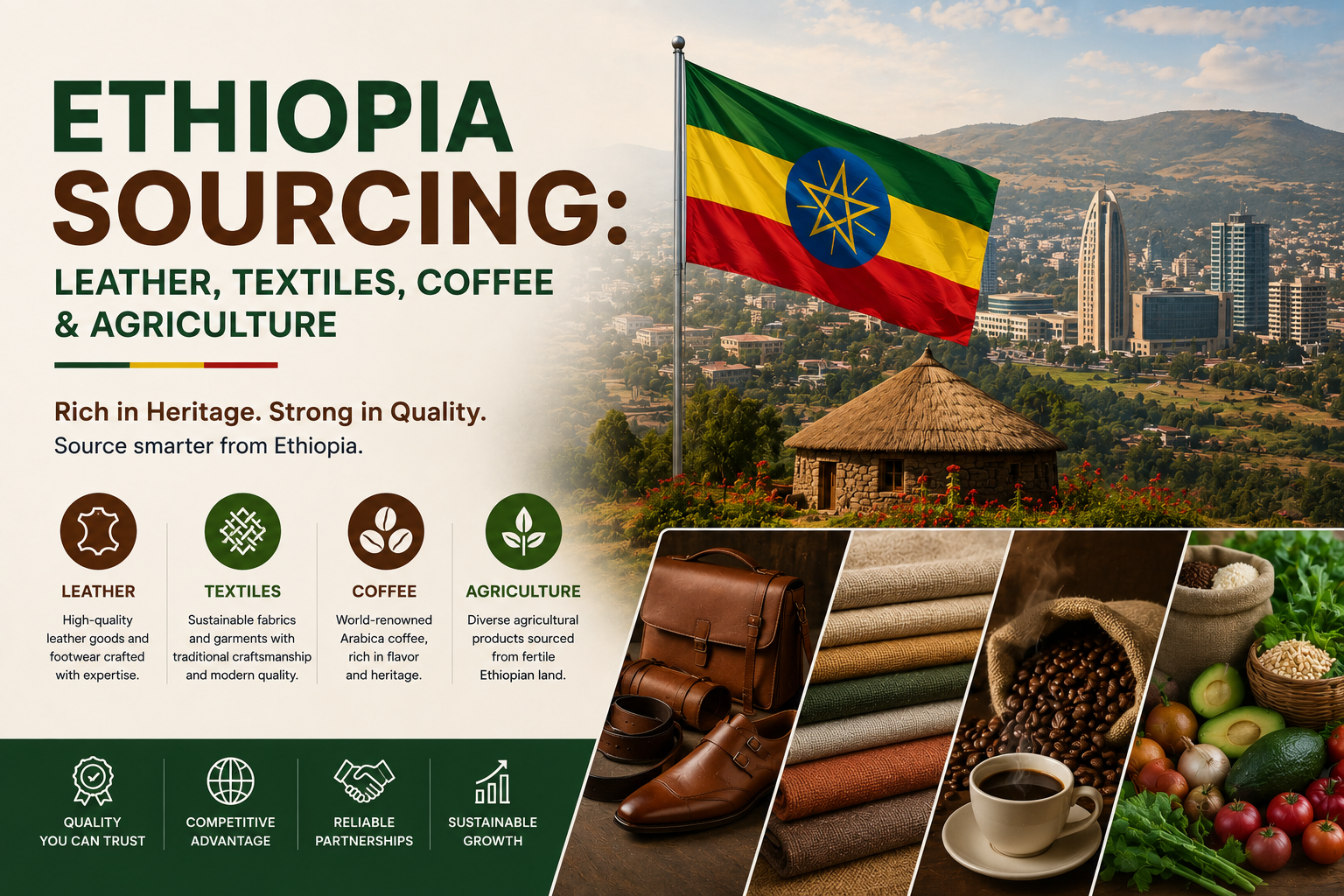
Ethiopia is not the country most people picture when they hear the name. Forget the outdated stereotypes. This is Africa’s second-most populous nation with 120 million people, a government that has built industrial parks modelled on Chinese special economic zones, and labour costs so low they make Bangladesh look expensive. H&M, PVH (Calvin Klein), and Huajian (the company that makes shoes for Ivanka Trump and Guess) already manufacture here. Ethiopia sourcing is not a future possibility. It is happening right now, driven by brands chasing the last frontier of genuinely cheap manufacturing on the planet.
Ethiopia Sourcing: Market Overview & Emerging Opportunities
Ethiopia sourcing exists because of one brutal economic reality: global brands need somewhere cheaper than Bangladesh and Vietnam as wages rise across Asia. Ethiopia delivers that. Factory workers earn USD 26-50 per month, the lowest manufacturing wages of any country actively courting foreign investment. The government sweetens the deal with zero corporate tax for up to ten years, duty-free import of machinery, and purpose-built industrial parks with guaranteed power and water supply.
Agriculture still dominates the economy at 46% of GDP, with services at 39% and industry at 14%. But that industrial slice is growing fast. The Ethiopian government follows a state-driven development model inspired by East Asian tigers. They pick sectors, build infrastructure, recruit anchor tenants, and push hard. Textiles, leather, and agro-processing are the chosen winners. Hawassa Industrial Park alone hosts over 20 international manufacturers on a single campus built from scratch in under two years.
Export destinations are diversifying rapidly. The United States (through AGOA duty-free access), European Union (Everything But Arms agreement), China, Saudi Arabia, and neighbouring East African nations all receive Ethiopian goods. These preferential trade agreements mean Ethiopian-made products enter Western markets with zero or minimal tariffs, a massive advantage over competitors who face 12-15% duties.
Products to Source from Ethiopia
Leather and Leather Goods. Ethiopia has Africa’s largest livestock population. Over 100 million cattle, sheep, and goats produce hides that feed a growing leather industry. Finished leather, shoes, bags, gloves, and jackets. Pittards (UK luxury leather brand) sources Ethiopian leather for premium gloves sold worldwide. Quality ranges from basic to genuinely premium depending on the tannery.
Textiles and Garments. T-shirts, polo shirts, workwear, denim, and knitted fabrics. Hawassa Industrial Park and Bole Lemi Industrial Park host garment factories producing for H&M, PVH, and Children’s Place. Production is basic to mid-range, focused on high-volume, low-complexity styles.
Coffee. Ethiopia is coffee’s birthplace. Literally. Arabica coffee originated in the Ethiopian highlands. Yirgacheffe, Sidamo, and Harrar varieties command premium prices in specialty markets worldwide. Annual coffee exports exceed USD 1 billion.
Cut Flowers. Roses, primarily. Ethiopia is Africa’s second-largest flower exporter after Kenya. Farms around Lake Ziway and Debre Zeit grow roses year-round for European auction houses in the Netherlands.
Oilseeds and Pulses. Sesame seeds (Ethiopia ranks among the world’s top five producers), niger seed, lentils, chickpeas, and kidney beans. Exported primarily to China, India, and Middle Eastern markets.
Honey and Beeswax. Ethiopia is Africa’s largest honey producer and the world’s tenth largest. Raw honey, filtered honey, and beeswax for cosmetics and pharmaceutical applications.
Spices. Black cumin, turmeric, ginger, cardamom, and coriander. Growing demand from international food manufacturers seeking traceable, organic-certified spice sources.
Horticulture. Avocados, green beans, and herbs for European supermarkets. A newer sector with significant growth potential as cold chain infrastructure improves.
Challenges in Ethiopia Sourcing and Our Approach
Ethiopia sourcing requires eyes wide open. This is not a mature manufacturing market. Infrastructure outside industrial parks remains underdeveloped. The country is landlocked, relying on Djibouti’s port for ocean freight, adding transit time and cost. Political instability and ethnic conflict have disrupted supply chains in recent years, particularly in the Tigray region. Power outages affect factories outside designated parks. Banking restrictions make international payments complicated. And quality consistency requires closer supervision than buyers accustomed to Asian factories might expect.
None of these challenges are insurmountable, but they demand experienced management. Our team works exclusively with factories inside established industrial parks where infrastructure is guaranteed. We build Djibouti transit time into delivery schedules from the start. We monitor political developments and advise on risk mitigation when tensions rise. We implement multi-stage inspection protocols because relying on final inspection alone is insufficient in this market. And we coordinate payment structures that work within Ethiopian banking regulations.
How We Support Your Ethiopia Sourcing
eSourcingSolution provides hands-on Ethiopia sourcing services for businesses seeking Africa’s lowest manufacturing costs with structured risk management. Our procurement intelligence delivers realistic cost comparisons against Bangladesh, Myanmar, and other low-cost alternatives. Quality control inspections verify production standards at every stage.
The Ethiopian Investment Commission (EIC) actively recruits foreign companies and provides sector-specific incentives data. The Ethiopian Chamber of Commerce and Sectoral Associations facilitates business connections across manufacturing and agricultural sectors.
We handle supplier identification, factory audits within industrial parks, sample development, production monitoring, and logistics coordination through Djibouti port. Whether you need leather goods from Addis Ababa, garments from Hawassa, or specialty coffee from Sidamo, our network covers Ethiopia’s key production zones.
Considering Ethiopia sourcing for your supply chain? Contact us for a free market assessment and honest evaluation of whether Ethiopian manufacturing fits your product requirements, volume needs, and risk tolerance.
Ethiopia is well-known for exporting coffee, oilseeds, tea, livestock such as cattle, sheep, and goats, as well as leather products. Gold is also a major contributor to the country’s export earnings. In 2012, Ethiopia’s exports reached an estimated US $3 billion. Major export destinations include China, Saudi Arabia, the United States, Germany, Italy, and Belgium, while its primary imports come from the United States, China, India, and Saudi Arabia.
Ethiopia’s agricultural sector produces goods for both domestic use and export. Important cash crops include cotton, sugarcane, oilseeds, flowers, coffee, and tea. Cereals, pulses, and potatoes are key staple crops. Livestock farming and aquaculture also play significant roles in the country’s primary sector.
In terms of mineral wealth, Ethiopia has considerable reserves of copper, gold, platinum, natural gas, and potash, all of which contribute to the country’s trade potential.
Ethiopia’s industries are largely agriculture-based. Food processing and beverage production dominate manufacturing activities. Other prominent sectors include leather goods, textiles, cement production, and metal processing.

Below are answers to common questions about eSourcingSolution, our services, and how we work. If you need more details, feel free to reach out — our team is ready to help!
We can source a wide range of goods and services — from raw materials and commodities to custom-engineered products and specialized services. Visit our Category Expertise page to explore what we cover.
We work with startups, SMEs, and global enterprises that want to source more competitively from emerging and developed markets, strengthen supply chains, and access reliable procurement support.
Yes. We maintain strong partnerships with a global network of vetted, reliable suppliers across multiple industries, ensuring quality, compliance, and long-term value.
Our proven qualification process, supported by local teams and digital audits, can fully onboard a new supplier in as little as 4–8 weeks, depending on category and compliance needs.
Using real-time market data, cost analysis, and sourcing intelligence, we can quickly evaluate potential savings, benchmark costs, and highlight key opportunities — typically within a few weeks.
It’s easy to begin — just reach out through our Contact page. We’ll arrange a quick discovery call, understand your goals, and design a customized sourcing plan to help you unlock better value.