
Last year a hotel chain client asked me to source 10,000 umbrellas for their guest rooms. “Just get us nice black umbrellas,” they said. Simple enough, right?
I asked them twelve questions they couldn’t answer. Compact or stick? Auto-open or manual? Steel shaft or fiberglass? How many ribs? What canopy fabric? What wind rating? Single fold or triple fold? Wooden handle or rubber grip? Logo printed or embroidered? Pongee or polyester? What Pantone black specifically? Matte or gloss hardware?
They stared at me like I’d asked them to solve calculus.
This happens every time someone needs to buy umbrellas beyond grabbing one from a convenience store rack. The types of umbrellas available today go far beyond “big one” and “small one.” The materials, construction methods, and design variations create dozens of distinct products that serve completely different purposes.
I’ve been sourcing umbrellas from Chinese manufacturers in Shangyu (the umbrella capital of China, producing over 60% of the world’s umbrellas) and other production hubs for years. I’ve walked through factories watching canopies get stretched, ribs get assembled, and handles get attached. Here’s everything I know about umbrella anatomy, materials, and types, organized so you can make an informed decision whether you’re buying one umbrella or ten thousand.
Table of Contents
| # | Section |
| 1 | Why Umbrella Choice Is More Complex Than You Think |
| 2 | Four Parts of an Umbrella You Should Understand |
| 3 | Seven Umbrella Materials and What They Mean for Quality |
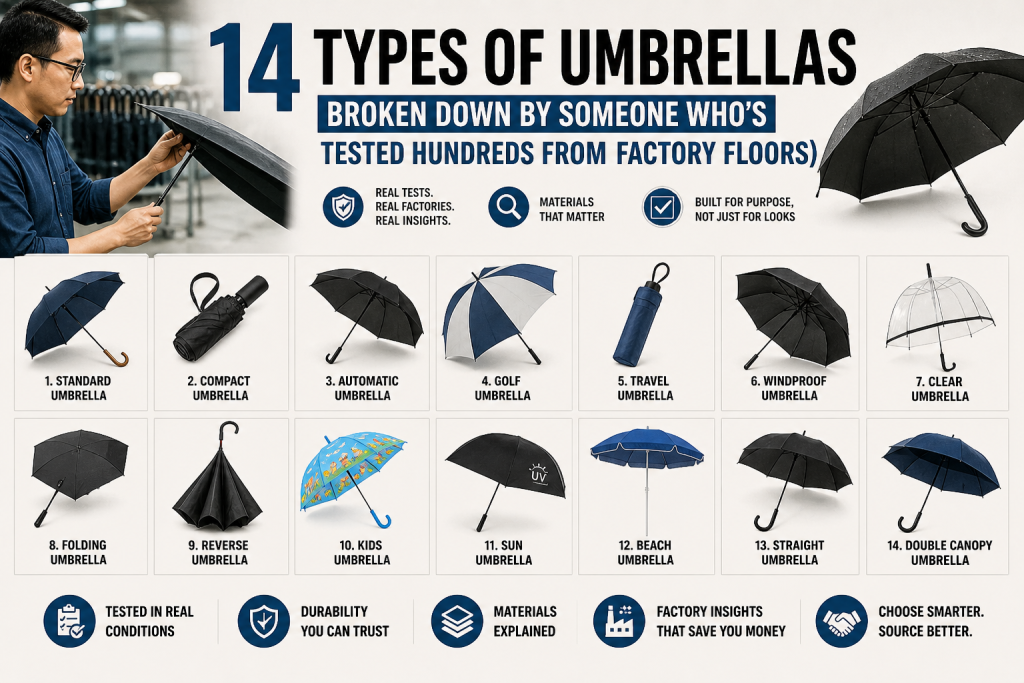
| 4 | 14 Types of Umbrellas Explained |
| 5 | Three Considerations for Umbrella Customization |
| 6 | FAQ |
Four Parts of an Umbrella You Should Understand
Every umbrella, from a $3 convenience store throwaway to a $300 handcrafted English stick umbrella, consists of four fundamental components. Understanding these parts helps you evaluate quality and make better purchasing decisions.
1. The Canopy
The fabric panel that actually blocks rain or sun. This is what most people notice first. The canopy is cut from triangular panels (called gores) stitched together and attached to the rib tips. Standard umbrellas use 8 gores/panels. Premium ones sometimes use 16 or 24 for a rounder, smoother shape.
Canopy size determines coverage. A 21-inch canopy (measured from shaft to edge) covers one person adequately. A 27-inch canopy covers one person generously or two people uncomfortably. A 30-inch+ canopy enters golf umbrella territory.
The fabric choice affects everything: water resistance, UV protection, weight, durability, color retention, and how the umbrella feels to carry. More on materials in the next section.
2. The Frame (Ribs and Stretchers)
The mechanical skeleton that opens and closes. Ribs extend from the shaft tip outward to support the canopy. Stretchers connect the ribs to the runner (the sliding mechanism on the shaft) and create the opening/closing leverage.
Rib count matters. 8 ribs is standard. More ribs (16, 24) create a stronger, rounder canopy but add weight. Fewer ribs (6) save weight but reduce wind resistance.
Rib material determines durability. Steel ribs are strong but heavy and can rust. Fiberglass ribs flex without breaking in wind and resist corrosion. Aluminum ribs are lightweight but bend permanently under stress. Carbon fiber ribs are the premium option: light, strong, and flexible.
3. The Shaft
The central pole. Connects the handle at the bottom to the canopy tip at the top. Houses the opening mechanism in automatic umbrellas.
Steel shafts are strong and affordable but heavy. Aluminum shafts are lighter but can bend. Fiberglass shafts are light and flexible. For folding umbrellas, the shaft telescopes in sections, and the joint quality at each section determines whether the umbrella wobbles or stays rigid when open.
4. The Handle
Where your hand goes. Seems simple but handle design affects comfort during extended use, grip security in wet conditions, and overall aesthetic.
Wood handles (maple, bamboo, chestnut) communicate tradition and quality. Rubber-coated handles provide grip in wet conditions. Plastic handles keep costs down. EVA foam handles are lightweight and comfortable. Leather-wrapped handles signal luxury. The handle shape (crook/hook, straight, pistol grip) affects how you carry and hold the umbrella.
Seven Umbrella Materials and What They Mean for Quality
Material selection separates a $5 umbrella that inverts in the first gust from a $50 umbrella that lasts a decade. Here’s what each material brings to the table.
1. Pongee Fabric (Canopy)
The standard for quality umbrellas. A polyester weave with a soft, slightly textured hand feel. Dries quickly. Takes dye well for rich, consistent colors. Good water resistance with proper coating. Most mid-range to premium umbrellas use pongee. It’s the sweet spot between performance and cost.
2. Polyester (Canopy)
The budget option. Thinner and stiffer than pongee. Adequate water resistance. Colors can look slightly flat compared to pongee. Perfectly functional for everyday use. What you’ll find on most umbrellas under $15 retail. Nothing wrong with it for the price point.
3. Nylon (Canopy)
Stronger than polyester. Better abrasion resistance. Slightly more expensive. Used in performance umbrellas where durability matters more than cost. Takes waterproof coatings well. Good for umbrellas marketed toward outdoor or travel use.
4. Fiberglass (Frame)
The modern standard for quality umbrella ribs and sometimes shafts. Flexes under wind load and returns to shape rather than bending permanently or snapping. Lightweight. Corrosion-proof. Won’t conduct lightning (minor benefit but real). The single biggest quality indicator in umbrella construction. If the ribs are fiberglass, the manufacturer cared about durability.
5. Steel (Frame/Shaft)
Traditional frame material. Strong and rigid. Heavier than alternatives. Can rust if coating chips. Bends permanently under extreme wind rather than flexing back. Still common in budget umbrellas and traditional stick umbrellas where weight isn’t a concern.
6. Aluminum (Frame/Shaft)
Lightweight alternative to steel. Common in compact folding umbrellas where weight matters. Less strong than steel or fiberglass. Can bend and not recover. Corrosion-resistant. Good for fair-weather umbrellas that won’t face extreme wind.
7. Carbon Fiber (Frame)
Premium material. Extremely light and strong. Flexes and recovers like fiberglass but at lower weight. Expensive. Found in high-end umbrellas marketed to travelers and professionals who want the lightest possible product without sacrificing wind resistance. Overkill for most applications but genuinely superior if budget allows.
14 Types of Umbrellas Explained
Now the main list. I’m splitting these into two main categories (the fundamental division), six functional types (designed around specific use cases), and six trendy types (designed around aesthetics and lifestyle).
Two Main Types of Umbrellas
1. Stick Umbrella (Straight Umbrella)
The classic. Full-length shaft, no folding mechanism, crook handle. Opens to full size in one motion. What a gentleman carried in 1920 and what doormen hand you at fancy hotels today.
Best for: Daily urban use, formal occasions, maximum coverage, people who don’t need to fit their umbrella in a bag.
Pros: Strongest construction (no folding joints to weaken). Largest canopy options. Most comfortable handle for extended carrying. Doubles as a walking aid.
Cons: Can’t fit in a bag or briefcase. Must be carried separately. Easy to forget in restaurants and taxis.
2. Folding Umbrella (Compact Umbrella)
Telescoping shaft that collapses to fit in a bag. Available in 2-fold, 3-fold, and 5-fold (micro) versions. The more folds, the smaller it packs but the less rigid it becomes when open.
Best for: Commuters, travelers, anyone who needs an umbrella available but not visible.
Pros: Portable. Fits in bags, glove compartments, desk drawers. Always available when rain surprises you.
Cons: Less stable than stick umbrellas. Folding joints are failure points. Smaller canopy typically. Auto-open mechanisms add weight and can fail.
Six Functional Umbrellas
3. Golf Umbrella
Oversized stick umbrella with 60-68 inch canopy span. Originally designed to shelter golfers and their equipment. Now used by anyone wanting maximum coverage.
Best for: Golfers, couples sharing, anyone who hates getting wet shoulders, corporate branding (huge printable surface area).
Pros: Covers two people comfortably. Wind-resistant (usually fiberglass frame). Highly visible. Massive branding area for custom promotional orders.
Cons: Heavy. Unwieldy in crowds. Antisocial on busy sidewalks. Can’t fit through standard doorways while open.
4. Windproof Umbrella
Engineered specifically to handle high winds. Features include vented double-canopy design (wind passes through without inverting), fiberglass flexible ribs, and reinforced joints.
Best for: Coastal areas, city wind tunnels between buildings, anyone tired of replacing inverted umbrellas.
Pros: Actually survives wind that destroys normal umbrellas. Vented canopy prevents inversion. Fiberglass ribs flex and recover.
Cons: Heavier than non-windproof equivalents. More expensive. The vented design means some rain can enter through the vent gap in extreme conditions.
5. Travel Umbrella
Ultra-compact folding umbrella optimized for portability. Usually 5-fold design packing under 7 inches. Lightweight materials throughout.
Best for: Frequent travelers, minimalist carry, purse or jacket pocket storage.
Pros: Tiny packed size. Featherweight. Always fits in any bag.
Cons: Small canopy (barely covers one person). Less wind-resistant. Lighter construction means shorter lifespan. Feels flimsy compared to full-size options.
6. UV Protection Umbrella (Sun Umbrella)
Canopy treated with UV-blocking coating (usually silver or black on the underside). Blocks 95-99% of UV radiation. Designed for sun protection rather than rain, though most handle both.
Best for: Sun-sensitive skin, outdoor events, tropical climates, anyone concerned about UV exposure.
Pros: Genuine UV protection (verified by testing standards). Keeps you cooler in direct sun. Dual rain/sun function.
Cons: UV coating degrades over time (2-3 years of regular use). Black undercoating makes the umbrella feel warmer underneath. Slightly heavier than non-coated equivalents.
7. Automatic Umbrella (Auto Open/Close)
Button-activated opening and closing mechanism. Press once to open, press again to close and retract. Convenience-focused design.
Best for: One-handed operation needs, getting in/out of cars, anyone carrying bags or children.
Pros: One-button operation. Fast deployment. Can open and close with one hand.
Cons: Mechanism adds weight and bulk. Spring mechanism is a failure point. More expensive than manual. When it breaks, the umbrella becomes useless (can’t manually override most designs).
8. Clear/Transparent Umbrella (Bubble Umbrella)
Dome-shaped canopy made from transparent POE or PVC material. Extends down around the user creating a bubble of visibility and protection.
Best for: Fashion-conscious users, photography (face visible in rain shots), windy conditions (dome shape deflects wind), people who want to see where they’re going.
Pros: Full visibility. Wind-resistant dome shape. Protects face and shoulders (deeper coverage than flat canopies). Photogenic.
Cons: Material yellows over time. Scratches easily. Not as durable as fabric canopies. Can look cheap if material quality is low. Condensation builds inside.
Six Trendy Umbrellas
9. Pagoda Umbrella
Upturned canopy edges creating a pointed, gothic silhouette inspired by Asian pagoda architecture. Dramatic and distinctive.
Best for: Fashion statements, weddings, cosplay, photography, anyone bored with conventional umbrella shapes.
Pros: Stunning visual impact. Conversation starter. Photographs beautifully. Unique silhouette.
Cons: Upturned edges can channel water toward the user in heavy rain. Less practical than conventional shapes. Niche appeal limits market size for sellers.
10. Inverted Umbrella (Reverse Umbrella)
Closes inward (wet side folds inside) rather than outward. Designed to keep the wet canopy surface contained when you close it, preventing dripping on floors and car interiors.
Best for: Car users (closes as you enter without getting the seat wet), office workers, anyone entering buildings frequently.
Pros: Wet surface stays inside when closed. Can stand upright on its own when closed. C-shaped handle allows hands-free carrying on your wrist.
Cons: Bulkier than conventional umbrellas. Can’t fold compact. Heavier. The novelty factor has worn off somewhat since they peaked in popularity around 2018.
11. Color-Changing Umbrella
Canopy printed with special ink that changes color or reveals hidden patterns when wet. Dry: one appearance. Wet: completely different appearance.
Best for: Gifts, children, novelty market, brands wanting memorable promotional items.
Pros: Genuinely delightful surprise factor. Great for social media content. Makes rain feel less miserable. Strong gift appeal.
Cons: Color-change ink fades over time (50-100 wet/dry cycles typically). More expensive to produce. Limited to lighter base colors for the effect to show. Novelty wears off for the owner.
12. Samurai Umbrella (Katana Umbrella)
Stick umbrella designed to look like a Japanese katana sword. Handle shaped like a sword grip. Sheath-style sleeve.
Best for: Novelty gifts, anime fans, collectors, conversation pieces.
Pros: Unique aesthetic. Strong gift market. Conversation starter. Functional as an actual umbrella.
Cons: Can cause alarm in public (looks like a weapon from a distance). Some venues may not allow entry. Airport security issues. Niche market.
13. LED Umbrella
Built-in LED lights in the shaft or canopy ribs. Illuminates the user and surrounding area in darkness. Some versions change colors.
Best for: Night visibility, safety in dark conditions, festivals, nightlife, children walking in dark mornings.
Pros: Genuine safety benefit (visibility to drivers). Fun aesthetic. Practical in dark rainy conditions.
Cons: Requires batteries or charging. Electronics add weight. Water and electronics are an ongoing reliability concern. LED components are failure points.
14. Kids’ Umbrella
Smaller canopy (typically 17-19 inch radius). Rounded rib tips for safety. Fun prints and character designs. Sometimes with clear panels so children can see ahead.
Best for: Children ages 3-10.
Pros: Sized for small hands and short heights. Safety features (rounded tips, pinch-free mechanisms). Fun designs encourage use. Clear panels maintain visibility.
Cons: Outgrown quickly. Lower durability (kids are rough). Limited wind resistance at small size. Often lost at school.
Three Considerations for Umbrella Customization
If you’re ordering umbrellas for a brand, corporate gifts, or promotional use, these three factors determine whether your custom order succeeds or becomes an expensive pile of unusable inventory.
1. Printing Method and Artwork
Screen printing works for simple logos with 1-3 colors. Affordable at scale. Clean, durable results. Digital printing handles full-color artwork, photographs, and complex designs but costs more per unit and can fade faster with UV exposure.
Your artwork needs to account for the gore (panel) shape. A logo that looks great on a flat screen looks distorted when stretched across a curved triangular panel. Request a canopy template from your manufacturer and mock up your design on the actual panel shape before approving.
Minimum order quantities for custom printing typically start at 500-1000 pieces depending on the factory. Below that, setup costs make per-unit pricing unreasonable.
2. Material Specification
Don’t just say “good quality umbrella.” Specify everything. Canopy fabric (pongee 190T? 210T? polyester?). Frame material (fiberglass ribs? steel? how many ribs?). Shaft material and diameter. Handle material and shape. Auto-open mechanism or manual?
Your product spec sheet should include all of this plus Pantone color references, hardware finish specifications, and packaging requirements. Vague specs give factories room to substitute cheaper materials. Detailed specs hold them accountable.
Get samples approved before bulk production begins. Open and close the sample 200 times. Leave it open in wind. Pour water on it for ten minutes. Check that the color matches your Pantone reference in daylight, not just under factory fluorescent lights.
3. Testing and Compliance
Umbrellas sold in major retail markets need to meet safety and quality standards. ASTM standards cover things like pinch points, sharp edges, and small parts (for children’s umbrellas). European markets have their own requirements.
For OEKO-TEX certified canopy fabric, specify this upfront. Not all factories stock certified fabric by default. If your retail partner requires third-party testing (and major retailers do), build testing time and cost into your timeline. A failed test after 10,000 units are produced is catastrophic.
Wind resistance claims need backing. If you’re marketing a “windproof” umbrella, test it. What wind speed does it actually survive? 40 mph? 60 mph? Make claims you can defend. A sourcing agent who understands testing requirements can coordinate this before shipment.
Umbrellas seem like the simplest product in the world until you need to choose one with intention or source thousands with specifications. The types of umbrellas available today cover everything from ultralight travel companions to statement pieces that turn heads on the street. The materials inside determine whether they last one storm or one decade.
Know what you need. Specify what you want. Test what you receive. That’s how umbrella buying works when you take it seriously.
Need help sourcing umbrellas from verified manufacturers? eSourcingSolution works with umbrella factories in Shangyu and across China’s production hubs. From custom umbrella development to final quality inspection, we manage the process. Start your order.
FAQ
What type of umbrella is most durable?
Stick umbrellas with fiberglass ribs and a steel or fiberglass shaft offer the highest durability. No folding joints means no mechanical weak points. Fiberglass ribs flex in wind without breaking or bending permanently. For folding umbrellas, look for fiberglass ribs and minimal fold points (2-fold is stronger than 3-fold or 5-fold).
What is the best umbrella material for rain?
Pongee fabric (190T or 210T) with polyurethane waterproof coating provides the best balance of water resistance, durability, and feel. Higher thread count (210T vs 190T) means tighter weave and better water resistance. Nylon is slightly more durable but costs more. Polyester works fine for budget applications.
How many ribs should a good umbrella have?
8 ribs is the standard and works well for most conditions. 16 ribs provide better wind resistance and a rounder canopy shape but add weight. For windproof performance, rib material (fiberglass) matters more than rib count. A well-made 8-rib fiberglass umbrella outperforms a 16-rib steel umbrella in wind.
What is the difference between pongee and polyester umbrella fabric?
Pongee is a type of polyester weave with a softer, slightly textured hand feel. It drapes better, takes dye more richly, and feels more premium than standard polyester taffeta. Standard polyester is stiffer, thinner, and cheaper. Both are waterproof when coated. Pongee is the upgrade that customers can feel but might not be able to name.
What is the minimum order quantity for custom umbrellas from China?
Most factories require 500-1000 pieces minimum for custom printing on standard umbrella models. Fully custom designs (unique shape, special materials, custom molds for handles) typically require 3000-5000 pieces minimum. Some factories accept 200-300 pieces at higher per-unit pricing. Your sourcing agent can negotiate MOQs based on your specific requirements and the factory’s current capacity.