
South Africa is the economic powerhouse of Africa — it leads the continent in industrial output, mineral production, and generates a significant share of Africa’s electricity supply.
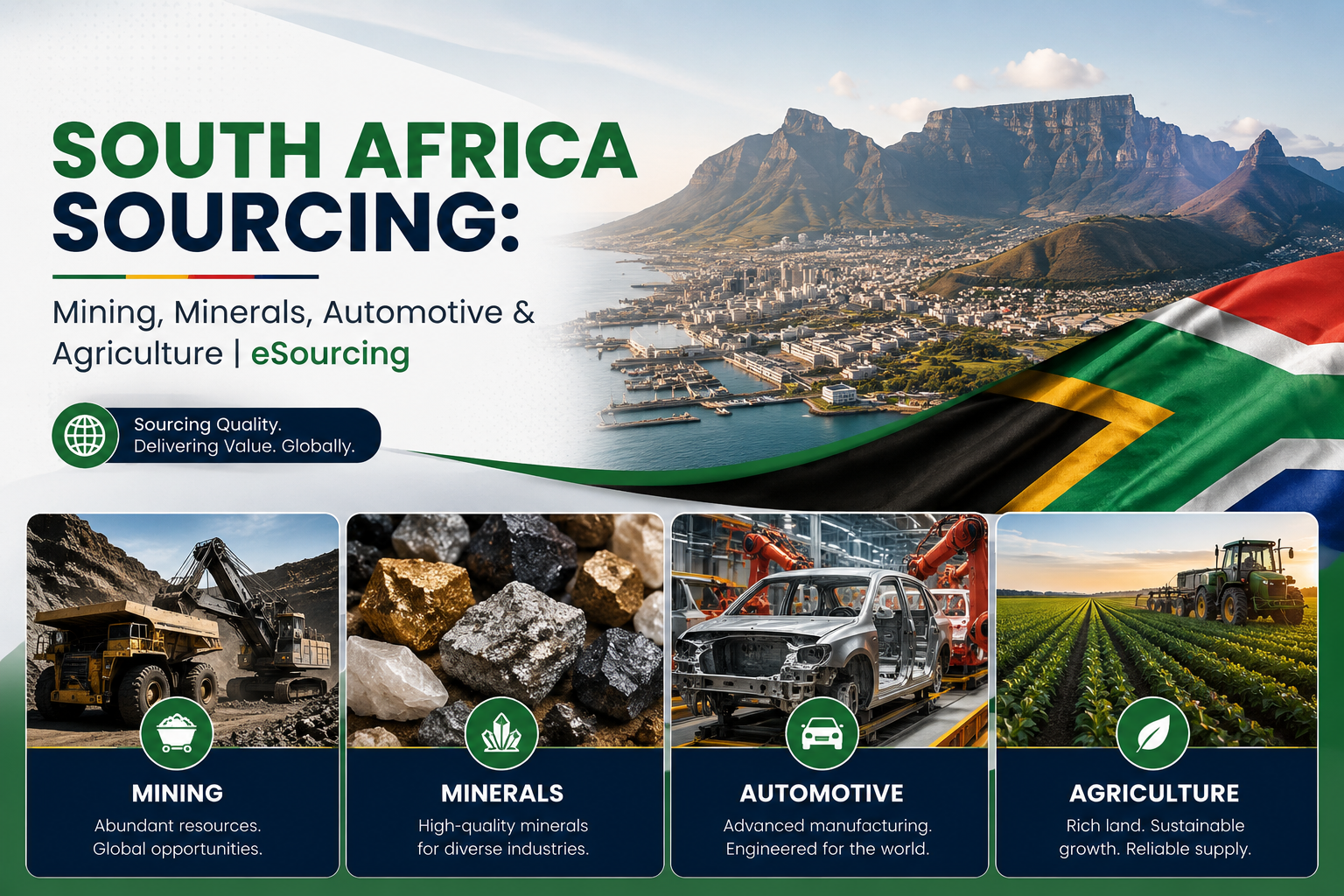
South Africa is not just another African market. It is the only African economy with a fully developed financial system, functioning stock exchange (the JSE is the 19th largest globally), deep-water ports capable of handling the world’s largest container ships, and manufacturing infrastructure that produces BMW 3 Series sedans for export to Europe. Monthly exports of USD 7.5 billion flow from mines, factories, farms, and vineyards to buyers across six continents. South Africa sourcing gives international procurement teams something no other African country can: first-world business infrastructure combined with developing-world cost advantages and access to mineral wealth that the global economy literally cannot function without.
South Africa Sourcing: Market Overview & Continental Leadership
South Africa sourcing operates on two distinct levels. The first is minerals and mining. The country sits on geological wealth that reads like a periodic table: gold, platinum, diamonds, chromium, manganese, vanadium, iron ore, and coal. South Africa produces 70% of the world’s platinum, 80% of its manganese, and remains a top-five gold producer despite over a century of continuous extraction. Every catalytic converter on every car in the world contains South African platinum group metals. Every stainless steel product uses South African chromium. These are not optional commodities. They are industrial necessities with no substitutes.
The second level is manufactured goods. South Africa’s industrial base is the most diversified on the continent. BMW, Mercedes-Benz, Toyota, Volkswagen, and Ford all operate assembly plants. The automotive sector exports over USD 7 billion annually, primarily right-hand-drive vehicles to the UK, Japan, and Australia. Beyond automotive, South Africa manufactures chemicals, processed food, machinery, and fabricated metal products at standards that satisfy European and American buyers.
Key export partners include the United Kingdom, United States, Germany, China, Japan, and India. The African Growth and Opportunity Act (AGOA) provides duty-free access to the US market for qualifying South African goods. Trade agreements with the EU (Economic Partnership Agreement) and SADC regional bloc expand market access further.
Products to Source from South Africa
Gold and Platinum Group Metals. Refined gold, platinum, palladium, rhodium, and iridium. Anglo American Platinum, Impala Platinum, and Sibanye-Stillwater are major producers. South Africa sourcing for PGMs means dealing with the companies that control global supply.
Diamonds. Rough and polished diamonds from De Beers and Petra Diamonds operations. South Africa pioneered industrial diamond mining and maintains significant production alongside Botswana and Russia.
Chromium and Manganese. Chrome ore, ferrochrome, manganese ore, and ferromanganese. Essential inputs for stainless steel and battery production. South Africa dominates global supply of both minerals.
Automotive and Auto Parts. Complete vehicles (BMW X3, Mercedes C-Class, Toyota Hilux, VW Polo), catalytic converters, leather interiors, wiring harnesses, and stamped components. The Eastern Cape (Port Elizabeth/Gqeberha) and Gauteng host primary automotive clusters.
Citrus and Fresh Fruit. Oranges, lemons, grapes, avocados, and deciduous fruits. South Africa is the world’s second-largest citrus exporter. Counter-seasonal production means South African fruit fills European shelves during Northern Hemisphere winter.
Chemicals and Petrochemicals. Sasol (world leader in coal-to-liquids and gas-to-liquids technology) produces fuels, polymers, and specialty chemicals. Industrial chemicals, explosives for mining, and agricultural chemicals round out the sector.
Iron and Steel. Flat steel, structural sections, stainless steel, and fabricated metal products. ArcelorMittal South Africa is the continent’s largest steel producer.
Macadamia Nuts and Rooibos Tea. South Africa produces 25% of global macadamia nuts and is the sole commercial source of rooibos tea. Both command premium pricing in international markets.
Wool and Mohair. South Africa produces over 50% of the world’s mohair from Angora goats in the Eastern Cape. Merino wool for luxury textiles is another significant export.
Challenges in South Africa Sourcing and Our Approach
South Africa sourcing requires navigating real structural problems. Load shedding (rolling blackouts from Eskom’s failing power grid) disrupts manufacturing schedules unpredictably. Crime and security concerns increase operational costs. Labour relations are adversarial, with strikes in mining and manufacturing sectors causing periodic supply disruptions. The Rand is volatile, swinging 15-20% against major currencies within single years. Port congestion at Durban and Cape Town adds days to shipping schedules. And Broad-Based Black Economic Empowerment (B-BBEE) regulations add compliance complexity for foreign buyers establishing direct relationships.
Our team manages these challenges through practical experience. We identify manufacturers with backup power generation that insulates production from load shedding. We build strike contingency into delivery timelines for mining-dependent products. We structure contracts with currency adjustment mechanisms. We route shipments through less congested ports where possible. And we advise on B-BBEE compliance requirements that affect supplier selection and procurement scoring.
How We Support Your South Africa Sourcing
eSourcingSolution provides comprehensive South Africa sourcing services for businesses seeking minerals, manufactured goods, and agricultural products from Africa’s most industrialised economy. Our procurement intelligence delivers commodity pricing data, supplier capability assessments, and market-specific risk analysis. Quality control inspections verify production and grading standards before shipment.
Trade & Investment South Africa (TISA) promotes South African exports and facilitates international trade partnerships. The South African Chamber of Commerce and Industry (SACCI) connects buyers with verified suppliers across mining, manufacturing, and agricultural sectors.
We handle supplier identification, mine and factory audits, commodity sourcing, logistics coordination from South African ports, and ongoing supply chain management. Whether you need platinum group metals from the Bushveld Complex, vehicles from Gauteng, wine from the Western Cape, or citrus from Limpopo, our network covers South Africa’s key production regions.
Ready to explore South Africa sourcing? Contact us for a free market assessment and supplier shortlist matched to your commodity or product requirements.

Below are answers to common questions about eSourcingSolution, our services, and how we work. If you need more details, feel free to reach out — our team is ready to help!
We can source a wide range of goods and services — from raw materials and commodities to custom-engineered products and specialized services. Visit our Category Expertise page to explore what we cover.
We work with startups, SMEs, and global enterprises that want to source more competitively from emerging and developed markets, strengthen supply chains, and access reliable procurement support.
Yes. We maintain strong partnerships with a global network of vetted, reliable suppliers across multiple industries, ensuring quality, compliance, and long-term value.
Our proven qualification process, supported by local teams and digital audits, can fully onboard a new supplier in as little as 4–8 weeks, depending on category and compliance needs.
Using real-time market data, cost analysis, and sourcing intelligence, we can quickly evaluate potential savings, benchmark costs, and highlight key opportunities — typically within a few weeks.
It’s easy to begin — just reach out through our Contact page. We’ll arrange a quick discovery call, understand your goals, and design a customized sourcing plan to help you unlock better value.