
Argentina’s exports — especially trade within the MERCOSUR bloc — have been a major driver of its economic growth.
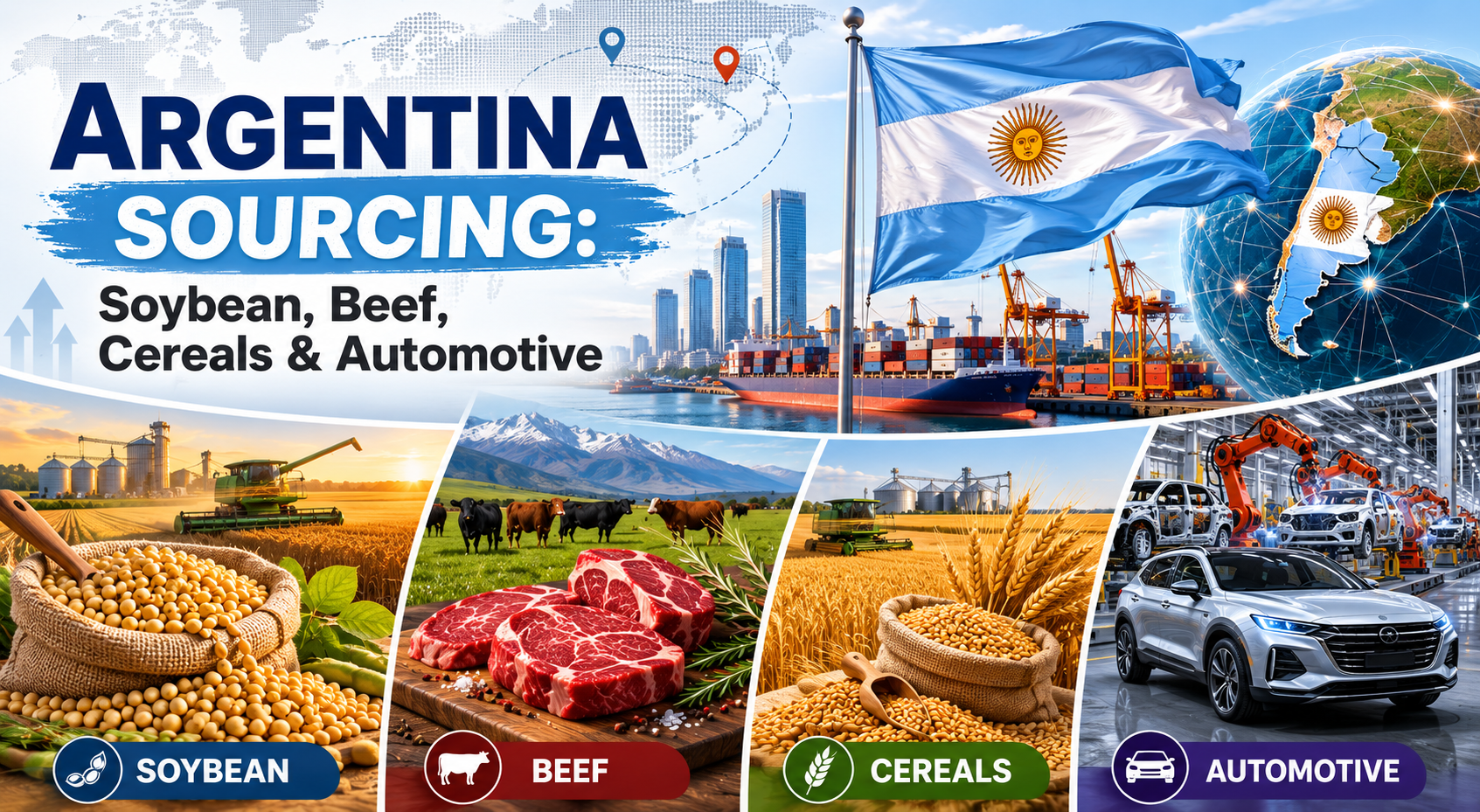
Argentina is the country that should dominate global trade but keeps getting in its own way. The fundamentals are staggering: the third-largest arable land area on earth, the Pampas grasslands producing beef and grain at a scale that feeds hundreds of millions, lithium reserves in the Andes that electric vehicle manufacturers are desperate to secure, and a workforce educated enough to design satellites and nuclear reactors. Monthly exports hit USD 8 billion despite decades of economic mismanagement, currency crises, and trade policies that actively punish exporters. Imagine what Argentina sourcing could deliver if the government simply stayed out of the way. For buyers willing to navigate the complexity, the rewards are real: world-class agricultural commodities, competitive industrial products, and pricing distorted in your favour by a perpetually undervalued peso.
Argentina Sourcing: Market Overview & Agricultural Dominance
Argentina sourcing is fundamentally an agricultural story. Over 60% of exports come from the land. The Pampas region produces soybeans, corn, wheat, and sunflower at yields that rival the American Midwest. Patagonia raises sheep and produces wool. Mendoza grows grapes that become wine exported to 120 countries. And the cattle ranches scattered across Buenos Aires province produce beef with a reputation that needs no marketing budget. When global food companies need reliable volume of agricultural commodities, Argentina delivers at scale few countries can match.
MERCOSUR membership (alongside Brazil, Paraguay, and Uruguay) provides preferential trade access across South America. Brazil absorbs the largest share of Argentine exports, followed by the European Union, China, the United States, and Chile. The EU-MERCOSUR trade agreement, decades in negotiation, promises to expand European market access significantly once ratified.
The economic reality buyers must understand: Argentina has experienced double-digit inflation for over a decade, currency controls that change without warning, and export taxes that shift with each government. The official exchange rate and the parallel market rate diverge dramatically. This creates both risk and opportunity. Products priced in Argentine pesos become extraordinarily cheap for foreign buyers when the currency weakens. But contracts require careful structuring to protect both parties from sudden policy changes.
Products to Source from Argentina
Soybean Products. Soybean meal, soybean oil, and raw soybeans. Argentina is the world’s largest exporter of soybean meal and soybean oil, and the third-largest soybean producer after the US and Brazil. Crushing plants along the Parana River near Rosario form the world’s most concentrated oilseed processing corridor.
Cereals and Grains. Corn, wheat, barley, and sorghum. Argentina ranks among the world’s top five exporters of both corn and wheat. The Pampas deliver consistent harvests that supply global food security.
Beef. Grass-fed beef raised on open pasture without feedlots or growth hormones. Argentine beef commands premium positioning in European, Chinese, and Middle Eastern markets. Annual production exceeds three million tonnes, with roughly 25% exported.
Motor Vehicles and Parts. Toyota, Volkswagen, Ford, and Stellantis (Fiat) operate assembly plants. Argentina produces approximately 500,000 vehicles annually, primarily pickup trucks and SUVs for regional markets. Auto parts including transmissions, stampings, and plastic components supply both domestic assembly and Brazilian factories.
Chemicals and Pharmaceuticals. Petrochemicals, agrochemicals, and generic pharmaceuticals. Argentina’s pharmaceutical industry is Latin America’s third largest, with companies like Bago, Roemmers, and Richmond serving regional markets.
Lithium. The “lithium triangle” spanning Argentina, Bolivia, and Chile contains over 50% of global lithium reserves. Argentine lithium production is expanding rapidly in Jujuy, Salta, and Catamarca provinces. Toyota, POSCO, and Ganfeng Lithium have all invested in Argentine extraction projects.
Leather and Hides. Bovine leather from the cattle industry feeds tanneries producing finished leather for automotive interiors, footwear, and luxury goods. Argentina’s leather quality benefits from grass-fed cattle with fewer skin blemishes than feedlot animals.
Honey. Argentina is the world’s third-largest honey exporter. Clover and wildflower honey from the Pampas, exported primarily to the United States and European markets.
Peanuts. Argentina is a top-five global peanut exporter. Runner and Virginia varieties grown in Cordoba province supply confectionery and snack manufacturers worldwide.
Challenges in Argentina Sourcing and Our Approach
Argentina sourcing is not for the faint-hearted. The challenges are structural, not incidental. Inflation exceeding 100% annually destroys pricing certainty. Currency controls restrict dollar access for Argentine companies, complicating payment flows. Export taxes (retenciones) on agricultural products reach 33% for soybeans, eating into supplier margins and creating incentive for informal arrangements. Port infrastructure at Rosario and Buenos Aires handles massive grain volumes but congests during harvest peaks. Political risk is constant: Argentina changes economic direction with every election cycle, and sometimes mid-term.
Our team has operated in this environment long enough to know what works. We structure contracts in US dollars with pricing mechanisms that adjust for peso movements. We work with exporters who have established dollar revenue streams and stable banking relationships. We build harvest-season logistics plans months in advance to avoid port congestion. We monitor policy changes in real time and advise clients when export regulations shift. And we maintain relationships with multiple suppliers in each category because Argentine business relationships require patience, flexibility, and backup options.
How We Support Your Argentina Sourcing
eSourcingSolution provides experienced Argentina sourcing services for businesses seeking agricultural commodities, industrial products, and emerging resources like lithium. Our procurement intelligence delivers commodity pricing analysis, supplier financial assessments, and regulatory risk monitoring specific to Argentine market conditions. Quality control inspections verify grading standards and production specifications.
The Argentina Investment and Trade Promotion Agency (AAICI) supports international companies establishing procurement relationships and provides sector-specific export data. The Argentine Chamber of Commerce and Services (CAC) facilitates business connections across agricultural, industrial, and services sectors.
We handle supplier identification, facility audits, commodity sourcing, contract structuring for volatile markets, and logistics coordination from Argentine ports. Whether you need soybean products from Rosario, beef from Buenos Aires province, wine from Mendoza, or lithium from the Puna region, our network covers Argentina’s key production zones.
Interested in Argentina sourcing for your supply chain? Contact us for a free market assessment and honest evaluation of whether Argentine products fit your requirements, timeline, and risk appetite.
Argentina offers sourcing opportunities across mining, primary production, agribusiness, communications, transport, and public utilities. Promising sectors also include environmental management, wine production, construction and building materials, and high-tech machinery.
To source effectively in Argentina, it’s important to understand local customs and business etiquette — these are key to building relationships founded on mutual trust and achieving favorable deals. Keep in mind that lead times in Argentina are often longer than in other regions, so this should be factored into your purchasing schedules.

Below are answers to common questions about eSourcingSolution, our services, and how we work. If you need more details, feel free to reach out — our team is ready to help!
We can source a wide range of goods and services — from raw materials and commodities to custom-engineered products and specialized services. Visit our Category Expertise page to explore what we cover.
We work with startups, SMEs, and global enterprises that want to source more competitively from emerging and developed markets, strengthen supply chains, and access reliable procurement support.
Yes. We maintain strong partnerships with a global network of vetted, reliable suppliers across multiple industries, ensuring quality, compliance, and long-term value.
Our proven qualification process, supported by local teams and digital audits, can fully onboard a new supplier in as little as 4–8 weeks, depending on category and compliance needs.
Using real-time market data, cost analysis, and sourcing intelligence, we can quickly evaluate potential savings, benchmark costs, and highlight key opportunities — typically within a few weeks.
It’s easy to begin — just reach out through our Contact page. We’ll arrange a quick discovery call, understand your goals, and design a customized sourcing plan to help you unlock better value.