
Someone asked me this last week on a call. Straight up. “Where is AliExpress located? Like, where are they actually based?” And I realized something. For a platform that millions of people buy from every single day, most buyers have no clue where the company sits, where the sellers operate from, or where their package actually ships from before it lands on their doorstep.
That matters more than you think. Especially if you’re buying for a business and not just grabbing a phone case for yourself.
Where is AliExpress located? Short answer: Hangzhou, China. Same city as its parent company Alibaba Group. But that short answer barely scratches what you actually need to know if you’re making sourcing decisions based on this platform. Because the headquarters location is just one piece. The sellers are scattered across China and beyond. The warehouses sit in different countries. And all of that affects your shipping times, your product quality, your communication experience, and ultimately your profit margins.
Let me break the whole thing down. Not the Wikipedia version. The version that actually helps you make better buying decisions.
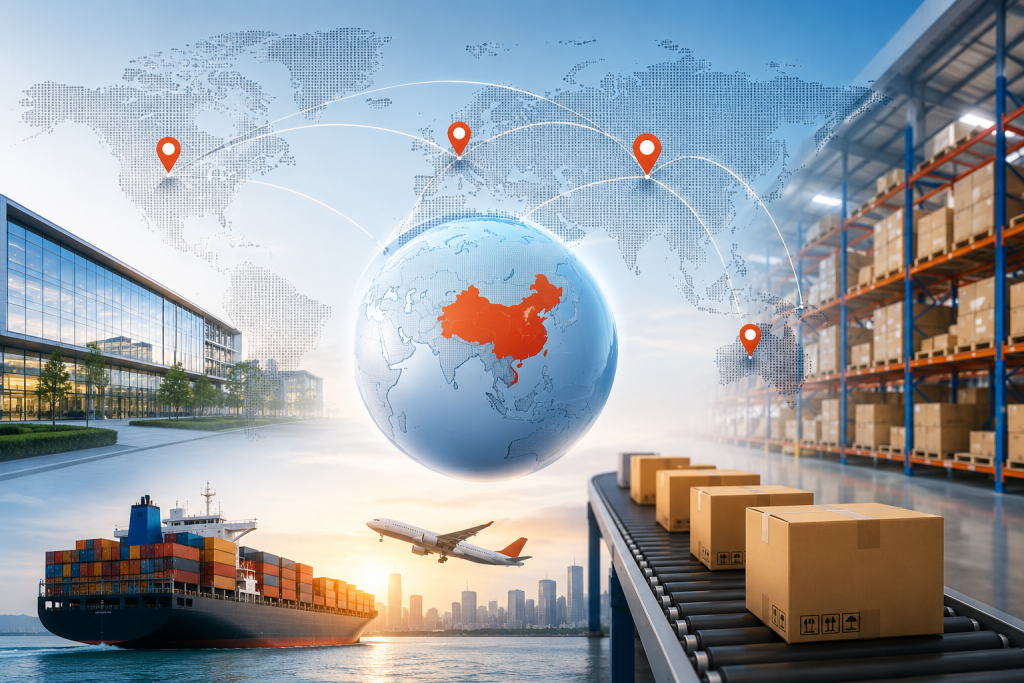
Table of Contents
| No. | Section | What You’ll Learn |
| 1 | Where Is AliExpress Headquartered | Physical location and what that means |
| 2 | Is AliExpress the Same as Alibaba | The corporate relationship explained |
| 3 | Where Are AliExpress Sellers Located | Geographic breakdown of actual sellers |
| 4 | Where Are AliExpress Warehouses Located | Global warehouse network mapped out |
| 5 | Does AliExpress Have Physical Stores | Offline presence or lack thereof |
| 6 | AliExpress for B2C vs a Sourcing Agent for B2B | When each approach makes sense |
| 7 | Popular Product Categories We Source | What overlaps with AliExpress listings |
| 8 | Key Takeaways | What this means for your next move |
| 9 | Frequently Asked Questions | Quick answers to common questions |
Where Is AliExpress Headquartered
AliExpress headquarters sits in Hangzhou, Zhejiang Province, China. Specifically within the Alibaba Group campus, which is this massive complex in the Xihu District. If you’ve seen photos of Alibaba’s campus, that’s where AliExpress operations run from too.
Hangzhou isn’t random. It’s one of China’s biggest tech hubs. Alibaba Group chose it as their base back in 1999 when Jack Ma started the company from his apartment there. The city grew into a tech center partly because Alibaba grew there. Chicken and egg situation.
For you as a buyer, the headquarters location tells you a few practical things. First, AliExpress operates under Chinese business law and regulations. Second, their core team works in China Standard Time (UTC+8). Third, their primary banking and financial infrastructure runs through Chinese systems. Fourth, dispute resolution ultimately falls under Chinese jurisdiction.
None of that matters much when you’re buying a $15 item for personal use. It matters a lot when you’re placing $5,000 or $50,000 orders for your business. Jurisdiction, communication timezone gaps, and legal recourse become real considerations at those volumes.
The company launched in 2010 as Alibaba’s international retail marketplace. While Alibaba.com targets B2B wholesale buyers, AliExpress was built for individual consumers buying small quantities. That distinction matters and I’ll come back to it.
Is AliExpress the Same as Alibaba
No. But also kind of yes. Let me explain.
AliExpress is owned by Alibaba Group. Same parent company. Same campus in Hangzhou. Same founder. But they’re different platforms serving different buyers with different business models.
Think of it like this. Alibaba.com is the wholesale marketplace. Minimum order quantities. Factory-direct pricing. Bulk buying. Negotiations. Trade assurance for large orders. It’s built for businesses buying hundreds or thousands of units.
AliExpress is the retail marketplace. Buy one item. No minimums. Fixed prices mostly. Consumer protection policies. Built for individual shoppers or very small business buyers testing products.
Alibaba Group’s corporate structure includes both platforms plus Taobao (domestic Chinese retail), Tmall (brand retail in China), Lazada (Southeast Asia), and a bunch of other businesses. AliExpress is just one arm of a much larger operation.
Why does this distinction matter for your business? Because people constantly confuse the two and end up on the wrong platform for their needs. If you need 500 units of a custom product, AliExpress is the wrong place. If you need 3 samples to test before committing to bulk, AliExpress might work fine for that specific purpose.
But here’s what neither platform gives you. Neither one provides someone on the ground in China checking your goods before they ship. Neither one negotiates pricing on your behalf. Neither one manages your supplier relationship or handles quality disputes face-to-face at the factory. That’s where working with a sourcing agent who handles procurement changes the equation entirely. More on that later.
Where Are AliExpress Sellers Located
This is where it gets interesting. And where most people’s assumptions fall apart.
The majority of AliExpress sellers are based in China. That’s not surprising. But they’re not all in one city or one region. They’re spread across China’s major manufacturing and trading hubs.
Guangdong Province (Shenzhen, Guangzhou, Dongguan). Biggest concentration of sellers. Electronics, phone accessories, fashion, home goods. The Pearl River Delta region is China’s manufacturing heartland and most AliExpress sellers in electronics and consumer goods operate from here.
Zhejiang Province (Yiwu, Hangzhou, Wenzhou). Small commodities, accessories, textiles, toys. Yiwu specifically is famous for its small goods wholesale market. Many AliExpress sellers are essentially Yiwu market traders who moved online.
Fujian Province (Quanzhou, Xiamen). Shoes, sportswear, bags, outdoor products. Quanzhou is China’s shoe manufacturing capital and a huge number of footwear sellers on AliExpress operate from there.
Jiangsu Province (Suzhou, Nanjing). Textiles, wedding dresses, costumes, fabric products. If you’ve ever bought a surprisingly cheap wedding dress on AliExpress, it probably came from Suzhou.
Beyond China. AliExpress has expanded to include sellers from Turkey, Russia, Spain, Italy, and other countries. But these represent a small fraction of total sellers. The platform remains overwhelmingly China-based.
What does seller location mean for you practically? Shipping times. Communication hours. Product quality standards. Return logistics. A seller in Shenzhen ships differently than a seller in Yiwu. A seller in Turkey has different shipping routes to Europe than a seller in Guangzhou.
And here’s the thing nobody on AliExpress tells you. Many “sellers” aren’t manufacturers at all. They’re trading companies or dropshippers themselves. They list products they don’t physically hold. When you order, they buy from a factory or wholesaler and ship to you. Adding a middleman. Adding time. Sometimes adding quality uncertainty.
When you’re buying for a business and need to know exactly who makes your product and where, a global sourcing service verifies the actual manufacturer rather than relying on whatever a platform listing claims.
Where Are AliExpress Warehouses Located
AliExpress doesn’t manufacture or stock products itself. It’s a marketplace. Sellers handle their own inventory and shipping. But AliExpress has built a network of overseas warehouses that some sellers use to store inventory closer to buyers. This speeds up delivery significantly.
Confirmed AliExpress warehouse locations:
China (multiple cities, primarily Shenzhen and Hangzhou). United States (multiple locations). Russia (Moscow region). Spain (Madrid). France. Poland. Belgium. Brazil. South Korea. Turkey. United Arab Emirates. Australia. United Kingdom. Germany. Italy. Netherlands.
These overseas warehouses work like this. A seller ships bulk inventory from China to an AliExpress warehouse in, say, Spain. When a Spanish customer orders, the product ships domestically within Spain rather than internationally from China. Delivery drops from 20-40 days to 3-7 days.
For individual buyers, this is great. Faster delivery. Easier returns. Better experience overall.
For business buyers? It’s more complicated. Warehouse stock is limited to popular items. You can’t customize products stored in overseas warehouses. Quantities available are retail-level, not bulk. And pricing reflects the added warehousing and logistics costs.
If you’re sourcing products for your business and need consistent supply, custom specifications, or bulk quantities, these warehouses don’t solve your problem. They’re built for consumer convenience, not business procurement.
The World Trade Organization tracks global trade patterns that explain why warehouse placement follows specific routes, but for practical purposes, what matters is whether warehouse availability actually serves your business model.
Does AliExpress Have Physical Stores
No. AliExpress does not operate physical retail stores. It’s purely an online marketplace.
However, there are some nuances worth knowing.
Alibaba Group operates Hema (Freshippo) grocery stores in China. They run Intime department stores. They have physical retail investments across China. But none of these are “AliExpress stores.” They’re separate businesses under the same corporate umbrella.
Some AliExpress sellers have their own physical shops or showrooms in Chinese wholesale markets. Particularly in Yiwu, Guangzhou, and Shenzhen. But these aren’t official AliExpress locations. They’re independent businesses that happen to also sell on the platform.
For business buyers, this means you can’t walk into an AliExpress store, touch products, and place a bulk order. Everything happens online. Product photos and descriptions are all you get before committing money.
This is actually one of the biggest risks of buying through AliExpress for business purposes. You’re making purchasing decisions based on photos that may or may not accurately represent the product. Reviews help but can be manipulated. And returning defective bulk orders internationally? Nightmare logistics.
Compare that to working with someone who physically visits factories, inspects samples in person, and sends you verified photos and videos before production starts. That’s what a quality control service provides that no online marketplace can match.
AliExpress for B2C vs a Sourcing Agent for B2B: What’s the Difference
Alright. This is where I stop being neutral and start being honest about what I’ve seen over 10+ years helping businesses source from China.
AliExpress works fine for certain things. Buying samples. Testing product ideas with tiny quantities. Personal purchases. Dropshipping very small operations where you’re fulfilling one order at a time and don’t mind thin margins and long shipping.
But the moment you need any of the following, AliExpress stops being the right tool:
Custom products with your branding or specifications. Consistent quality across hundreds or thousands of units. Negotiated pricing that improves your margins. Factory audits confirming ethical manufacturing. Pre-shipment inspections catching defects before they reach your customers. Packaging designed for retail shelves. Intellectual property protection for your designs.
None of that exists on AliExpress. The platform wasn’t built for it.
A sourcing agent does all of that. We find factories. We negotiate pricing you’d never get as a foreign buyer contacting suppliers cold. We sit in the factory during production checking quality. We handle logistics. We solve problems in Chinese, in person, in real time.
The cost difference? AliExpress charges nothing upfront but you pay higher per-unit prices, accept quality uncertainty, and handle everything yourself. A sourcing agent charges a service fee but saves you money on unit costs through supplier negotiation and cost optimization that typically exceeds the fee itself.
I had a client last year buying phone cases on AliExpress for $2.80 each. Selling them for $12.99. Thought the margins were fine. We found the same factory (literally the same one) and negotiated $1.15 per unit at 1,000 pieces. His margin nearly doubled. The sourcing fee paid for itself on the first order and every order after was pure profit improvement.
That’s not unusual. It’s typical. AliExpress prices include the platform’s cut, the seller’s markup, and often a trading company’s margin stacked on top of the factory price. Strip those layers away by going direct through a sourcing agent and the math changes dramatically.
For businesses ready to move beyond AliExpress-level sourcing, booking a consultation takes 15 minutes and shows you exactly what’s possible with your specific products.
Popular Product Categories We Source (That You’ll Also Find on AliExpress)
Everything on AliExpress comes from somewhere. Usually a factory in China that also sells wholesale to businesses. The same products you browse on AliExpress at retail markup, we source at factory pricing in bulk.
Electronics and accessories. Phone cases, chargers, cables, earbuds, smart home devices, LED lighting. Shenzhen is the hub. We work directly with manufacturers there rather than through AliExpress trading companies.
Home and kitchen products. Storage solutions, kitchen gadgets, bathroom accessories, home decor. Mostly sourced from Yiwu and Zhejiang province factories.
Fashion and apparel. Clothing, shoes, bags, jewelry, watches. Guangzhou for fashion. Quanzhou for shoes. Direct factory relationships mean custom designs, your labels, your packaging.
Beauty and personal care. Skincare tools, makeup accessories, beauty devices, packaging. Guangdong province dominates this category.
Outdoor and sports. Camping gear, fitness equipment, cycling accessories, water sports. Ningbo and Yiwu are major sourcing cities for these categories.
Toys and baby products. Educational toys, baby gear, children’s accessories. Shantou is China’s toy capital. Strict safety testing required for these categories, which is something AliExpress sellers rarely provide documentation for.
Pet products. Beds, toys, grooming tools, accessories. Growing category with factories across Zhejiang and Guangdong.
For any of these categories, we handle everything from product idea development through to delivered goods. That includes finding the right factory, developing your custom version, creating proper packaging for retail, and managing production quality.
If you’re currently buying any of these categories on AliExpress for resale, you’re leaving money on the table. Period. The factory price versus the AliExpress price gap is usually 40 to 70 percent. On a product you’re selling hundreds or thousands of, that gap is your profit margin walking out the door.
We’ve written extensively about how to source products from China for Amazon FBA specifically because so many Amazon sellers start on AliExpress and don’t realize how much margin they’re sacrificing.
Key Takeaways
So where is AliExpress located? Hangzhou, China. Parent company Alibaba Group. Sellers spread across China’s manufacturing regions. Warehouses in 15+ countries for faster consumer delivery.
But location is just geography. What actually matters for your business is this:
AliExpress is a consumer retail platform being used by business buyers who’ve outgrown it. The prices include multiple markup layers. The quality control is nonexistent beyond buyer reviews. The customization options are limited to what’s already listed. And the legal protections for bulk business purchases are thin.
If you’re buying 1 to 10 units of something for personal use or product testing, AliExpress is perfectly fine. Use it. Enjoy the convenience.
If you’re buying 100+ units for resale, building a product line, launching a brand, or scaling an existing business, you need a different approach. You need someone in China who works for you, not for the platform. Someone who finds factories, negotiates your pricing, checks your quality, and protects your interests.
That’s what we do at eSourcing Solution. Not because AliExpress is bad. It’s great at what it’s designed for. But it’s not designed for what serious business buyers need.
Want to see the price difference on your specific products? Get in touch and we’ll run a comparison. No obligation. Just numbers. And numbers don’t lie.
Frequently Asked Questions (FAQ)
Is AliExpress a Chinese company?
Yes. AliExpress is owned by Alibaba Group, headquartered in Hangzhou, China. It was founded in 2010 as Alibaba’s international retail platform targeting consumers outside China.
Is AliExpress safe to buy from?
For individual consumer purchases, generally yes. AliExpress offers buyer protection, dispute resolution, and refund policies. For business purchases in bulk, the protections are weaker and quality verification is your responsibility. There’s no pre-shipment inspection. No factory audit. No one checking goods before they ship to you.
Why does AliExpress shipping take so long?
Most AliExpress sellers ship directly from China using economy postal services. Standard shipping takes 15 to 45 days depending on destination and shipping method chosen. Sellers using overseas warehouses deliver faster (3-7 days) but stock limited product ranges. The long shipping times reflect the cheapest possible logistics options, which is how sellers keep prices low.
Can I buy wholesale on AliExpress?
Sort of. Some sellers offer bulk discounts for larger quantities. But AliExpress isn’t designed for wholesale. Minimum order quantities are typically 1 unit. Bulk pricing, when available, is still higher than factory-direct pricing because you’re paying the platform fee and seller markup. For genuine wholesale pricing, you need to go direct to manufacturers through Alibaba.com or through a sourcing agent who handles bulk procurement from China.
What’s the difference between AliExpress and buying through a sourcing agent?
AliExpress: you browse listings, choose products, pay retail-ish prices, hope quality is good, handle everything yourself. Sourcing agent: we find factories, negotiate bulk pricing (typically 40-70% below AliExpress), verify quality in person, customize products to your specs, manage production, and handle logistics. The sourcing agent approach costs more in service fees but saves significantly more in per-unit pricing. Our guide on China sourcing agent costs breaks down exactly what you’d pay.
Do I need a product spec sheet to start sourcing from China?
It helps enormously. A clear spec sheet tells factories exactly what you want, reducing samples rounds and miscommunication. We’ve written a complete guide on creating product spec sheets for sourcing that walks you through the process step by step.
Can AliExpress sellers register trademarks for me?
No. AliExpress sellers sell products. They don’t provide legal services. If you’re building a brand and need trademark protection in China or internationally, that’s a separate process entirely. We handle trademark and patent registration as part of our brand protection services because too many clients learn the hard way that someone in China registered their brand name before they did.
How do I know if an AliExpress seller is actually a manufacturer?
Honestly? You often don’t. Many AliExpress “sellers” are trading companies or individual resellers who don’t manufacture anything. They buy from factories and resell at markup. The listing won’t tell you this. The seller won’t admit it. The only way to verify is to physically visit the factory or have someone do it for you. Our procurement intelligence service identifies and verifies actual manufacturers versus middlemen so you know exactly who you’re dealing with.