
Picking mug materials is trickier than it looks.
You’d think it’s simple—just grab whatever’s cheap and call it a day. But the material you choose affects everything. Cost, durability, how customers feel about your product, even whether they come back and buy again.
If you’re sourcing mugs (retail, corporate gifts, private label, doesn’t matter), you’ve seen the options. Ceramic. Stainless steel. Glass. Plastic. Each one comes with baggage. Some are dirt cheap but fall apart. Others feel premium but the MOQs are insane and lead times drag on forever.
This guide walks through nine mug materials. What works, what doesn’t, and when each one actually makes sense for your business.
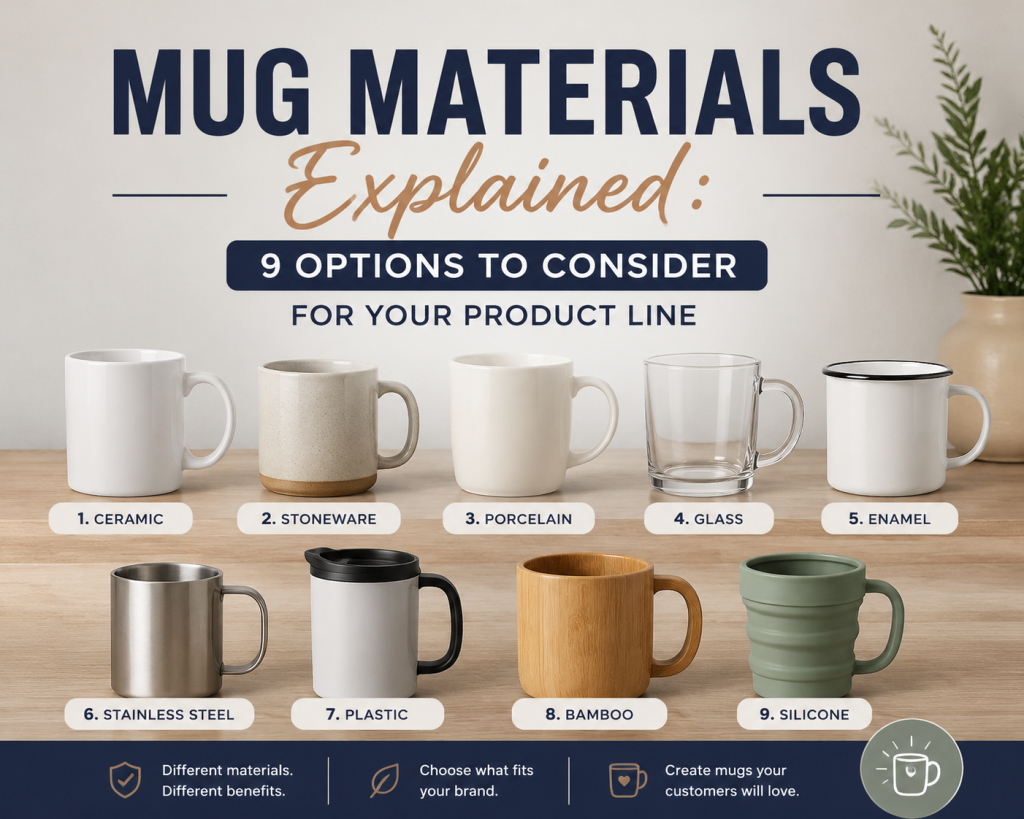
Table of Contents
- Ceramic Mugs
- Stainless Steel Mugs
- Glass Mugs
- Plastic Mugs
- Bamboo Fiber Mugs
- Silicone Mugs
- Copper Mugs
- Enamel Mugs
- Paper Mugs
- Which Material Actually Works for Your Business?
mug materials –Ceramic Mugs
Ceramic is what most people picture when you say “coffee mug.” It’s the default.
What’s good about it:
- Keeps drinks warm longer than most materials
- Super easy to customize—prints, glazes, colors, all of it
- Feels solid without being too heavy
- Tons of suppliers, and the MOQs are usually reasonable
What’s not so good:
- Break it and it’s done. No second chances with drops
- Heavier than plastic or silicone, which means shipping costs add up
- Not great for travel or outdoor use
Where it works best: Home mugs, office gifts, branded merch, retail shelves
Ceramic dominates because it hits that sweet spot of cost and quality. If you’re new to bulk product sourcing from China, start here. Suppliers have been making ceramic mugs forever, so quality control is easier to manage.
One thing though—watch the glazes. You need food-grade stuff that meets FDA or EU standards. Cheap glazes can leach lead or cadmium, especially when people pour acidic drinks like coffee into them. If you’re using a China sourcing agent, make them verify this before you commit to an order.
Stainless Steel Mugs
Stainless steel exploded over the last ten years. Durable, travel-friendly, and people who care about the environment love them.
What’s good:
- Basically indestructible. Drops, dents, whatever—it takes the hit
- Double-walled versions keep drinks hot or cold for hours
- Lighter than ceramic
- Lasts forever, so customers aren’t replacing them every year
What’s not:
- Costs more upfront per unit
- Harder to customize (printing on metal isn’t as easy as ceramic)
- Can’t microwave them
- Some people complain about a metallic taste if the inside isn’t coated
Where it works: Travel mugs, outdoor gear, promo products for active brands, subscription boxes
Stainless steel owns the outdoor and fitness market. If your customers care about sustainability, this checks that box too. Reusable, recyclable, doesn’t add to single-use waste.
When you’re sourcing, grade matters. 304 stainless (also called 18/8) is food-safe and won’t rust. Cheaper stuff like 201 stainless? It’ll corrode, especially if it sees saltwater or acidic liquids.
Adding this to your lineup? Think about packaging optimization. Stainless mugs are bulkier than ceramic, so smart packing saves you money on freight.
Glass Mugs
Glass mugs look clean and modern. Cafes and restaurants use them because they show off the drink inside.
What’s good:
- Looks great—perfect for latte art or layered drinks
- Doesn’t hold onto flavors or smells
- Easy to clean
- Feels high-quality
What’s not:
- Fragile. Even more than ceramic
- Terrible heat retention unless you go double-walled
- Breaks during shipping more than you’d like
- Single-wall glass gets too hot to hold
Where it works: Cafes, restaurants, specialty stores, gift sets
Glass makes sense if you’re going after a niche that values design over durability. Double-walled borosilicate glass mugs are the premium pick—they insulate well and look impressive, but they cost more and need careful handling during global sourcing.
Pro tip: if you’re importing glass, budget extra for protective packaging. Breakage eats into margins fast. Some sellers use foam sleeves or molded pulp inserts to cut down on damage.
Plastic Mugs
Plastic mugs are cheap, light, and kid-proof. Not exactly trendy, but they still have a spot in certain markets.
What’s good:
- Cheapest to make
- Won’t shatter
- Light—keeps shipping costs down
- Easy to mold into fun shapes and bright colors
What’s not:
- Stains and smells stick around over time
- Most types aren’t microwave-safe
- Feels cheap
- Environmental concerns (especially with single-use plastics)
Where it works: Kids’ stuff, promotional giveaways, camping gear, budget retail
If you go plastic, look for BPA-free polypropylene or Tritan. Safer and tougher than cheaper plastics like polystyrene.
Plastic’s taken a beating lately because of environmental pushback. If you source these, position them as reusable alternatives to disposable cups. That framing helps.
For finding suppliers, procurement outsourcing can help you sort through the crowded plastic mug market and find factories that don’t cut safety corners.
Bamboo Fiber Mugs
Bamboo fiber mugs are the eco-friendly pick that’s gotten more popular recently. They’re made from bamboo powder mixed with resin, then molded.
What’s good:
- Biodegradable (depends on the resin)
- Light
- Natural look
- Appeals to eco-conscious buyers
What’s not:
- Not as tough as ceramic or stainless
- Can crack or chip if you use it hard
- Doesn’t hold heat well
- Some use melamine resin, which isn’t great for hot drinks
Where it works: Eco-brands, outdoor retailers, subscription boxes, lifestyle products
Bamboo fiber works if your brand leans into sustainability. But here’s the catch—not all bamboo mugs are the same. Some use melamine-formaldehyde resin as a binder, and that can release chemicals when it gets hot.
If quality matters to you, ask about the resin type. Food-grade corn starch-based resins are safer but cost more. This is where quality control services make a real difference. You need someone on the ground checking materials before production ramps up.
Silicone Mugs
Silicone mugs are the new kid. Collapsible, portable, made for people who move around a lot.
What’s good:
- Collapses down to save space in bags
- Heat-resistant and microwave-safe
- Almost impossible to destroy
- Fun colors
What’s not:
- Doesn’t insulate as well as other options
- Can hold onto smells if you don’t clean it right
- Limited appeal outside travel/outdoor markets
- Some people think it’s gimmicky
Where it works: Travel accessories, camping gear, festival merch, novelty gifts
Silicone’s niche, but the niche is growing. Backpackers, RV people, frequent travelers—they love the collapsible thing. If that’s your crowd, silicone fits.
Check for food-grade silicone. Cheap versions smell like plastic and fall apart fast. Make sure your supplier uses platinum-cured silicone, not peroxide-cured (lower quality).
Copper Mugs
Copper mugs have a retro thing going. Mostly tied to Moscow Mules, but they’ve become a design statement in home bars and restaurants.
What’s good:
- Eye-catching
- Great heat conductivity (keeps cold drinks cold)
- Antimicrobial
- Feels premium
What’s not:
- Needs a food-safe lining (usually stainless steel or nickel)
- Tarnishes without regular polishing
- Costs more
- Niche appeal
Where it works: Bars, restaurants, luxury gift sets, cocktail fans
Copper’s specialty. Not for mass retail, but works in premium segments. If you source these, make sure the interior lining is done right. Unlined copper reacts with acidic drinks and leaches into the liquid.
This is where supplier negotiation and cost optimization matters. Copper prices jump around, so locking in a good rate early protects your margins.
Enamel Mugs
Enamel mugs have that vintage camping vibe. Steel coated with enamel, giving them a glossy, colorful finish.
What’s good:
- Durable and chip-resistant (not indestructible though)
- Light
- Retro look hits with certain crowds
- Can go over a campfire (sometimes)
What’s not:
- Chips expose the steel underneath (which rusts)
- Doesn’t hold heat well
- Not dishwasher-safe
- Limited customization
Where it works: Outdoor brands, camping gear, vintage retail, promo products
Enamel works if your brand’s rugged or outdoorsy. Popular with hikers, campers, van-lifers.
Quality’s all over the place. Some chip after one drop, others last years. If you’re working with a procurement intelligence team, they can help you vet suppliers based on coating thickness and steel quality.
Paper Mugs
Paper mugs are single-use, but worth mentioning if you’re in foodservice or events.
What’s good:
- Cheapest per unit
- Light
- Easy to print on
- Disposable (convenient for events, takeout)
What’s not:
- Single-use only
- Doesn’t insulate without a sleeve
- Environmental concerns
- Not for long-term products
Where it works: Coffee shops, events, food trucks, promo giveaways
Paper makes sense if you supply cafes, catering, or events. Not a retail product, but a volume play.
If you source paper mugs, look for recyclable or compostable options. Brands are under pressure to cut waste, so positioning paper mugs as eco-friendly (even though they’re disposable) helps with sales.
Which Material Actually Works for Your Business?
There’s no single “best” here. Depends on your market, budget, and brand.
Quick breakdown:
Mass-market retail? Ceramic. Affordable, familiar, appeals to everyone.
Travel and outdoor? Stainless steel or silicone. Both handle rough use and temperature control.
Premium or design-focused? Glass or copper. They make a statement and justify higher prices.
Eco-conscious buyers? Bamboo fiber or stainless steel. Both cut down on waste versus disposables.
Kids or budget lines? Plastic. Cheap, safe, handles drops.
Niche or vintage? Enamel. Has character and hits specific subcultures.
If you’re still figuring it out, start with one and test it. You don’t need all nine right away. Pick what aligns with your brand and customer base, then expand.
When you’re ready to scale, benefits delivered through a sourcing partner streamlines everything. Better pricing, faster turnaround, fewer logistics headaches.
Wrapping Up
Mug materials matter more than most sellers think. Wrong choice? Returns, bad reviews, dead inventory. Right choice? Brand differentiation and customer loyalty.
If you’re sourcing overseas, don’t skip due diligence. Verify materials, test samples, work with suppliers who get your quality standards. A few extra weeks upfront saves months of problems later.
Need help figuring out which material fits your business? Book a consultation and we’ll walk through your options. Ready to start sourcing? Get in touch and let’s talk suppliers, pricing, timelines.