
Not all towels feel the same.
Grab a cheap towel from the discount bin and you’ll know immediately. Thin, scratchy, barely soaks up water. Then touch a hotel luxury towel and it’s completely different. Thick, plush, absorbs everything instantly. What’s the difference? The material.
Fabric choice changes everything about a towel. How it feels on your skin, how much moisture it holds, how long it lasts, what you’ll pay for it. Whether you’re buying towels for your home, sourcing for retail, or outfitting a hotel, understanding materials saves headaches and money.
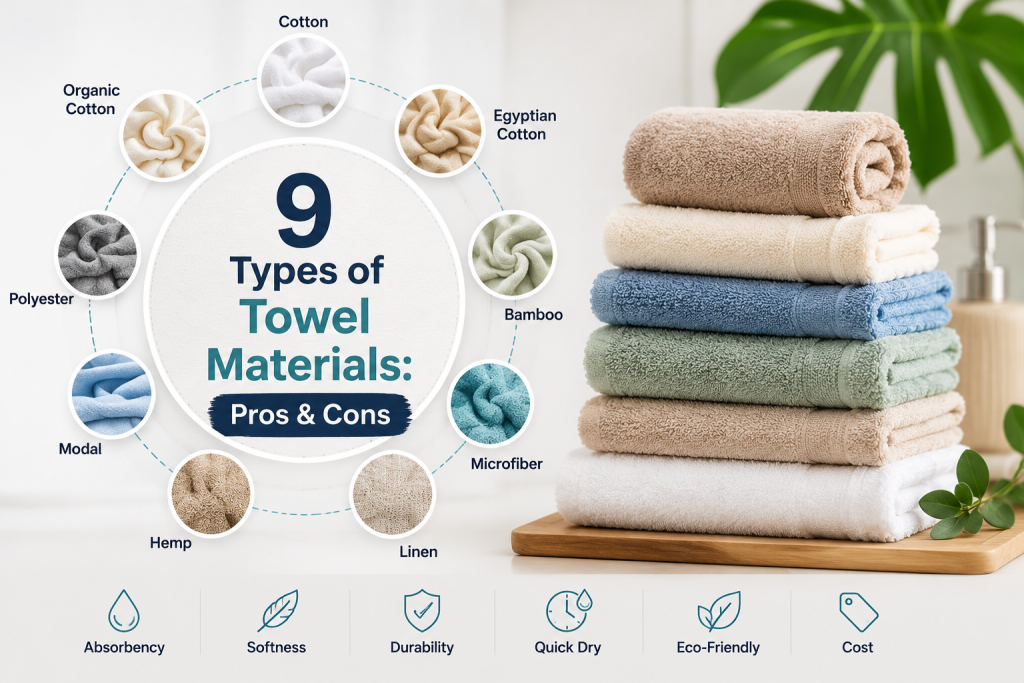
Here are 9 towel materials worth knowing, with the real pros and cons for each one.
Table of Contents
| # | Material | Best For | Key Characteristics |
| 1 | 100% Cotton | All-purpose, everyday use | Soft, absorbent, breathable, widely available |
| 2 | Egyptian Cotton | Luxury, premium products | Extra-long fibers, supremely soft, highly absorbent |
| 3 | Turkish Cotton | Luxury, quick-drying | Long fibers, plush yet lightweight, dries faster |
| 4 | Bamboo | Eco-conscious, sensitive skin | Sustainable, antibacterial, silky soft, hypoallergenic |
| 5 | Microfiber | Travel, sports, gym | Ultra-absorbent, quick-drying, lightweight, compact |
| 6 | Linen | Summer, beach, lightweight | Highly absorbent, dries fast, textured feel |
| 7 | Modal | Softness, luxury feel | Incredibly soft, smooth, less absorbent than cotton |
| 8 | Cotton-Polyester Blend | Budget, commercial use | Durable, affordable, dries fast, less soft |
| 9 | Organic Cotton | Eco-friendly, chemical-free | Pesticide-free, sustainable, same benefits as cotton |
1. 100% Cotton
What it is:
Your standard towel material. The one most people think of when they picture a towel.
How it’s made:
Comes from cotton plant fibers. Usually woven into terry cloth (those little loops you see) or velour (where the loops are sheared flat for a smooth surface).
Absorbency:
Really good. Cotton naturally loves water. Quality varies based on how long the fibers are and how tightly it’s woven.
Softness:
Depends on the quality, but generally feels nice. Gets even softer after you wash it a few times.
How long it lasts:
Holds up well. A decent cotton towel can last you years if you take care of it. Handles regular washing without falling apart.
Drying time:
Takes a while. Cotton holds onto moisture, so it’s not winning any speed contests here.
The good stuff:
Soaks up water like a champ. Feels soft and comfy. Breathes well so it doesn’t feel stuffy. Actually gets nicer with age. You can find it everywhere at pretty much any price point. Easy to wash and care for. Natural fiber, not synthetic.
The not-so-good:
Sits around wet for hours. Can get that musty smell if you don’t dry it properly. Sheds some lint when it’s new. Colors fade after tons of washes. Gets heavy when soaked.
Where it works best:
Your everyday bathroom towels, hand towels, washcloths, kitchen duty, general home use.
What you’ll pay:
All over the map. Budget options exist, mid-range too. Depends on cotton quality and how thick it is (measured in GSM).
Taking care of it:
Toss it in the washing machine. Skip the fabric softener though, it makes towels less absorbent. Medium heat in the dryer works fine.
According to the Textile Research Journal, cotton stays the most popular towel fabric because it balances absorbency, toughness, and comfort better than alternatives.
If you’re doing bulk product sourcing from China for towels, 100% cotton is where you start. Works for almost any retail situation.
2. Egyptian Cotton
What it is:
The fancy cousin of regular cotton. Grown in Egypt using extra-long cotton fibers.
How it’s made:
Those longer fibers (35mm or more) get spun into smoother, stronger threads. Results in that luxury hotel towel feeling.
Absorbency:
Outstanding. More fiber length means more surface area soaking up water.
Softness:
This is what people brag about. Egyptian cotton feels incredible. Plush against your skin.
How long it lasts:
Years and years. Those long fibers don’t break easily, so towels hold up forever. 10+ years isn’t unusual with proper care.
Drying time:
Slow as molasses. All that thickness and absorbency means it sits wet for ages.
The good stuff:
Feels absolutely luxurious. Soaks up tons of water. Lasts forever. Gets even better as it ages. Prestigious material people recognize. Doesn’t pill up like cheaper stuff. Strong fibers mean less breakage.
The not-so-good:
Expensive. Like, really expensive. Takes forever to dry. Heavy, especially when wet. Needs proper care to stay nice. The market’s full of fakes claiming to be Egyptian cotton when they’re not.
Where it works best:
High-end bath towels, fancy hotels, spa treatments, premium retail products, impressive gifts.
What you’ll pay:
Premium prices. Expect to pay 2 to 5 times what regular cotton costs.
Taking care of it:
Wash in warm water. Don’t use harsh detergents. Don’t overload your washing machine. Low heat in the dryer or hang it to dry.
Heads up:
Lots of products say “Egyptian cotton” but aren’t real. Genuine Egyptian cotton comes from Egypt and has specific fiber lengths. Look for GOTS certification or verify the origin. Don’t just trust labels.
When working with a China sourcing agent, get lab testing done to prove the cotton actually comes from Egypt and has the right fiber length.
3. Turkish Cotton
What it is:
Turkey’s answer to Egyptian cotton. Another premium long-fiber cotton with its own personality.
How it’s made:
Similar long fibers to Egyptian, but works differently. Often combines those terry loops with flat woven sections.
Absorbency:
Really good. Grabs water fast and holds it well.
Softness:
Excellent right out of the package. Unlike Egyptian cotton that needs some breaking in, Turkish cotton starts soft. Plush but doesn’t feel heavy.
How long it lasts:
Very good to excellent. Long fibers make strong towels that resist wearing out.
Drying time:
Faster than Egyptian. Turkish cotton isn’t as dense, so it dries quicker.
The good stuff:
Soft immediately, no waiting. Highly absorbent. Lightweight compared to Egyptian cotton. Dries faster than other premium cottons. Gets more absorbent over time. Less likely to get mildew because it dries faster. Luxurious without feeling like a wet blanket.
The not-so-good:
Still expensive, though usually less than Egyptian. Can be tough to find the real deal. Might feel less substantial if you like super thick towels. Still dries slower than synthetic options.
Where it works best:
Bath towels, beach towels (lighter for carrying around), spas and hotels, premium home stuff.
What you’ll pay:
Premium pricing. Slightly less than Egyptian cotton usually.
Taking care of it:
Similar deal as Egyptian cotton. Warm water wash, skip fabric softeners, low tumble dry.
Turkish vs Egyptian:
Turkish is lighter and dries faster. Egyptian is thicker and soaks up more. Both are premium. Pick based on what matters more to you.
4. Bamboo
What it is:
Towels made from bamboo plant fibers. Can be bamboo rayon (processed with chemicals) or bamboo linen (mechanical process, less common).
How it’s made:
Most bamboo towels are bamboo rayon. They take bamboo pulp and process it into fiber. Creates a silky smooth fabric.
Absorbency:
Very good. Some manufacturers claim it absorbs 3x more water than cotton. Results vary based on how it’s processed though.
Softness:
Incredible. Bamboo fabric feels silky smooth, softer than cotton. Great for sensitive skin.
How long it lasts:
Good but not amazing. Not as tough as cotton long-term. Can thin out or get those little fabric balls over time.
Drying time:
Fast to moderate. Faster than cotton, not as fast as microfiber.
The good stuff:
Incredibly soft and silky feeling. Hypoallergenic, good if your skin is sensitive. Naturally fights bacteria and microbes. Doesn’t hold smells. Sustainable since bamboo grows crazy fast without pesticides. Absorbs moisture really well. Breathes nicely. Helps regulate temperature.
The not-so-good:
Processing bamboo rayon uses a lot of chemicals. Doesn’t last as long as cotton. Costs more than regular cotton. Can shrink if you’re not careful washing it. The whole “eco-friendly” thing is debatable given the chemicals used. May develop pilling.
Where it works best:
Bath towels for people with sensitive skin, baby towels, gym towels (that antibacterial thing helps), eco-conscious products.
What you’ll pay:
Mid to premium range. More than standard cotton, less than Egyptian.
Taking care of it:
Wash in cold or warm water. Hot water makes it shrink. Air dry or use low heat. Don’t use bleach or fabric softeners.
Environment reality check:
According to the Federal Trade Commission, bamboo rayon processing involves chemicals that can harm the environment. True bamboo linen (mechanical processing) is better environmentally but harder to find and pricier.
If sourcing bamboo towels through global sourcing channels, check how it’s processed and what certifications it has.
5. Microfiber
What it is:
Synthetic fabric made from polyester and polyamide (nylon). Fibers are thinner than a human hair.
How it’s made:
Millions of tiny fibers create massive surface area. Each fiber gets split to absorb even more.
Absorbency:
Crazy good. Can absorb 7 times its own weight in water. Wicks moisture incredibly well.
Softness:
Pretty good. Not as plush as cotton but smooth and soft. Cheap versions can feel scratchy though.
How long it lasts:
Very good. Synthetic fibers resist wearing out. Can outlast cotton if you care for it right.
Drying time:
Super fast. Dries in a fraction of the time cotton takes. Huge advantage.
The good stuff:
Extremely absorbent. Dries incredibly fast (30 minutes to 2 hours). Lightweight and packs small. Perfect for travel and sports. Doesn’t hold odors like cotton does. Durable and lasts long. Affordable. Antibacterial properties because bacteria can’t grow well when it dries so fast.
The not-so-good:
Less plush feeling than cotton. Doesn’t breathe as well. Can feel “synthetic” to some people. Holds onto oils and greases. Not environmentally friendly since it’s plastic-based. Can melt if you get it too hot. Some folks just don’t like how it feels.
Where it works best:
Travel towels, gym and sports towels, hair towels, camping, drying your car, cleaning cloths.
What you’ll pay:
Budget to mid-range. Generally pretty affordable.
Taking care of it:
Wash in warm water. Don’t use fabric softener, it clogs up the fibers and makes them absorb less. Air dry or low heat (high heat can damage it).
Quality varies wildly:
Microfiber quality is all over the place. For towels, look for 300+ GSM. Cheap stuff under 200 GSM can be scratchy and not absorb well.
For quality control on microfiber towels, test absorbency and check fiber quality before ordering a bunch.
6. Linen
What it is:
Natural fabric from flax plant fibers. One of the oldest fabrics humans ever made.
How it’s made:
Woven from flax fibers. Creates textured, somewhat rough fabric that softens up with use and washing.
Absorbency:
Excellent. Linen soaks up moisture really well and pulls it away from your skin.
Softness:
Starts moderate and rough, gets dramatically better with every wash. Begins textured, becomes soft and supple over time.
How long it lasts:
Outstanding. Linen is one of the strongest natural fibers out there. These towels can literally last decades.
Drying time:
Very fast. Fastest-drying natural fiber. Perfect if you live somewhere humid.
The good stuff:
Highly absorbent. Dries extremely fast. Incredibly durable and long-lasting. Gets softer every time you wash it. Doesn’t leave lint. Naturally fights microbes. Breathes really well. Eco-friendly since flax needs little water or pesticides. Becomes more beautiful with age and use.
The not-so-good:
Rough texture at first (not everyone likes it). Expensive. Wrinkles like crazy. Less plush than cotton. Can feel scratchy on sensitive skin initially. Limited color options since natural fibers don’t take dye as vibrantly.
Where it works best:
Beach towels, summer towels, kitchen towels, travel (lightweight and dries fast), hot and humid climates.
What you’ll pay:
Premium. More expensive than regular cotton.
Taking care of it:
Machine washable. Actually gets better with washing. Can handle hot water. Tumble dry or hang it.
Best for:
People who value texture over plushness. Those living in humid places. Eco-conscious buyers. Anyone wanting towels that last forever.
Textile experts say linen towels are making a comeback because they’re sustainable and practical for modern life.
7. Modal
What it is:
Semi-synthetic fabric made from beech tree pulp. It’s a type of rayon but better.
How it’s made:
Wood pulp gets processed into fibers through spinning. Creates an incredibly smooth fabric.
Absorbency:
Good. Less absorbent than cotton but better than regular polyester. Some sources say it absorbs about 50% more water than cotton.
Softness:
Outstanding. Modal is famous for being incredibly soft and smooth. Silkier than cotton.
How long it lasts:
Good to very good. More durable than regular rayon, not quite as tough as cotton. Resists pilling and shrinking.
Drying time:
Fast to moderate. Faster than cotton, slower than microfiber.
The good stuff:
Exceptionally soft and smooth. Luxurious feel. Resists shrinking. Holds color really well, doesn’t fade. Breathable. Drapes beautifully. Stronger when wet than cotton is. More sustainable than regular rayon.
The not-so-good:
Less absorbent than cotton. Expensive. Not as easy to find. Can be delicate, needs gentle care. Semi-synthetic, not fully natural. Might not feel substantial enough for some people.
Where it works best:
Luxury bath towels, hair towels, facial towels, spa products, high-end home textiles.
What you’ll pay:
Premium to luxury. More expensive than regular cotton.
Taking care of it:
Wash in cool or warm water. Gentle cycle is better. Don’t use harsh detergents. Air dry or low heat tumble dry.
Often mixed:
Lots of towels blend modal with cotton to balance softness and absorbency.
8. Cotton-Polyester Blend
What it is:
Fabric that mixes cotton (natural) with polyester (synthetic). Common ratios are 80/20, 70/30, 60/40 cotton to polyester.
How it’s made:
Cotton and polyester fibers get blended together before spinning into yarn. Tries to grab the benefits of both.
Absorbency:
Moderate. Less absorbent than 100% cotton. More polyester means less absorption.
Softness:
Moderate. Less soft than pure cotton but softer than pure polyester. Depends on the blend ratio.
How long it lasts:
Excellent. Polyester adds strength and wear resistance. These towels last a really long time.
Drying time:
Fast. Polyester dries quickly, so it speeds up drying compared to pure cotton.
The good stuff:
Very durable. Affordable. Dries faster than cotton. Doesn’t shrink much. Doesn’t wrinkle as easily. Holds color well. Easy to care for. Budget-friendly for commercial settings.
The not-so-good:
Less absorbent than pure cotton. Less soft and plush. Can feel synthetic. Not as breathable. May pill over time. Not eco-friendly since polyester is plastic. Doesn’t improve with age like cotton does.
Where it works best:
Commercial towels (gyms, hotels, hospitals), budget retail, industrial use, institutional settings.
What you’ll pay:
Budget to mid-range. One of the cheapest options.
Taking care of it:
Machine washable. Super easy care. Can handle getting washed all the time. Medium heat tumble dry.
Where you see it:
Gyms, budget hotels, hospitals, rental properties, anywhere durability and low cost matter more than luxury feel.
If you’re sourcing for commercial use through procurement outsourcing, cotton-poly blends give you the best cost per use.
9. Organic Cotton
What it is:
Cotton grown without synthetic pesticides, fertilizers, or GMO seeds. Certified by groups like GOTS (Global Organic Textile Standard).
How it’s made:
Same as regular cotton (terry, velour, whatever). The difference is how it’s grown, not how the fabric is made.
Absorbency:
Excellent. Same as regular cotton. Performance is identical.
Softness:
Excellent. Same as regular cotton. Might feel slightly softer because there’s no chemical residue.
How long it lasts:
Very good. Same as regular cotton.
Drying time:
Moderate to slow. Same as regular cotton.
The good stuff:
No pesticides or nasty chemicals. Better for the environment (soil health, water quality, biodiversity). Better for farmers who aren’t exposed to pesticides. Hypoallergenic since there’s no chemical residue. Performance matches regular cotton. Sustainable and ethical. Certified and traceable. Gets softer with washing.
The not-so-good:
More expensive (20-50% higher than regular). Harder to find. Same slow drying as regular cotton. Can still get mildew if you don’t dry it properly. No performance advantage over regular cotton. Need to verify certifications are real.
Where it works best:
Baby towels, products for sensitive skin, eco-conscious brands, premium retail, organic lifestyle products.
What you’ll pay:
Mid to premium. Costs more than regular cotton but performs the same.
Taking care of it:
Same as regular cotton. Machine washable. Skip fabric softeners.
Certifications worth looking for:
GOTS (Global Organic Textile Standard), USDA Organic, OEKO-TEX Standard 100, Fair Trade Certified
According to the Organic Trade Association, organic cotton uses 91% less water than regular cotton and has way lower environmental impact.
When sourcing organic cotton towels, verify those certifications. Lots of products claim “organic” without proper certification. Working with supplier verification services helps make sure it’s legit.
How to Pick the Right Towel Material
Choosing towel material depends on what matters to you:
Everyday home use:
100% cotton or Turkish cotton. Good balance of softness, absorbency, and value.
Luxury feel:
Egyptian cotton, Turkish cotton, or modal. Premium softness and quality.
Sensitive skin:
Organic cotton or bamboo. Hypoallergenic and no chemicals.
Travel and sports:
Microfiber. Lightweight, dries fast, packs small.
Eco-conscious:
Organic cotton, linen, or bamboo (check how it’s processed).
Budget commercial:
Cotton-polyester blend. Tough and affordable.
Humid climates:
Linen or microfiber. Dries fast so no mildew.
Beach and summer:
Linen or Turkish cotton. Lightweight and quick-drying.
Premium retail:
Egyptian cotton, Turkish cotton, or modal blends. Customers expect luxury.
What to Think About
GSM (Grams Per Square Meter):
Measures how thick the fabric is. Higher GSM means thicker, more absorbent towels.
300-400 GSM: Lightweight (gym, travel)
400-600 GSM: Standard bath towels
600-900 GSM: Luxury, premium towels
Fiber length:
Longer fibers (Egyptian and Turkish cotton) make softer, tougher towels.
Weave style:
Terry (looped): Most absorbent
Velour (sheared loops): Smooth on one side
Waffle: Textured, lightweight, dries quick
Absorbency vs drying time:
They work against each other. Most absorbent materials (cotton) dry slowest. Quick-drying materials (microfiber) feel less plush.
Climate:
Humid places need quick-drying materials. Dry climates can handle slower-drying but more absorbent options.
Washing frequency:
Washing all the time favors durable materials like cotton-poly blends or quality cotton.
Material Comparison Chart
| Material | Absorbency | Softness | Durability | Drying Speed | Price |
| 100% Cotton | High | High | High | Slow | Mid |
| Egyptian Cotton | Very High | Very High | Very High | Very Slow | High |
| Turkish Cotton | Very High | Very High | Very High | Moderate | High |
| Bamboo | High | Very High | Moderate | Fast | Mid-High |
| Microfiber | Very High | Moderate | High | Very Fast | Low-Mid |
| Linen | High | Moderate* | Very High | Very Fast | High |
| Modal | Moderate | Very High | Moderate | Fast | High |
| Cotton-Poly | Moderate | Moderate | Very High | Fast | Low |
| Organic Cotton | High | High | High | Slow | Mid-High |
*Linen starts rough but gets very soft over time
Sourcing Each Material
Cotton (all types):
Check where the cotton actually comes from. Ask for fiber length specs. Look for OEKO-TEX certification.
Bamboo:
Ask how it’s processed (rayon vs linen). Check environmental certifications. Test for consistent softness.
Microfiber:
Check GSM (should be 300 or higher). Verify fiber split quality. Test absorbency before big orders.
Linen:
Make sure it’s 100% flax. Check weave quality. Understand that rough texture at first is normal.
Modal:
Check modal content percentage (100% or blend). Look for certifications. Test for pilling resistance.
Blends:
Verify exact ratio. Test performance. Compare to pure materials for value.
When managing supplier negotiation and cost optimization, remember that material is 40-60% of towel production cost. Premium materials let you charge higher retail prices.
Testing Towel Quality
Before ordering tons:
Absorbency test:
Drop water on the towel. Should absorb within 5-10 seconds. Cotton and bamboo should be immediate.
Color bleeding test:
Wash a sample with a white cloth. Check if dye transfers.
Durability test:
Wash 5-10 times. Check for shrinking, pilling, losing softness.
Lint test:
New cotton towels shed some lint initially, but too much means poor quality.
Weight check:
Weigh the actual towel. Compare to claimed GSM. Some suppliers lie about weight.
Fiber content check:
Lab testing can confirm actual fiber content vs what’s claimed. Important for premium materials like Egyptian cotton or bamboo.
Using quality control services for towel orders catches problems before production finishes.
Common Material Mixes
Manufacturers often blend materials for specific benefits:
Cotton-Bamboo (70/30):
Combines cotton’s absorbency with bamboo’s silkiness and antibacterial stuff.
Cotton-Modal (80/20):
Adds modal’s softness to cotton’s practicality.
Cotton-Linen:
Balances cotton’s plushness with linen’s quick-drying.
Microfiber-Cotton:
Tries to combine quick-drying with natural feel (less common, results vary).
Blends can give you best of both or water down each material’s strengths. Test thoroughly.
Environmental Side
Most eco-friendly:
Organic cotton, linen (flax), hemp (rare for towels)
Moderately eco-friendly:
Regular cotton (renewable but uses lots of pesticides), bamboo linen (mechanical process)
Less eco-friendly:
Bamboo rayon/viscose (chemical processing), microfiber (petroleum-based, sheds microplastics)
Least eco-friendly:
Cotton-polyester blends, pure polyester (plastic-based, doesn’t biodegrade)
Environmental textile studies show linen has the lowest environmental impact of common towel materials, followed by organic cotton.
Bottom Line on Towel Materials
There’s no single “best” towel material. Best choice depends on what you care about most:
Luxury and got money? Egyptian or Turkish cotton.
Eco-conscious? Organic cotton or linen.
Practical and budget-minded? Regular cotton or cotton-poly blend.
Athletic or travel-focused? Microfiber.
Sensitive skin? Bamboo or organic cotton.
Want it to last forever? Linen or quality cotton.
Understanding these 9 materials helps you make smart decisions whether buying for yourself or sourcing for retail.
Need help sourcing quality towels with verified materials? Contact us to talk about your requirements. Ready to start production with the right towel fabric? Book a consultation and we’ll help you figure out materials, suppliers, and quality standards.
Knowing your towel materials means better products, happier customers, fewer returns.