
Your container arrives at the port. Now what?
It doesn’t magically teleport to your warehouse. Somebody needs to pick it up from the port, load it on a truck, and deliver it to your facility. That short trip from port to destination? That’s drayage.
Sounds simple. Isn’t. Drayage causes more headaches, delays, and unexpected costs than almost any other part of international shipping. Miss your pickup window? Extra fees. Container sits too long? Demurrage charges. Wrong paperwork? Your freight sits waiting while costs pile up.
Here’s everything you need to know about drayage so you don’t get burned.
Table of Contents
| # | Topic | What You’ll Learn |
| 1 | What is Drayage? | Definition and basics |
| 2 | How Drayage Works | The actual process |
| 3 | Types of Drayage | Different service categories |
| 4 | Key Players in Drayage | Who’s involved |
| 5 | Drayage Costs and Fees | What you’ll pay |
| 6 | Common Challenges | Problems you’ll face |
| 7 | Best Practices | How to do it right |
| 8 | Technology and Tracking | Modern drayage tools |
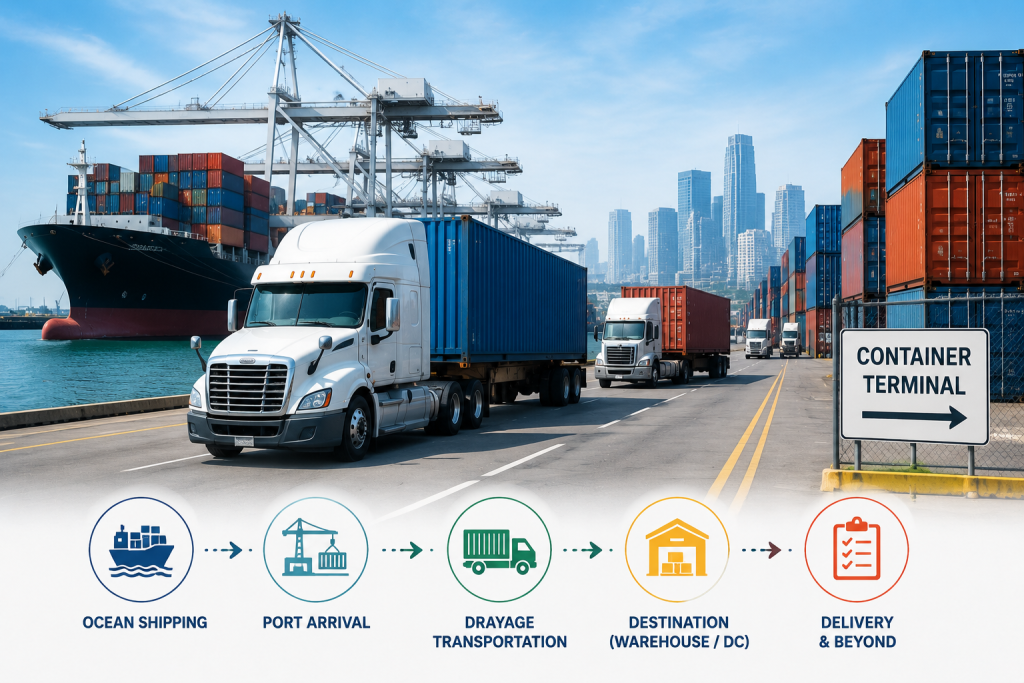
What is Drayage?
Drayage is short-distance transportation of shipping containers, usually from a port or rail terminal to a warehouse or final destination.
The term:
Comes from “dray,” an old word for a cart pulled by horses. Back in the day, drays moved goods from ships to warehouses. Now trucks do it, but the name stuck.
Distance:
Typically short hauls. Usually within the same metro area. Could be 10 miles, could be 100 miles, but rarely more than that. It’s not long-haul trucking across states.
Purpose:
Connects different parts of the supply chain. Gets containers from ships to trains, trains to warehouses, warehouses to stores. The critical first and last mile of international shipping.
Why it matters:
Without drayage, your imported goods sit at the port forever. It’s the essential link between ocean freight and your actual business location. Mess up drayage and your entire supply chain stalls.
According to the Federal Highway Administration, drayage operations handle millions of container moves annually at US ports alone. It’s a massive, essential part of logistics most people never think about.
When doing bulk product sourcing from China, drayage is your first logistics challenge once containers hit US soil.
How Drayage Works
The basic process, step by step:
1. Container arrives at port
Your ocean freight ship docks. Container gets unloaded onto the port. Sits in a container yard waiting for pickup.
2. You arrange drayage
Book a drayage company (often through your freight forwarder). Schedule pickup. Provide all necessary documentation.
3. Customs clearance
Container must clear customs before release. Your customs broker handles this. Need all the right paperwork: commercial invoice, packing list, bill of lading, entry documents.
4. Port releases container
Once customs clears and port fees are paid, port releases the container for pickup. You get a release number.
5. Drayage driver arrives
Truck driver goes to the port. Shows release documentation. Waits in line (sometimes hours during busy times).
6. Container loaded
Port loads your container onto the truck chassis. Driver secures it and inspects the seal.
7. Transportation
Driver hauls container from port to your warehouse or wherever it’s going. Could be direct delivery or to a rail yard for further transport.
8. Container delivered
Driver arrives at destination. Container gets unloaded (live unload) or dropped for later unloading (drop and hook). You have limited time—usually 2-4 hours—to unload before extra fees kick in.
9. Empty return
Empty container goes back to port or designated empty container yard. This is included in most drayage quotes but not always, so verify.
Timing:
The whole process can take a few hours to a few days depending on port congestion, customs issues, chassis availability, and scheduling.
Complications:
This assumes everything goes smoothly. Often doesn’t. Customs holds, missing paperwork, port congestion, chassis shortages, driver shortages—all cause delays.
Types of Drayage
Different situations need different drayage services:
Port Drayage:
Most common type. Picking up containers from seaports. Moving them to warehouses, distribution centers, or rail terminals. What most people mean when they say “drayage.”
Inter-Carrier Drayage:
Moving containers between different carriers or shipping lines. Container comes in on one shipping line, needs to go out on another. Transfer happens at the port.
Intra-Carrier Drayage:
Moving containers between facilities of the same carrier. Like moving from one terminal to another within the same port complex.
Expedited Drayage:
Rush service. When you need the container moved ASAP. Costs more but gets priority. Used when you’re up against deadlines or have time-sensitive cargo.
Shuttle Drayage:
Moving containers short distances within the same facility or between nearby facilities. Like moving from overflow storage to the main terminal.
Door-to-Door Drayage:
Pickup from shipper’s location, transport to port, then from destination port to final delivery. Complete service covering both ends.
Pier Drayage:
Moving containers from ship to storage area within the port itself. Very short distance moves.
Over-the-Road (OTR) Drayage:
Longer hauls that blur the line between drayage and regular trucking. Still considered drayage if part of intermodal shipping chain.
Most importers deal mainly with standard port drayage. Understanding the other types helps when you encounter unusual shipping situations.
Key Players in Drayage
Who’s actually involved in getting your container moved:
Drayage Companies:
Trucking companies specializing in container moves. Own trucks and chassis. Have relationships with ports. Handle the actual transportation. Can be large national firms or small local operators.
Freight Forwarders:
Coordinate your entire shipment including drayage. Book drayage on your behalf. Handle documentation. Act as intermediary between you and drayage company. Working with global sourcing partners usually includes freight forwarding.
Customs Brokers:
Clear your goods through customs. Without customs clearance, container can’t be released for drayage. Critical player even though they don’t touch the container physically.
Port Authorities:
Control the ports. Set rules, fees, operating hours. Release containers for pickup. Charge demurrage if containers sit too long.
Chassis Providers:
Own the wheeled frames containers sit on during transport. Can be owned by shipping lines, leasing companies, or drayage companies. Chassis shortages cause major delays.
Warehouse Operators:
Receive your containers. Unload them. Need to coordinate timing with drayage driver. Their operating hours and capacity affect drayage scheduling.
Shipping Lines:
Ocean carriers who brought your container. Own or lease many chassis. Set container return requirements. Charge detention fees if you keep containers too long.
Trucking Dispatchers:
Schedule and route drayage drivers. Coordinate pickups and deliveries. Handle last-minute changes and problems.
You (the Importer):
Provide documentation. Schedule deliveries. Pay fees. Communicate with all parties. Your decisions and timing affect everything.
All these players need to coordinate. When coordination breaks down, delays happen and costs rise. Having a China sourcing agent handle logistics coordination prevents many coordination failures.
Drayage Costs and Fees
What you’ll actually pay and why:
Base Drayage Rate:
The main charge for moving your container. Varies by distance, location, container size (20ft vs 40ft). Typically $150-$600 depending on distance and market. Major ports during busy seasons cost more.
Fuel Surcharge:
Extra fee based on current diesel prices. Usually calculated as percentage of base rate. Fluctuates with fuel costs. Can add 20-40% to base rate.
Chassis Rental:
If using separate chassis, might be charged daily. Rates vary but often $15-50 per day. Some drayage quotes include chassis, some don’t—clarify this.
Congestion Fees:
During peak seasons or port congestion, extra fees kick in. Can be $50-200+ per container. Not always transparent until you get the bill.
Wait Time:
If driver waits more than included time (usually 1-2 hours) for loading or unloading, hourly wait charges apply. Often $75-150 per hour.
Pre-Pull Charges:
Picking up container early and storing it temporarily. Useful to avoid port storage fees but costs extra. Usually $50-150.
Demurrage:
Port storage fees when container sits at port too long after ship arrival. Start after free time (typically 3-7 days). Can be $75-150 per day, escalating over time. Gets expensive fast.
Detention:
Charges for keeping container too long after pickup. Free time usually 2-5 days. Then daily charges kick in, similar to demurrage rates.
Per Diem:
Daily equipment rental fee charged by shipping line for container use. Overlaps with detention but charged by shipping line not port.
Overweight Fees:
Containers over weight limits (often 44,000 lbs) incur extra charges. Can be $100-500+ depending on how much over.
Accessorial Charges:
Extra services like liftgate, inside delivery, appointment scheduling, hazmat handling. Each adds cost.
Drop Fees:
If dropping container at your location instead of live unload. Usually $50-150.
Redelivery Fees:
If delivery fails (nobody there, wrong address, etc.), second attempt costs extra. Often full drayage rate again.
According to Freightos, drayage costs have increased significantly post-pandemic, with some routes seeing 50-100% increases during peak congestion.
Always get detailed quotes showing all fees. Hidden charges are common in drayage.
Common Challenges
Real problems you’ll run into:
Port Congestion:
Ports get backed up, especially major ones like LA/Long Beach. Truck wait times can hit 4-6 hours. Delays cascade through entire supply chain. Worst during peak shipping season (summer/fall).
Chassis Shortages:
Not enough chassis available when you need them. Driver shows up, no chassis to put container on. Pickup gets delayed. Particularly bad at busy ports.
Driver Shortages:
Not enough qualified drayage drivers. Companies can’t cover all the loads. Leads to delays and higher prices. Industry-wide problem getting worse.
Last Free Day Confusion:
Calculating when demurrage starts is confusing. Different ports have different rules. Easy to miscalculate and get hit with surprise fees.
Customs Holds:
Customs flags your shipment for inspection. Container sits waiting. Demurrage charges pile up while you wait for customs release. Can’t be predicted accurately.
Documentation Errors:
Wrong or missing paperwork delays everything. Bill of lading doesn’t match, wrong consignee name, missing entry documents. Container can’t be released until fixed.
Appointment Scheduling:
Many warehouses require appointments. Getting appointment slots during convenient times is hard. Warehouse hours might not match driver availability.
Communication Breakdowns:
Information doesn’t flow between all the parties. Port says container’s ready, customs broker says it’s not cleared, drayage company says chassis isn’t available. Figuring out who’s right takes time.
Equipment Damage:
Container arrives damaged. Driver refuses to accept it without notation. Creates delays and disputes about who’s responsible.
Street Turn Denials:
You want to take an empty container and use it for your export load (street turn) instead of returning it empty. Saves money. But shipping lines often deny permission. Have to return empty and get different container for your export.
Overweight Containers:
You don’t know container is overweight until driver weighs it. Can’t be moved legally. Need to de-stuff and redistribute weight. Massive delay and extra cost.
Weather Delays:
Severe weather shuts down ports or makes roads impassable. Everything backs up. Force majeure clauses might not protect you from charges.
Understanding these challenges helps you plan better. Build buffer time into schedules. Have backup plans. Using quality control services ensures proper documentation, preventing many avoidable delays.
Best Practices
How to handle drayage without losing your mind:
Book Early:
Don’t wait until last minute to arrange drayage. Book as soon as you know container arrival date. Capacity tightens during busy seasons. Early booking gets better rates and guaranteed service.
Understand Free Time:
Know exactly when demurrage and detention clocks start. Calculate your last free day precisely. Schedule pickup well before last free day to build in buffer.
Get Complete Documentation Ready:
Have commercial invoice, packing list, bill of lading, and all customs paperwork prepared before container arrives. Missing documents cause delays and cost money.
Communicate with Warehouse:
Coordinate delivery timing with whoever’s receiving the container. Confirm their operating hours, unloading capacity, appointment requirements. Don’t assume they can receive containers anytime.
Plan Unloading:
Have labor and equipment ready when container arrives. Standard free time is 2-4 hours. After that, wait charges apply. Know how long unloading actually takes and plan accordingly.
Track Your Container:
Monitor container progress from ship to port to release. Don’t wait for problems to find you. Proactive tracking lets you address issues before they become expensive.
Build Relationships:
Work with reliable drayage companies consistently. Relationships get you priority service during crunch times. Loyalty matters in this industry.
Understand True Costs:
Get detailed quotes including all potential fees. Compare total cost, not just base rates. Cheap base rate with high accessorial charges often costs more than higher base rate with fees included.
Have Backup Plans:
Main drayage company can’t cover your load? Have backup options identified. Port shuts down? Know alternative ports or routing options.
Consider Pre-Pull:
If demurrage is about to start but you can’t get container delivered yet, pre-pull gets it out of port storage. Costs money but often less than demurrage.
Use Technology:
Drayage management platforms provide visibility and automate coordination. Reduces phone tag and email chains. Catches problems earlier.
Consolidate When Possible:
Multiple containers? Try to schedule them together. Often get better rates. Easier for drayage company to optimize routing.
Verify Weight:
Know your container weight before pickup. Overweight surprises cause major problems. Include buffer in weight calculations—containers often weigh more than you think.
Read the Fine Print:
Drayage contracts and quotes have terms and conditions. Cancellation policies, force majeure clauses, dispute resolution. Read them before problems happen.
Working with procurement outsourcing services often includes drayage management, taking this headache off your plate entirely.
Technology and Tracking
Modern tools making drayage less painful:
Transportation Management Systems (TMS):
Software platforms managing the entire drayage process. Book loads, track containers, handle documentation, process payments. Bigger importers use these. Can integrate with warehouse systems.
Real-Time GPS Tracking:
Know exactly where your container is at any moment. Driver location, estimated arrival time, route taken. Reduces anxiety and helps coordinate receiving.
Electronic Data Interchange (EDI):
Automated document exchange between parties. Port, customs, drayage company, warehouse all share information electronically. Reduces manual data entry and errors.
Port Appointment Systems:
Many ports now require appointments for container pickup. Online systems let you schedule pickup time slots. Reduces port congestion and wait times. But adds coordination complexity.
Chassis Visibility Platforms:
Shows chassis availability by location in real-time. Helps drayage companies find chassis faster. Some ports and leasing companies provide this.
Drayage Marketplaces:
Digital platforms connecting shippers with drayage carriers. Like Uber for containers. Can get instant quotes, book loads, track shipments. Growing in popularity. Examples: Drayage.com, NEXT Trucking.
Automated Alerts:
Systems send notifications when container arrives, customs clears, pickup scheduled, delivery completed. Keeps everyone informed without constant phone calls.
Mobile Apps:
Drivers use apps to receive assignments, update status, capture proof of delivery, report problems. Dispatchers see everything in real-time.
Blockchain (Emerging):
Some companies experimenting with blockchain for transparent documentation and payments. Still mostly experimental but gaining traction.
AI and Machine Learning:
Predicting port congestion, optimizing routes, forecasting delays. Still developing but getting better at anticipating problems.
According to the American Journal of Transportation, technology adoption in drayage accelerated dramatically during COVID disruptions. Digital platforms handled congestion better than traditional phone-and-email operations.
You don’t need all this technology for small volumes. But knowing what exists helps you choose service providers using modern systems.
FAQs About Drayage
What does drayage mean in shipping?
Drayage is short-distance transportation of shipping containers, typically from a port or rail terminal to a warehouse or distribution center. It’s the first leg of inland transportation after your container arrives at the port.
How much does drayage cost?
Drayage typically costs $150-$600 for the base rate depending on distance and location, plus fuel surcharges, chassis fees, and potential accessorial charges. Total costs including all fees usually range from $250-$1,000+ per container depending on circumstances.
What’s the difference between drayage and cartage?
Drayage specifically refers to container transportation, usually intermodal shipping. Cartage is a broader term for any short-distance freight movement, including non-containerized goods. All drayage is cartage, but not all cartage is drayage.
Who pays for drayage?
Usually the importer (buyer) pays drayage costs as part of getting goods from the port to their facility. Under FOB shipping terms, buyer arranges and pays for all transportation after the port of origin. Under DDP terms, seller pays. Check your Incoterms.
How long does drayage take?
Drayage itself (the drive) might take 1-4 hours depending on distance. But total time from container arrival to delivery can be 2-7 days factoring in customs clearance, scheduling, and potential delays. During port congestion, can take longer.
What is demurrage vs detention in drayage?
Demurrage is port storage fees when your container sits at the port terminal too long before pickup. Detention is equipment fees charged when you keep the container too long after pickup before returning it empty. Both are daily charges that escalate over time.
Do I need a customs broker for drayage?
Yes, you need customs clearance before drayage can happen. Customs brokers handle the clearance process. Without customs release, the port won’t release your container for pickup no matter who you’ve hired for drayage.
What is a chassis in drayage?
A chassis is the wheeled trailer frame that containers sit on during truck transport. Containers don’t have wheels—they need to be placed on a chassis to be moved by truck. Chassis availability significantly impacts drayage operations.
Can I pick up my own container from the port?
Generally no unless you’re a licensed carrier with proper insurance, equipment, and port access credentials. Ports require professional drayage carriers with specific qualifications. DIY container pickup isn’t realistic for most businesses.
What happens if I miss my drayage appointment?
Missing appointments can result in rescheduling fees, loss of your time slot (requiring rebooking), and potential demurrage charges if the container sits at the port longer. Some drayage companies charge cancellation fees. Always communicate schedule changes as early as possible.
Final Word on Drayage
Drayage seems like it should be simple. Pick up container, drive it somewhere, drop it off. Done.
Reality is way more complicated. Coordination between multiple parties. Tight timing windows. Confusing fee structures. Equipment shortages. Port congestion. Documentation requirements. Any one thing going wrong delays everything.
But drayage isn’t optional. If you’re importing goods, you’re dealing with drayage whether you manage it yourself or pay someone else to handle it. Understanding how it works, what it costs, and where problems hide helps you avoid expensive mistakes.
The businesses that handle drayage well build it into their planning from the start. Calculate realistic timing. Budget for all potential fees. Work with reliable providers. Track everything. Have backup plans.
The businesses that handle it poorly? They scramble when containers arrive. Pay rush fees. Rack up demurrage charges. Experience delays that ripple through their entire operation. Small drayage mistakes create big business problems.
Know drayage. Plan for it. Budget for it. Don’t let the “last mile” become your most expensive mile.
Need help managing drayage and logistics for your imports? Contact us to discuss your shipping needs. Want to optimize your entire supply chain including drayage? Book a consultation and we’ll identify ways to cut costs and reduce delays.