
Best fabric for pants-Guide
Think all pants are basically the same? Think again.
Throw on some cheap polyester slacks during a heatwave and you’ll feel like you’re trapped in a sauna. Switch to a decent pair of linen trousers and suddenly the heat doesn’t seem so bad. Same body, same weather, totally different experience. The cut didn’t change. The brand name on the tag didn’t matter. It came down to one thing: the fabric.
Here’s the deal. What your pants are made from decides pretty much everything that matters. How soft they feel. Whether air moves through them or your legs just cook. How many months before the knees give out. Whether you step out looking crisp or crumpled.
Maybe you’re picking pants for yourself. Maybe you’re sourcing them for a clothing brand. Either way, getting fabric right saves cash and spares you a world of frustration. So let’s break down 10 materials that actually matter, with the real upsides and downsides for each.
Table of Contents
| # | Fabric | Best For | Key Traits |
| 1 | Cotton | Everyday casual wear | Soft, breathable, versatile |
| 2 | Denim | Jeans, durable casual | Tough, rugged, long-lasting |
| 3 | Polyester | Athletic, budget wear | Durable, wrinkle-resistant, cheap |
| 4 | Wool | Dress pants, cold weather | Warm, structured, breathable |
| 5 | Linen | Summer, hot climates | Lightweight, cool, breathable |
| 6 | Khaki/Chino | Smart casual | Crisp, structured, versatile |
| 7 | Corduroy | Fall/winter casual | Warm, textured, durable |
| 8 | Spandex/Elastane Blends | Stretch, athletic | Flexible, form-fitting, comfortable |
| 9 | Nylon | Outdoor, technical wear | Water-resistant, lightweight, strong |
| 10 | Rayon/Viscose | Drapey, dressy casual | Silky, breathable, flowing |
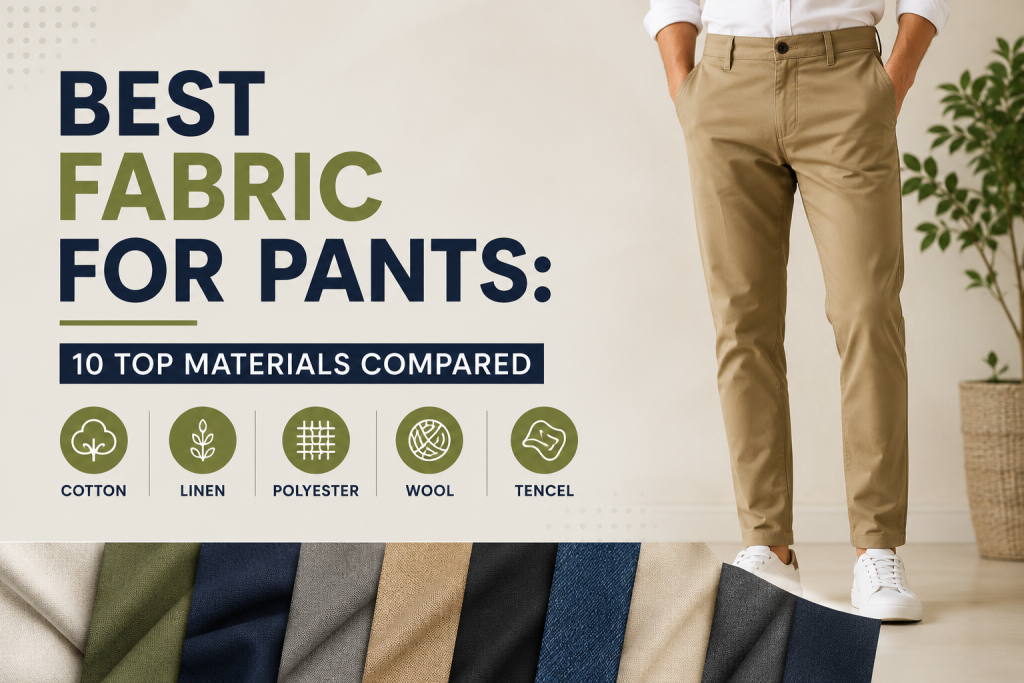
Types of best fabric for pants
1. Cotton
The go-to fabric for casual pants. Natural, comfy, you’ll find it everywhere.
What it feels like:
Soft on your skin. Lets air through so you’re not sweating buckets. Comes in all sorts of weights, from feather-light to heavy stuff.
The good:
It’s comfortable and soft. Breathes nicely, so it’s solid for warm days. Natural fiber, nothing synthetic about it. Toss it in the wash, no fuss. Easy on the wallet. Works across loads of styles. Actually gets softer every time you wash it. And it’s gentle if your skin throws fits at synthetics.
The not-so-good:
Wrinkles the second you sit down. Shrinks on you if you get careless with hot water. Colors fade over time. Doesn’t pull sweat away well. Hangs onto moisture longer than synthetics do. And pure cotton? No stretch whatsoever.
Who it’s for:
Casual pants, everyday trousers, summer wear, anyone whose skin reacts to synthetic stuff.
Cost:
Budget to mid-range. One of the friendlier prices out there.
According to Cotton Incorporated, cotton stays the most preferred fabric for casual clothing because it nails that balance of comfort, breathability, and price.
If you’re getting into bulk product sourcing from China, cotton pants make a safe first move for most clothing lines.
2. Denim
Cotton’s rougher, tougher relative. The stuff that built the blue jean empire.
What it feels like:
Heavy cotton twill weave. Rugged. Durable as anything. Starts out stiff, then breaks in and molds to your shape over time.
The good:
Tough as nails. Lasts years if you treat it halfway decent. That classic look never goes out of style. Honestly gets better with age. Shrugs off rough treatment. Plays nice across casual styles. Hides stains like a champ. Wears well in any season.
The not-so-good:
Heavy, and stiff until you break it in. Takes ages to dry after washing. Forget about breathability in summer. Can feel like cardboard before it loosens up. Bleeds color the first few washes. Pure denim has zero stretch, though blends sort that out.
Who it’s for:
Jeans, everyday casual, anything rugged, folks who want pants that won’t quit.
Cost:
All over the map. Budget options to seriously premium stuff.
Quick tip:
Denim weight is measured in ounces, and it matters. Lighter stuff (under 12oz) feels softer and cooler. Heavier (14oz and up) lasts forever but feels stiff.
3. Polyester
The synthetic grinder. Cheap, durable, all over budget clothing racks.
What it feels like:
Smooth synthetic fiber. Barely wrinkles. Keeps its shape. Can feel a touch plasticky next to natural fibers.
The good:
Seriously durable. Won’t wrinkle on you. Holds color, doesn’t fade. Dries fast. Cheap to make. Won’t shrink or stretch out. Easy care all around. And the technical versions wick moisture, which is great for athletic gear.
The not-so-good:
Doesn’t breathe, traps heat against you. Can feel cheap and synthetic. Holds onto smells. Not exactly eco-friendly, it’s basically plastic from petroleum. Gets sweaty fast in heat. Static cling drives some people nuts. And it’ll melt if it gets too close to high heat.
Who it’s for:
Athletic pants, budget clothing, uniforms, travel pants you don’t want to iron.
Cost:
Budget. About as cheap as it gets.
Usually mixed:
You rarely see pure polyester in decent pants. It’s typically blended with cotton or spandex to feel better while keeping that durability.
According to the Textile Exchange, polyester rules global fiber production thanks to its low cost and flexibility, though the environmental worries keep piling up.
4. Wool
The premium pick for dress pants and cold weather. Natural, warm, classy.
What it feels like:
Natural fiber straight from sheep. Warm, yet somehow still breathable. Holds its structure beautifully. Feels substantial, like quality.
The good:
Insulates like a dream, keeps you toasty when it’s freezing. Surprisingly breathable for something so warm. Resists wrinkles naturally. Drapes and holds shape gorgeously. Wicks moisture on its own. Doesn’t hold odors. Looks sharp and sophisticated. Lasts ages if you care for it. Even resists flames.
The not-so-good:
Pricey. Often needs dry cleaning. Can itch, depending on the type. Way too warm for summer. Moths love it. Shrinks if you wash it wrong. And it’s heavier than synthetic stuff.
Who it’s for:
Dress pants, suits, cold-weather trousers, anywhere you need to look professional.
Cost:
Premium, especially the fine stuff like merino.
Type matters a lot:
Merino is soft and fine. Worsted wool runs smooth for suits. Tweed is rugged and textured. Each one fits a different job.
When you bring in a China sourcing agent, double-check wool content and quality grade, because wool blends are all over the place.
5. Linen
The summer hero. Made from flax, built for surviving the heat.
What it feels like:
Light, textured, natural. Breathes like crazy. Has that relaxed, slightly rumpled vibe that’s honestly part of the appeal.
The good:
Breathes better than almost anything. Keeps you cool when it’s brutal out. Light as a feather. Wicks moisture. Softens up with every wash. Eco-friendly too, since flax barely needs water to grow. Naturally fights bacteria. And it’s tough for something so lightweight.
The not-so-good:
Wrinkles like nobody’s business. Feels a bit rough at first. Costs more. That crumpled look isn’t everyone’s thing. Lacks structure. Can go see-through if it’s too thin. And it shrinks unless it’s been pre-washed.
Who it’s for:
Summer pants, beach days, hot climates, anyone who likes a relaxed look.
Cost:
Mid to premium. More than cotton, for sure.
Just accept the wrinkles:
Linen wrinkles. That’s just what linen does. People who love it have made peace with this. It’s part of the whole aesthetic.
6. Khaki/Chino (Cotton Twill)
The smart-casual MVP. Cotton twill that walks the line between casual and dressy.
What it feels like:
Tightly woven cotton twill. Crisp but still comfy. More put-together than plain cotton, more laid-back than dress pants.
The good:
Crazy versatile, dress them up or down. Durable. Comfortable. Holds shape better than basic cotton. Looks professional yet casual. Breathes well. Simple to care for. And the style never really dies.
The not-so-good:
Still wrinkles, just less than plain cotton. Can fade. Limited stretch unless it’s blended. Not as warm as wool. And that casual look means they won’t cut it for formal events.
Who it’s for:
Smart casual, office casual, everyday wear, the wardrobe staple everyone needs.
Cost:
Budget to mid-range. Solid value for how versatile they are.
The wardrobe workhorse:
Chinos go with practically everything. Throw on a blazer and you’re dressed up. Pair them with a tee and you’re chilling. That kind of flexibility is why they’re a must-have.
For global sourcing of versatile pants, chinos hit a wide market.
7. Corduroy
The textured cold-weather choice. Cotton with those signature ridges running down it.
What it feels like:
Cotton fabric with vertical ribs, called wales. Soft, warm, textured. Has this vintage, cozy thing going on.
The good:
Warm and snuggly. Durable. Soft texture. Stands out with that distinctive look. Perfect for fall and winter. Comfortable. Hides wear nicely. And the classic style keeps cycling back into fashion.
The not-so-good:
Way too warm for summer. The wales flatten out over time as you wear them. Looks dated to some folks. Heavier than regular cotton. Collects lint like a magnet. And the fit runs bulkier.
Who it’s for:
Fall and winter casual, vintage-inspired looks, cooler climates.
Cost:
Mid-range. Roughly the same as quality cotton.
Wale width is key:
Wide wale is chunky and casual. Fine wale, sometimes called pinwale, looks more refined and dressy. Pick based on the vibe you’re after.
8. Spandex/Elastane Blends
The stretch ingredient. Mixed into other fabrics to add flex and comfort.
What it feels like:
Spandex, also called elastane or Lycra, almost never goes it alone. It gets blended in small doses, usually 2 to 5%, with other fabrics to bring the stretch.
The good:
Adds stretch and flexibility. Makes fit and comfort way better. Lets you actually move. Hugs your body. Bounces back to shape. Stops that knee sag. Brilliant for active wear. And it makes stiff fabrics actually wearable.
The not-so-good:
Pure spandex is useless for pants. Loses elasticity over time. Heat wrecks it. The blends cost more. Can feel too tight if there’s too much. And it’s synthetic.
Who it’s for:
Stretch jeans, athletic pants, leggings, fitted styles, anything that needs to move with you.
Cost:
Depends on the base fabric. The spandex itself adds a modest bump.
A little goes a long way:
Just 2 or 3% spandex turns stiff fabric into comfy, flexible pants. That’s exactly why almost every modern pant has a bit of stretch baked in.
9. Nylon
The technical specialist. Strong, water-resistant, made for the great outdoors.
What it feels like:
Synthetic fiber that’s light but seriously tough. Shrugs off water. Shows up a lot in outdoor and technical pants.
The good:
Strong and durable. Resists water. Lightweight. Dries fast. Stands up to abrasion. Great for outdoor stuff. Blocks wind. And it packs down tiny.
The not-so-good:
Doesn’t breathe, traps the heat. Feels synthetic. Not ideal for everyday casual. Holds odors. Static cling. Not eco-friendly. And it’s kind of noisy, with that swishy sound when you walk.
Who it’s for:
Outdoor pants, hiking gear, technical wear, rain pants, activewear.
Cost:
Mid-range. The technical versions run higher.
Often blended:
Nylon mixes with spandex for stretchy technical pants, or with other fibers when you need specific performance traits.
According to REI’s expert advice, nylon is the favorite for outdoor pants because it brings together durability, water resistance, and quick drying, which active use demands.
10. Rayon/Viscose
The drapey contender. Semi-synthetic fabric with a silky hand.
What it feels like:
Made from processed wood pulp. Silky, smooth, drapes like a dream. Breathes like a natural fiber but feels luxurious.
The good:
Silky soft. Breathable. Drapes beautifully. Lightweight. Gives you that luxe feel without the luxe price. Soaks up color well. Comfortable. And it’s versatile for dressy casual stuff.
The not-so-good:
Wrinkles in a heartbeat. Goes weak when wet. Can shrink. Needs gentle washing. Less durable than cotton. Not built for heavy use. And the semi-synthetic process leans on chemicals.
Who it’s for:
Drapey trousers, dressy casual pants, flowing styles, warm-weather dress pants.
Cost:
Mid-range. Affordable for how upscale it feels.
Handle with care:
Rayon weakens when wet, so wash it gently. A lot of rayon pants are dry-clean only or want hand washing.
Bringing in quality control services helps you verify fabric content and quality before placing bulk orders, especially with blends where the exact composition matters.
How to Choose the Right Pants Fabric
Picking the best fabric really comes down to what you care about most:
Want everyday comfort?
Cotton or cotton blends. Soft, breathable, easy to care for.
Need them to last?
Denim or polyester blends. Built to take a beating.
Battling the heat?
Linen or lightweight cotton. Cool and breathable.
Facing the cold?
Wool or corduroy. Warm and insulating.
Dressing for work?
Wool or quality chinos. Sharp and structured.
Hitting the gym?
Polyester or nylon blends with spandex. Flexible and sweat-wicking.
Need versatility?
Chinos or cotton blends. Dress them up, dress them down.
Want to move freely?
Anything with 2 to 5% spandex. That bit of stretch changes everything.
Care about the planet?
Linen, organic cotton, or wool. Natural and sustainable.
What to Think About When Buying
Climate:
Hot weather wants breathable fabrics like linen and cotton. Cold weather wants warmth from wool and corduroy.
Activity level:
Active use needs durability and stretch. Sitting around mostly? Comfort wins.
Care requirements:
Some fabrics like wool and rayon need special handling. Others like polyester and cotton just go in the wash.
Occasion:
Formal calls for wool or quality blends. Casual opens up your options.
Budget:
Natural premium fabrics like wool and linen cost more. Synthetics and cotton are easy on the wallet.
Stretch needs:
Want flexibility? Hunt for spandex blends. Prefer structure? Stick with rigid or pure fabrics.
For supplier negotiation and cost optimization, keep in mind that fabric choice drives 40 to 60% of your production cost. The material you pick hits your margins and retail pricing directly.
Fabric Comparison Chart
| Fabric | Breathability | Durability | Comfort | Wrinkle Resistance | Price |
| Cotton | High | High | High | Low | Low-Mid |
| Denim | Low | Very High | Mid | High | Low-High |
| Polyester | Low | High | Mid | Very High | Low |
| Wool | High | High | High | High | High |
| Linen | Very High | Mid-High | High | Very Low | Mid-High |
| Chino | Mid | High | High | Mid | Low-Mid |
| Corduroy | Mid | High | High | Mid | Mid |
| Spandex Blend | Varies | Mid | Very High | Mid | Varies |
| Nylon | Low | Very High | Mid | High | Mid |
| Rayon | High | Mid | High | Low | Mid |
FAQs About Pants Fabric
What is the best fabric for pants?
There’s no single winner here. Cotton takes everyday comfort, wool owns dress pants and warmth, linen rules hot weather, denim brings the durability, and polyester blends handle budget-friendly easy care. Your best pick depends on your climate, what you’re doing, and the occasion.
What is the most comfortable fabric for pants?
Cotton and cotton blends with a touch of spandex are usually the comfiest for everyday wear. They’re soft, breathable, and they flex with you. For dress pants, fine merino wool delivers comfort with class. Rayon feels silky and comfortable too.
What fabric is best for hot weather pants?
Linen wins for hot weather, hands down. It breathes incredibly well, weighs almost nothing, and keeps you cool. Lightweight cotton is a decent backup. Steer clear of polyester and nylon in the heat, since they lock in moisture and warmth.
What is the most durable fabric for pants?
Denim and polyester top the durability list. Denim handles rough treatment and lasts years, while polyester fights off wear, wrinkles, and fading. Nylon also holds up remarkably well against abrasion for technical and outdoor pants.
Are cotton or polyester pants better?
Depends what you need. Cotton breathes better, feels more comfortable, and it’s natural, making it the better call for everyday casual. Polyester is more durable, resists wrinkles, and costs less, so it shines for athletic wear and easy care. Blends grab the best of both.
Why do pants have spandex in them?
Spandex, or elastane, gets added in small amounts (2 to 5%) to bring stretch and flexibility. It boosts comfort, frees up your movement, helps pants keep their shape, and stops the knees from sagging. That’s exactly why most modern pants come with a bit of stretch.
What fabric doesn’t wrinkle for pants?
Polyester resists wrinkles best, with wool and nylon close behind. Cotton, linen, and rayon wrinkle easily. For travel or low-maintenance days, polyester blends or wool keep looking sharp without you reaching for the iron.
Is wool good for pants?
Absolutely, wool is fantastic for dress pants and cold-weather trousers. It’s warm, breathable, fights wrinkles, drapes beautifully, and looks polished. The catches are the higher price and the special care it needs. Merino and worsted wool are the popular go-tos.
What is the best fabric for work pants?
For office work, wool or quality cotton chinos look professional and stay comfortable. For physical or manual labor, durable cotton duck, denim, or polyester-cotton blends take the wear and tear better while offering some protection.
What fabric is best for summer dress pants?
Linen and lightweight tropical-weight wool are your best bets for summer dress pants. Linen keeps you cool but wrinkles, while tropical wool stays breathable and looks polished. Cotton-linen blends strike a nice middle ground between coolness and structure.
Final Word on Pants Fabric
Fabric makes the pants. Take the exact same design, switch the material, and you’ve basically got a different garment.
The right fabric hangs entirely on what you need it to do. Trying to survive a heatwave? Linen’s your friend. Need them to take a pounding? Denim or polyester. Want to look sharp at the office? Wool or quality chinos. After comfort and freedom of movement? Anything with a hint of spandex.
There’s no one fabric that beats all the others. There’s just the right fabric for your particular situation. A linen trouser that’s perfect for a beach getaway would be straight-up miserable in January. Wool dress pants that look incredible at a meeting would turn a summer hike into torture.
Get familiar with these 10 fabrics and you can make smart calls. Building out your own closet or sourcing pants for a brand, knowing what each material does well and where it falls flat leads to way better decisions.
Match the fabric to the job. Nail that, and your pants will feel good, hang in there for the long haul, and actually do what you bought them for.
Need a hand sourcing quality pants with the right fabrics for your brand? Contact us to talk through your requirements. Ready to kick off production with the perfect material? Book a consultation and we’ll help you pick fabrics, line up suppliers, and lock in quality standards.