
Let’s talk about the part of buying on Alibaba that quietly drives people up the wall. Not finding products. Not haggling prices. Shipping.
You spot a brilliant deal, the unit price looks unreal, you do a little happy dance, then the shipping quote rolls in and wipes the smile clean off your face. Suddenly that bargain doesn’t look like such a bargain anymore.
Sound familiar? You’re definitely not alone. Alibaba shipping confuses just about everyone at first, because it isn’t one simple flat rate. It bends and shifts depending on what you’re buying, how much, how heavy, how fast you need it, and which method you pick.
So let’s clear the fog. We’re breaking down exactly how Alibaba shipping works, why it costs what it costs, how long it takes, and the real tricks to trim that bill down, whether you’re grabbing a single sample or shipping a full container.
Table of Contents
| # | Question | What You’ll Learn |
| 1 | How Alibaba Shipping Works | The basic mechanics |
| 2 | Shipping Methods Explained | Courier, air, sea |
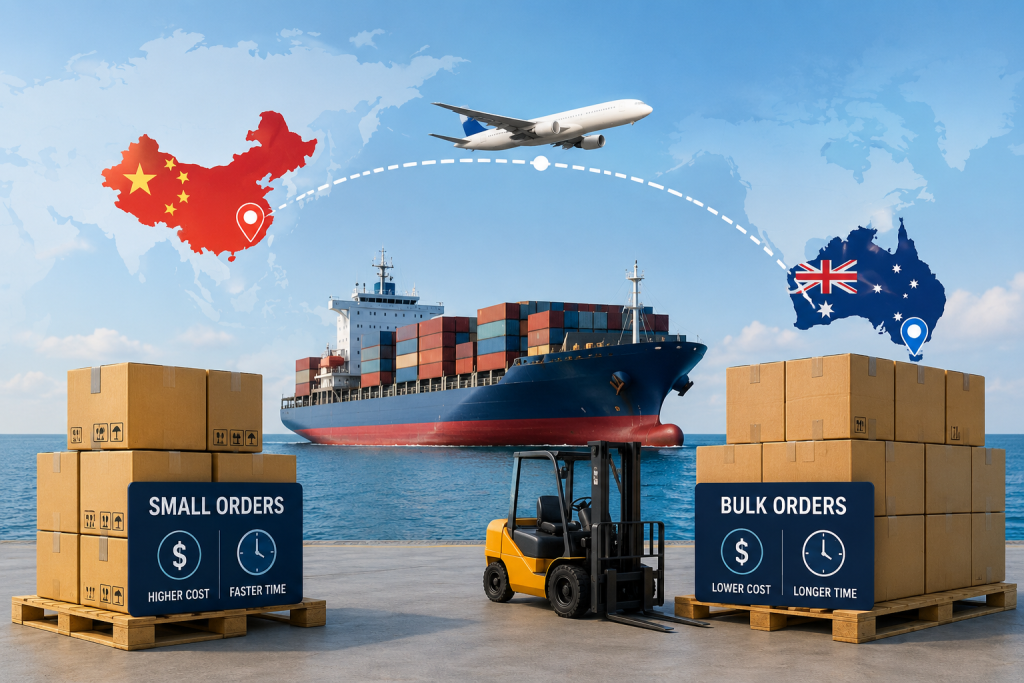
| 3 | Small vs Bulk Orders | Key differences |
| 4 | Why It’s So Expensive | The real reasons |
| 5 | How Long Shipping Takes | Realistic timeframes |
| 6 | How to Lower Costs | Money-saving tactics |
| 7 | Can You Get Free Shipping | The honest answer |
| 8 | How to Track Shipments | Staying in the loop |
Alibaba shipping Detail Guide
How Does Alibaba Shipping Work?
First things first. Alibaba itself doesn’t actually ship your goods. That surprises a lot of newcomers.
Alibaba is a marketplace, a giant matchmaking platform connecting you with suppliers, mostly factories and trading companies in China. The shipping side is arranged between you and the individual supplier, or through a freight forwarder you bring in yourself.
So when you check out a listing, the shipping cost you see usually comes from one of a few sources. The supplier quotes it directly based on your destination and order size. Alibaba’s own logistics service (Alibaba Logistics or Freight) generates an estimate. Or you arrange shipping completely separately through your own forwarder.
Here’s the key thing to grasp. Shipping cost depends on three big factors working together: the weight and volume of your goods, the distance to your country, and the shipping method you choose. Change any one of those and the price moves, sometimes dramatically.
For anyone doing serious bulk product sourcing from China, understanding this structure is the first step to controlling your costs rather than getting blindsided by them.
Alibaba Shipping Methods Explained
Alibaba gives you several ways to get goods from China to your door. Each suits a different situation, and picking the wrong one is how people overpay.
Express courier (DHL, FedEx, UPS):
Door-to-door delivery in roughly 3 to 7 days. The couriers usually handle customs for you, which makes life easy. The catch? It’s the priciest option per kilo. Best for samples, small parcels, and urgent orders.
Air freight:
Goods fly via cargo planes, landing in around 5 to 12 days depending on the route and customs. Cheaper than express courier for medium-weight shipments, but you’ll often need to handle customs clearance and final delivery yourself. Good middle ground for moderately sized orders.
Sea freight:
The bulk champion. Goods travel by ocean container, taking anywhere from 20 to 45 days. By far the cheapest per unit for large or heavy shipments. You ship either FCL (full container load) when you’ve got enough to fill a container, or LCL (less than container load) when you share space with other shippers.
Rail freight:
Available for some destinations (especially Europe), offering a middle path between sea and air on both cost and speed. Less common for Australia, the US, and other overseas markets.
The honest takeaway? Express for tiny and urgent, air for medium, sea for big. Match the method to your order and you’ll never wildly overpay.
According to Freightos, shipping rates fluctuate constantly with fuel prices, demand, and seasonal peaks, which is why two identical shipments can cost different amounts months apart.
Small Orders vs Bulk Orders
This is where the whole picture splits in two. Shipping a sample behaves completely differently from shipping a pallet, and knowing the difference saves real money.
Small orders (samples, a few units):
For tiny shipments, express courier almost always wins. It’s quick, it handles customs, and the per-shipment cost, while high per kilo, stays manageable for small parcels. The downside is that shipping can easily cost more than the products themselves. A $20 sample with $40 shipping is normal and not worth stressing over, it’s just the cost of checking quality before you commit.
Bulk orders (cartons, pallets, containers):
Here, sea freight takes over. The per-unit shipping cost plummets when you ship in volume. A product that costs $50 to ship one of via courier might cost cents per unit by sea in a full container. This is exactly why bulk importing works financially, the shipping economics flip in your favor as volume climbs.
The crossover point:
Somewhere between a handful of units and a few cartons, the math shifts from “courier makes sense” to “air or sea makes sense.” Roughly speaking, once your shipment exceeds 100 to 200 kg, sea freight usually becomes the cheaper route despite the slower speed.
The strategic move:
Smart importers use small courier orders to sample and test products cheaply, then switch to sea freight for the real bulk order once they’re confident. You eat the high courier cost upfront to avoid the far bigger risk of bulk-ordering something that disappoints.
When you work with a China sourcing agent, they help you nail this transition, consolidating orders and picking the right method so you’re never paying courier rates on a shipment that should go by sea.
Why Is Alibaba Shipping So Expensive?
Let’s tackle the question everyone asks. Why does shipping sometimes cost more than the goods?
Distance and fuel:
You’re moving physical goods thousands of kilometers across the planet. Fuel, handling, and logistics infrastructure all cost money, and those costs get passed to you.
Small shipments are inefficient:
Shipping one or two items is wildly inefficient compared to filling a container. Couriers charge premium rates for small parcels because the overhead per shipment is high regardless of size. This is why small orders feel so brutally expensive proportionally.
Dimensional weight:
Here’s a sneaky one. Couriers and air freight charge based on whichever is greater: actual weight or “dimensional weight” (the space your package occupies). A big, light box can cost as much as a small, heavy one. Bulky lightweight products get punished here.
Fuel surcharges and fees:
The headline rate rarely tells the whole story. Fuel surcharges, handling fees, residential delivery fees, and remote-area surcharges all pile on. The final bill often exceeds the initial quote.
Customs, duties, and taxes:
These aren’t technically “shipping” but they hit at the same time. Import duties, GST or VAT, and customs brokerage can add significantly to your landed cost, catching first-timers off guard.
Peak season spikes:
Around Chinese New Year and major shopping seasons, demand surges and rates climb. Timing your shipments matters more than people realize.
The reassuring truth? Shipping feels expensive on small orders because of inefficiency, not because you’re being ripped off. Scale up and the per-unit cost drops sharply, which is the whole point of buying wholesale.
How Long Does Alibaba Take to Ship?
Patience is part of the game with Alibaba, but knowing realistic timeframes helps you plan instead of panic.
The two phases:
Total time splits into production time plus shipping time. People often forget the first part. Your supplier needs to actually make or prepare your goods before anything ships.
Production time:
For in-stock items, this might be just a day or two. For made-to-order or customized products, expect anywhere from one to four weeks, sometimes longer for complex or large orders. Always confirm production lead time before ordering.
Shipping time by method:
Express courier runs about 3 to 7 days. Air freight lands around 5 to 12 days. Sea freight takes 20 to 45 days depending on the route, plus extra time for customs clearance and final delivery on your end.
Customs clearance:
This is the wildcard. With correct paperwork, clearance can be quick. With errors or random inspections, it can add days or even weeks. Good documentation keeps this smooth.
Realistic total timelines:
A sampled, in-stock product via courier might arrive in a week or so. A custom bulk order by sea could easily take 6 to 10 weeks from order to delivery once you add production, shipping, and clearance. Plan your inventory and cash flow around these realities.
The golden rule? Always ask your supplier for both production lead time and shipping time upfront, then add a buffer for customs. Underestimating timing is how businesses run out of stock at the worst possible moment.
How to Lower Alibaba Shipping Costs
Now for the good stuff. Here are the genuine ways to shrink that shipping bill without cutting corners that matter.
Order in larger volumes:
The single biggest lever. Per-unit shipping drops sharply as volume rises. If you can consolidate orders or buy enough to justify sea freight, you slash the cost dramatically.
Choose the right method:
Don’t pay courier rates on a shipment that should go by sea. Matching the method to the order size is the easiest way to stop overpaying instantly.
Consolidate shipments:
Buying from multiple suppliers? Consolidate everything into one shipment rather than paying separate freight on each. A forwarder or sourcing agent can pool your goods together.
Optimize packaging:
Because of dimensional weight, bulky packaging costs you. Ask suppliers to pack efficiently, removing wasted space and using right-sized boxes to lower the chargeable weight.
Negotiate with suppliers:
Shipping costs are sometimes negotiable, especially on larger orders. Suppliers with good freight relationships can pass on better rates. Always ask.
Use your own freight forwarder:
For regular or larger shipments, a dedicated freight forwarder often beats the supplier’s default shipping quote, sometimes substantially. They specialize in getting better rates.
Time your orders:
Avoid shipping around Chinese New Year and peak seasons when rates spike. Plan ahead and ship in quieter windows when possible.
Compare Incoterms:
Understand whether you’re quoted EXW, FOB, CIF, or DDP. Each shifts responsibility and cost differently. FOB is common and lets you control freight, while DDP bundles everything but can hide markups.
This is precisely where supplier negotiation and cost optimization pays off, since shaving shipping costs directly fattens your margins on every single order.
Can You Get Free Shipping?
The honest answer? Sort of, but not really. Let’s be straight about it.
“Free shipping” listings:
Some Alibaba listings advertise free shipping, especially for samples or small orders. But here’s the reality, the shipping cost is almost always baked into the product price. Nothing is truly free, the supplier just absorbs it into what you pay. For small samples this can be a genuine convenience, even if you’re indirectly footing the bill.
Sample shipping deals:
Suppliers sometimes offer free or discounted sample shipping to win your business, betting you’ll place a bulk order later. This is a real perk worth asking about, since it lowers your cost of testing products.
Bulk order leverage:
On large orders, you can sometimes negotiate the supplier to cover or heavily discount shipping as part of the deal. Again, it’s usually folded into pricing, but it can still work in your favor when negotiated well.
The realistic view:
Don’t chase free shipping as a goal. On real bulk orders, shipping is a genuine cost that someone always pays. Your energy is better spent lowering the actual cost through volume, method choice, and negotiation, rather than hunting for a “free” label that just hides the cost elsewhere.
Bottom line? Treat free shipping offers as a nice bonus on samples, not a strategy for serious importing. The smart money focuses on lowering real costs, not chasing illusions.
How to Track Alibaba Shipments?
Once your goods are on the move, you’ll want to keep tabs on them. Here’s how tracking actually works.
Through Alibaba’s platform:
If you ordered using Trade Assurance or Alibaba Logistics, you can often track your shipment directly within your Alibaba account, where status updates appear as the goods move.
Courier tracking:
For express shipments via DHL, FedEx, or UPS, your supplier provides a tracking number. Pop it into the courier’s website and you get detailed, real-time tracking right to your door. This is the easiest method to follow.
Air and sea freight tracking:
For air and sea, your freight forwarder or shipping line provides tracking, often via a bill of lading or booking number. Updates are less frequent than courier tracking, you’ll see milestones like “departed port” and “arrived destination” rather than minute-by-minute movement.
Communicate with your supplier:
Honestly, the simplest tracking tool is often just staying in touch with your supplier. Good suppliers proactively share shipping updates, documents, and tracking details. If yours goes quiet, ask directly.
Use a forwarder or agent:
A freight forwarder or sourcing agent handles tracking for you, chasing updates and flagging delays so you don’t have to babysit the shipment yourself. For busy businesses, this hands-off approach is worth a lot.
The key is knowing your tracking reference and who to ask. Whether it’s a courier number, a bill of lading, or your agent’s updates, staying informed lets you plan around arrival and catch any delays early.
For businesses that want true peace of mind, pairing tracking with independent quality control inspections before shipment means you know both that your goods are good and exactly where they are.
Final Word on Alibaba Shipping
Alibaba shipping feels like a maze at first, but once you see the logic, it stops being intimidating and starts being manageable.
The pattern is clear when you zoom out. Shipping isn’t one flat rate, it’s a moving target shaped by weight, volume, distance, method, and timing. Small orders feel brutally expensive because tiny shipments are inefficient, while bulk orders unlock the cheap per-unit rates that make wholesale importing actually profitable. Express courier wins for samples and urgency, air freight covers the middle, and sea freight dominates for serious volume.
The real skill is matching the method to the order, ordering in smart volumes, consolidating where you can, negotiating actively, and timing around peak seasons. Do those things and you control your shipping costs rather than letting them ambush you.
And on timing, always remember the two phases. Production plus shipping plus customs. Build in a buffer, ask your supplier for clear lead times, and you’ll never get caught flat-footed waiting on stock.
Whether you’re ordering your first sample or scaling to container loads, the fundamentals hold. Understand how the cost is built, pick the right method for the job, and keep tabs on your shipment from factory to door. Get that right, and Alibaba shipping shifts from a frustrating mystery into just another part of running a smart, profitable sourcing operation.
Want help navigating Alibaba shipping, consolidating orders, and getting the best freight rates? Contact us to talk through your product and sourcing needs. Ready to source smarter, slash shipping costs, and avoid the rookie mistakes? Book a consultation and we’ll help you handle suppliers, shipping, quality, and everything in between.