
If you are looking to source products from China, you need to find the best China product sourcing agent. Choosing the ideal China product sourcing agent depends on evaluating the agent’s quality control measures, industry experience, commission structure, and credentials.
As the market evolves, so do the regulations. Importing from China in 2026 is a bit stricter. The compliance rules are tighter, supplier scams are on the rise, and production is evolving across China under the China Plus One model.
Choosing the wrong sourcing agent may affect your profits, delay product launches, or worse, damage your brand reputation.
To help you select the best China product sourcing agent, we have curated this guide, which covers all the essential points in detail.
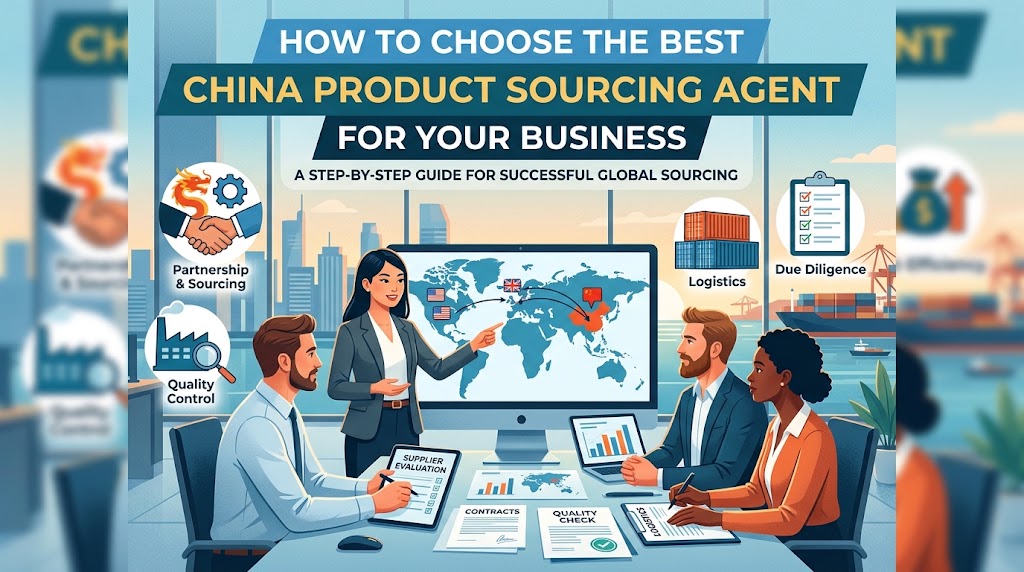
Things to Do Before Choosing a China Product Sourcing Agent
Before you start looking up a supplier, you need to have a clear strategy.
1. Establish a Sourcing Strategy
You need to have a reliable sourcing strategy, which should cover the product specifications, material type, dimensions, packaging, etc.
Also decide your target market. If you are looking to sell in the US, the certifications may differ from those in Europe.
Set up a tentative price range as well as your minimum order quantities. Don’t forget to estimate production and shipping timelines.
2. Choose the Right Sourcing Model
Once you have set up a sourcing strategy, choose from the following sourcing models.
- Factory: Ideal for large orders. It offers the lowest cost and full control but requires high MOQs. Suitable for experienced importers.
- Freelance agent: Ideal for first-time importers. Offers flexibility and affordability but is also risky due to accountability issues.
- Trading company: Suitable for sourcing multiple product categories. Convenient but limited transparency.
- Sourcing company: Offers complete support, supplier management, compliance, and logistics. Incurs high fees but offers lower risk and complete transparency.
3. Choose the Sourcing Location
Under the China Plus One model, production zones are spreading throughout China. Labor-intensive manufacturing is shifting to Southeast Asia, whereas automation is centered in China.
- Shenzhen / Dongguan: Electronics, smart devices, and IoT products. These areas are known for fast innovation, advanced factories, and strong technology supply chains.
- Ningbo / Cixi: Automotive parts, outdoor products, and industrial tools. These cities offer reliable manufacturing, automation, and excellent shipping connections.
- Yiwu (Zhejiang): Small consumer products, gifts, kitchen items, and low-MOQ goods. A great choice for startups and businesses testing new products.
- Guangzhou: Fashion, bags, beauty products, and packaging. A major sourcing hub with strong supplier networks and international trade events.
- Foshan / Shunde: Furniture, home products, and appliances. These regions focus on customized designs, quality manufacturing, and sustainable production.
- Hangzhou: Packaging, ODM products, and e-commerce-focused manufacturing. Ideal for online brands looking for flexible production solutions.
- Vietnam / Thailand: Textiles, plastics, and assembly products. Lower-cost manufacturing options that can work well with Chinese quality control and logistics support.
The China Plus One strategy allows importers to maintain quality in China while diversifying costs and reducing tariff exposure in nearby countries.
4. Evaluate a China Sourcing Agent
China is home to hundreds of different sourcing agents. Here’s how to evaluate them based on your business needs.
Physical presence in China
Check whether your preferred sourcing agent is present in China. There are remote agents who manage factories by email. It’s different from those present on the factory site during production. Ask your sourcing agent where their team is based and whether they can visit the factory during production.
Conduct factory audits
Check the factory’s capacity management, quality control, safety standards, production documentation, and previous client testimonials. If your sourcing agent doesn’t do this, it may be risky.
Do in-process inspections
In some cases, the inspector shows up at the end of production to check a sample from the finished batch. By that point, if there is a problem, the entire production run is already made. In-process inspections, conducted during production, catch issues while there is still time to fix them.
Have accountability measures
What if the products are faulty? What if there is an issue with production? These are some fundamental questions your sourcing agent should know the answers to. If there is an unclear answer, you are risking quality control.
Sustainability standards
If your customers care about how and where products are made, check whether your sourcing agent has a formal sustainable sourcing programme, covering factory working conditions, environmental practices, and supply chain transparency.
Risk management
Sometimes, unprecedented issues arise such as factory shutdowns, regulation changes, and logistics delays. A professional sourcing agent always has a business continuity plan with backup suppliers and warehouse stock. You should ask your agent what happens if production stops for some time. Their answer should reflect how professional and prepared they are.
How to Verify a Sourcing Agent
Verification is your most critical step. A trustworthy agent will always be transparent.
- Check their business and export licenses.
- Verify their registration on QCC.com, including legal representative, address, and business scope.
- Ensure they use a company domain email, not Gmail or Yahoo.
- Call an office landline, not only a mobile number.
- Ask for at least two client references in your product category.
- Request sample QC reports with photos, AQL data, and CAPA summaries.
- Never pay a personal account and always confirm bank details over the phone.
If an agent refuses these checks, walk away immediately.
Quality Control Measures During Production
Quality control is not a one-time inspection. It should be maintained during every stage of production.
- Pre-production inspection: Verify raw materials and initial samples.
- During production: Inspect when 20-30% of goods are complete to catch problems early.
- Pre-shipment inspection: Confirm labeling, packaging, and performance before dispatch.
- Container loading check: Verify quantity, carton labeling, and correct SKUs.
How Much Does a China Sourcing Agent Charge?
China sourcing agent fees depend on the services you need and how you work with them. The most common pricing models are:
- Percentage of Order Value: The agent charges a percentage of your total order cost, usually around 5–10%. This is simple but may increase the fee as your order value grows.
- Fixed Project Fee: A set price is agreed before the work begins. This is common for specific projects, such as finding suppliers, developing products, or managing complex orders.
- Monthly Retainer: A monthly fee for ongoing sourcing support. This option works best for businesses that place regular or large-volume orders and need continuous supplier management.
Tips to Remember When Dealing with a China Sourcing Agent
Business in China is built on Guanxi (relationships) and Mianzi (respect). Here’s what you need to know.
- Avoid public criticism or aggressive behavior. When issues arise, discuss them privately and calmly.
- Patience, consistency, and courtesy will get you better results than confrontation ever will.
- Sign an NNN Agreement (Non-disclosure, Non-use, Non-circumvention) written in Chinese and enforceable under Chinese law.
- Register your trademark in China before production begins.
- List molds, tooling, and ownership clauses in the contract.
- For long-term partnerships, consider periodic local legal audits to prevent IP violations.
The Bottom Line
As business evolves, sourcing needs continue to change. In 2026, successful sourcing is no longer just about finding the lowest price; it is about finding reliable suppliers, verifying factories, maintaining product quality, and building a stable supply chain.
A professional China sourcing partner helps businesses reduce risks by connecting them with trusted manufacturers, managing communication, controlling quality, and coordinating logistics from production to final delivery.
Ready to source products from China with confidence? Contact eSourcing Solution today to connect with verified suppliers, improve quality control, and build a reliable supply chain. Book your free consultation now!