
If you are a sourcing procurement manager, you have probably heard “just buy from China” a hundred times. It sounds easy until a sample arrives late, a supplier changes materials, or a container sits at port because one document was wrong. This guide is built for people who carry that responsibility. It covers where China stands today, how to find suppliers, how to check them, and how to avoid the mistakes that cost real money.
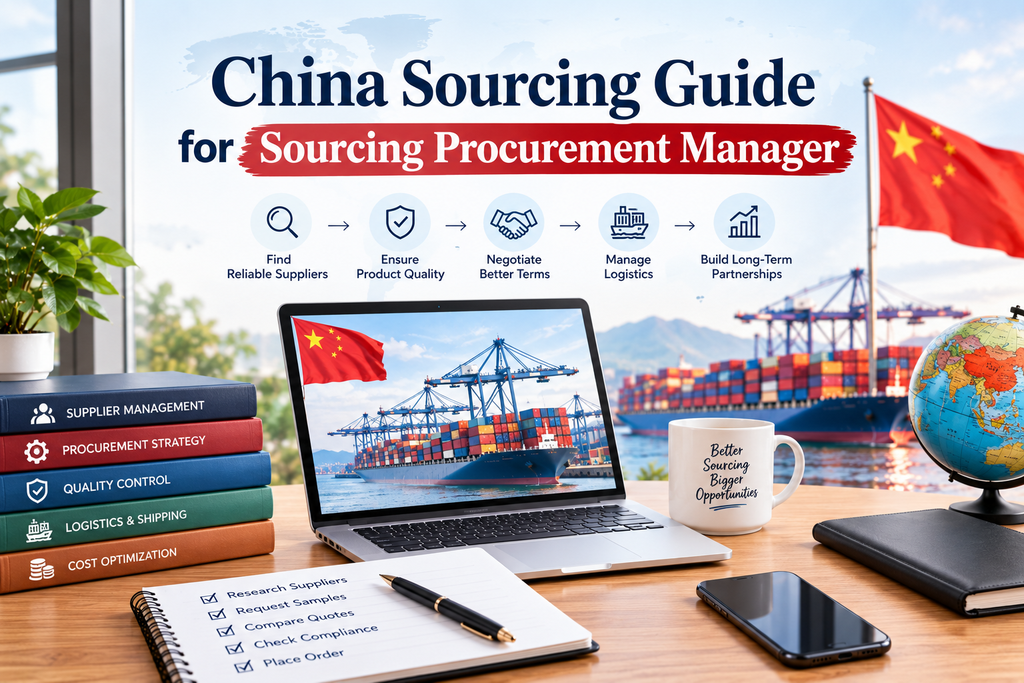
Why China Still Matters for Procurement Teams
Tariffs and “China plus one” talk have not changed one basic fact. China is still the biggest manufacturing base in the world.
- China produced around 30% of global manufacturing value added in 2025, and has held the top spot for 16 years in a row.
- Exports rose 5.5% in 2025 to $3.77 trillion, while imports stayed flat at $2.58 trillion.
- Exports to the U.S. fell 20% in dollar terms in 2025, yet total exports kept growing because sales moved to other markets.
- Machinery and electronics make up roughly 42 to 45% of China’s exports.
What does this mean for you? Chinese factories are hungry for orders, and many are looking for buyers outside the U.S. That gives a smart buyer room to negotiate. It also means the good suppliers are busy, so you need to show up prepared.
Step 1: Know What You Are Buying Before You Talk to Anyone
Most sourcing problems start with a vague request. A supplier who gets a loose brief will fill the gaps with the cheapest choice. Before you contact anyone, write down:
- Product specs, tolerances, and materials
- Target price range and expected yearly volume
- Required certifications (CE, UL, RoHS, ISO, FDA, depending on your product)
- Packaging and labeling rules
- Delivery window and Incoterms (FOB, CIF, DDP)
A one-page spec sheet with drawings saves you weeks. Suppliers will also take you more seriously when they see you know your product.
Step 2: Choose Where to Find Suppliers
There is no single best channel. Each one fits a different situation. Common routes include referrals from industry contacts and hiring a sourcing agent or company to help find and vet suppliers.
| Channel | Best For | Main Risk | Typical Speed |
| Online marketplaces (Alibaba, Global Sources, Made-in-China) | Standard products, quick price checks | Many trading companies posing as factories | Fast |
| Trade fairs (Canton Fair, Hong Kong shows) | Meeting many factories in person | Travel cost, time away from the office | Medium |
| Sourcing agent or sourcing company | New buyers, complex or custom products | Agent fees, need to vet the agent | Medium |
| Referrals from peers | Trusted, proven suppliers | Small pool of options | Slow |
| Direct factory outreach | Large, long-term volumes | Language and trust barriers | Slow |
A practical tip: use marketplaces to build a long list, then cut it down with video calls and sample tests. Do not place your first order based on a listing page alone.
Step 3: Check the Supplier, Not Just the Quote
A low price means little if the supplier disappears after the deposit. Here is a simple vetting routine that many experienced buyers follow:
- Verify the business license. Check the registered name, address, and scope of business against official records.
- Ask for a video factory tour. A real factory can show you machines, workers, and stock on a live call.
- Confirm factory or trader. Ask who owns the equipment. Traders are not bad, but you should know who you are dealing with.
- Request references. Ask for two or three current overseas customers you can contact.
- Order samples. Test them yourself or through a third-party lab.
- Run a third-party audit. For bigger orders, pay for an on-site inspection before you commit.
If a supplier gets defensive about any of these, treat it as a warning sign.
Want to know what top questions you must ask sourcing agents? Read our blog here.
Step 4: Look at Total Cost, Not Unit Price
Sourcing procurement managers get judged on savings, but the unit price is only part of the story. Experts who study supply management in China point out that the right balance of quality, cost, and delivery is what counts, and that total cost should guide decisions. Add up all of this:
- Unit price and tooling or mold fees
- Freight, insurance, and port charges
- Import duties and tariffs
- Quality inspection costs
- Cost of defects, returns, and delays
- Payment terms and currency risk
A supplier who quotes 8% higher but ships on time with fewer defects is often cheaper in the end. Run the numbers on a sheet before you decide.
Step 5: Negotiate Like a Partner
Negotiation in China is usually about the relationship as much as the price. Some habits that help:
- Ask for a price breakdown, so you know where the room is.
- Offer volume commitments or longer contracts in return for better pricing.
- Be clear on payment terms. A common starting point is a 30% deposit and 70% before shipping, but you can push for better as trust grows.
- Put everything in writing, including spec changes, lead times, and penalties for late delivery.
- Be respectful. Reliable suppliers remember buyers who treat them fairly, and they give those buyers priority when capacity is tight.
Step 6: Protect Quality and Your Ideas
Quality control should not start at the end of production. Build it into the whole process:
- Pre-production check: confirm materials and approve a golden sample.
- During production check: inspect when about 20 to 50% of the order is done.
- Pre-shipment inspection: check the finished goods against the agreed standard (AQL levels) before the final payment.
For intellectual property, register your trademarks and patents in China. China uses a first-to-file system, so if you do not register, someone else might. Also sign an NDA and non-compete agreement written under Chinese law and in Chinese, or a court there will have little to work with.
Common Mistakes Sourcing Procurement Managers Make
Here are the mistakes we see again and again:
- Picking a supplier on price alone
- Skipping the sample stage to save time
- Paying a large deposit to an unverified company
- Not having a backup supplier
- Leaving contracts in English only
- Ignoring shipping delays and customs rules until the last minute
- Assuming the supplier understands the spec without confirming it in writing
Most of these are easy to avoid with a checklist and one extra phone call.
Build a Backup Plan
The strongest sourcing teams do not depend on one factory or one region. Try to qualify at least two suppliers for your key items. Some buyers also split orders between China and another country such as Vietnam, India, or Mexico. China still gives you the deepest supplier base and the shortest path from raw material to finished product, so a mixed approach often works better than leaving China completely.
Conclusion
Sourcing from China is not about finding the cheapest factory. It is about finding the right partner, checking them properly, and managing the relationship with clear rules. A sourcing procurement manager who plans specs, vets suppliers, counts the total cost, and builds quality checks into every step will get better results and fewer surprises. Start small, learn from each order, and keep a backup ready.
If you want a team that has done this many times to take the heavy lifting off your plate, contact eSourcingSolution today and let us help you find, vet, and manage the right suppliers in China.
Frequently Asked Questions
How do I find a reliable supplier in China?
Start with a mix of marketplaces, trade fairs, and referrals. Then verify each shortlisted supplier through business license checks, video tours, samples, and ideally a third-party audit.
Is it better to use a sourcing agent or go direct?
If you are new to China or your product is complex, an agent can save time and prevent costly errors. If you have a stable product and a team that speaks the language, going direct can lower costs. Many companies start with an agent and move to direct once the relationship is solid.
What is a normal MOQ in China?
It depends on the product. Simple items may start at a few hundred units, while custom or molded products can need thousands. Many factories will lower the MOQ if you accept a higher unit price or agree to repeat orders.
How do I avoid scams when sourcing from China?
Never pay the full amount upfront; always confirm the company name on the contract matches the bank account name, and use secure payment methods. Check the supplier's license and ask for references before you send money.
How long does the sourcing process take?
For a standard product, expect about 4 to 8 weeks from first contact to samples, and another 30 to 60 days for production and shipping. Custom products with tooling take longer.