
If you buy clothes or home textiles for a living, you already know one thing. Finding a good factory is hard. Finding one that delivers on time, keeps quality steady, and doesn’t surprise you with extra costs is even harder.
That is why many apparel importers go to Canton Fair Phase 3. In one place, you can meet hundreds of garment and textile suppliers, touch the fabric, check the stitching, and talk about price face to face. This guide covers how to do apparel textiles sourcing Canton Fair menswear womenswear well: what you will see, what to check, and what to ask before you pay a deposit.
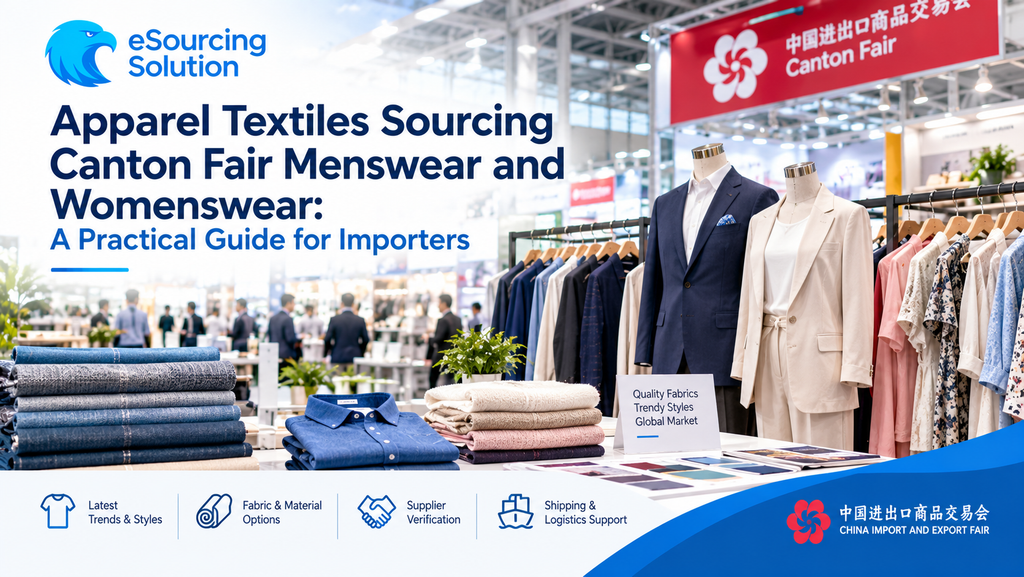
What Is Canton Fair Phase 3?
The Canton Fair, officially called the China Import and Export Fair, is held twice a year in Guangzhou at the Canton Fair Complex in Pazhou. Each session runs in three phases, and each phase has different products.
The 140th Canton Fair opened on October 15, 2026, with a total exhibition area of 1.55 million square meters, according to the official introduction published by China’s Ministry of Commerce. Phase 3 runs from October 31 to November 4, 2026. This is the phase for clothing, textiles, footwear, bags, home textiles, and also food, health products, and stationery.
For context, the previous session, the 139th, had 314,000 overseas buyers from 220 countries and regions attend in person. So you will not be alone. Plan your days well, because the halls get busy.
One more useful thing. The official Canton Fair website and app run all year, every day, and show the same sections as the physical fair. This means you can browse exhibitors and products before you fly, and build a shortlist.
Apparel Textiles Sourcing Canton Fair Menswear and Womenswear Categories You Will See at Phase 3
Here is what the apparel side of Phase 3 usually looks like.
- Menswear. Shirts, trousers, jackets, suits, casual wear and uniforms. Many suppliers show both basic lines and trend-led pieces.
- Womenswear. Dresses, tops, knitwear, outerwear and fashion-forward designs. This is where you will see the fastest style changes, so ask suppliers how often they update their collections.
- Sportswear and activewear. Leggings, tracksuits, running gear and team wear. Look closely at stretch, seams, and moisture control here.
- Underwear and intimate apparel. Bras, briefs, thermal wear, socks and loungewear. Fit and comfort matter a lot in this category, so ask for samples early.
- Seasonal collections. Many suppliers show spring/summer and fall/winter ranges, and some take pre-orders. We cover this in more detail below.
Textile Quality and Material Selection
Good clothing starts with good fabric. You don’t need to be a textile engineer, but you should know what to ask.
Fabric composition and thread count. Ask for the exact blend, like 95% cotton and 5% elastane, and ask for it in writing. For sheets and shirts, thread count and yarn quality both matter. A high thread count with poor yarn still feels rough, so touch the fabric yourself.
Natural vs. synthetic fibers. Cotton, silk, and wool feel good and breathe well, but they cost more and can need more care. Polyester and nylon are cheaper, stronger, and dry fast, but they can feel less comfortable. Blends try to give you the best of both. This means the right choice depends on your customer and your price point.
Performance fabrics. For activewear, ask about moisture-wicking, stretch recovery, and pilling. A simple test: stretch the fabric, let go, and see if it snaps back.
Sustainable and organic textiles. More buyers now ask for recycled polyester, organic cotton, and low-impact dyes. If a supplier says a fabric is organic or recycled, ask for the paperwork.
Certifications. Two worth knowing are OEKO-TEX, which tests textiles for harmful substances, and the Global Organic Textile Standard (GOTS), which covers organic fibers and the way they are processed. Ask for the certificate number and check that it is current and covers the exact product you are buying, not just a different item from the same factory.
How to Assess an Apparel Manufacturer
A nice booth does not tell you much. That is where global product sourcing support helps. Our team can build your supplier shortlist before the fair, meet factories with you on-site, and check samples, prices and lead times, so you leave with real options instead of a bag of business cards. These five checks tell you more.
1. Production capacity and speed. Ask how many pieces they make per month and how many lines they run. Then ask how many orders they already have. A factory that is full may promise a date it can’t keep.
2. Design and customization skills. Can they work from your tech pack? Do they have in-house pattern makers? Some factories only copy, and some can develop new styles. Know which one you are talking to.
3. Sample development and approval. Ask how long a sample takes, what it costs, and whether the cost is refunded when you place an order. Agree on a clear approval step. Many problems start when a buyer approves a sample, and the bulk goods end up slightly different.
4. Quality control and defect rates. Ask about their inspection steps: incoming fabric check, in-line checks, and final check. Ask what defect rate they accept, and whether they allow third-party inspection before shipping.
5. Labor practices and ethical sourcing. Ask for social audit reports. Many retailers now need these, and it is much easier to ask at the fair than to fix a problem later.
Bulk Apparel Textiles Sourcing Canton Fair Menswear and Womenswear Strategy
Once you like a supplier, it is time to talk numbers. Here is what to settle before you leave the booth.
MOQ by garment type. Minimum order quantities change by product. Simple basics usually have lower MOQs than complex items like tailored jackets. They also change by color and size. Ask for the MOQ per style and per color, and ask if it goes down for repeat orders.
Size range and fit consistency. Ask which sizing standard they use, like US, EU, or Asian sizing, and ask for a size chart. If you sell in the US or Europe, Asian sizes often run smaller, so check this early.
Color and pattern options. Ask about color matching. Request lab dips or color cards, and agree on how much color difference is acceptable.
Branding and labeling. Check if they can add your woven labels, hang tags, and care labels, and at what cost.
Payment terms and deposits. A common setup is a deposit when you place the order and the balance before shipment or against the shipping documents. Terms differ by supplier and order size, so negotiate them and get everything in the contract. Never pay a large amount to a personal account.
Customization and Private Label
If you want your own brand, this is where Canton Fair helps a lot, because you can talk to many factories in a short time.
Bring sketches, tech packs, or a reference garment. A good factory will tell you honestly what is possible at your budget. Private label branding and tags. Neck labels, woven tags, hang tags, and size labels can all carry your name.
Ask which methods the factory does in-house and which they send out. Outsourced work can mean longer lead times and less control. Packaging and presentation. Polybags, boxes, hangers, and folding style all change how your product looks on a shelf or in an online order.
If you want a design nobody else sells, say so up front and put it in writing. Ask if they will agree not to sell the same style to your competitors in your market.
Leather, Fur and Down Products
Phase 3 also includes leather and fur garments and down jackets, among other categories. These are high-value items, so check them more carefully.
Ask what type of leather it is, like genuine, split, or synthetic. Check the finish, the smell, and the stitching. Request a material test report if the product is premium. Many retailers now prefer faux fur or animal-free options. If that is your direction, ask which fibers are used and how the fabric feels and wears.
Ask for the fill power, the down-to-feather ratio, and the fill weight per jacket. Also ask how the supplier tests for cleanliness and where the down comes from. Make sure the claims on the label match the real material and the rules in your country. Some markets have strict rules on fur and animal products.
Use a clear contract, inspect before shipping, and insure the shipment. One mistake on a big order of leather coats costs a lot.
Compliance Standards You Cannot Skip
This is the part that many first-time buyers ignore, and it is also the part that can get your goods stopped at the border.
- Children’s clothing (CPSIA). In the US, children’s products must meet CPSIA rules, which include limits on lead and certain phthalates. You will normally need testing and a Children’s Product Certificate.
- Flammability. Some garments and fabrics must meet flammability rules in your market. Ask about any fabric treatments used and whether they were tested.
- Labeling rules. The EU and the US have different labeling rules. These usually cover fiber content, country of origin, the name of the responsible company, and size.
- Care instructions and material declarations. Care symbols and fiber content must be correct. A wrong label can mean fines or a recall.
- Ethical and sustainable certifications. If you advertise a product as organic or sustainable, you need proof to back that up.
- Rules change, so check them with your customs broker or a testing lab before you place a big order.
Home Textiles: Sheets, Towels and Linens
Phase 3 also covers home textiles like bedding, towels, curtains, cushions, and carpets. If you sell homeware, it is worth a few hours.
Don’t trust thread count alone. Feel the fabric, and ask about yarn type and finishing. Ask how the product holds up after many washes. For dark towels and bedding, color bleeding is a common complaint, so ask for color fastness test results.
Check the density and finish of any embroidery. Loose threads are an easy way to spot poor quality. Be clear on washing temperature and drying method, and put it on the label. Prices drop as quantities go up. Ask for a price list with quantity breaks, and ask what is included, like packaging and labels.
Seasonal Collections and Pre-Order Strategy
Timing matters as much as price in fashion. Here is how to plan.
Trends and forecasting. Look at what several suppliers show in the same colors and shapes. When you see the same trend in many booths, it is likely a real one.
Spring/summer vs. fall/winter. Ask which season the supplier is working on right now. Some factories are already planning the next season at the fair.
Pre-order discounts. Some suppliers offer better prices for early orders because it helps them plan fabric and production. Ask, but don’t lock in too much volume on an untested style.
Lead time for new designs. Sample, approval, fabric buying, production, inspection, and shipping all take time. Count backward from the date you want the goods in store, and add a buffer.
Inventory planning. Start with smaller first orders on new styles, then reorder what sells. This lowers your risk and keeps cash free.
Tips for Your Time at the Canton Fair
- Browse exhibitors on the official website or app before you travel.
- Make a list of 15 to 20 suppliers and rank them.
- Carry a notebook or phone and write down prices, MOQs, and lead times at every booth.
- Take photos of samples and business cards on the spot.
- Ask for samples to be sent after the fair, so you can compare them side by side.
- Follow up within a week while the supplier still remembers you.
Conclusion
Apparel textiles sourcing Canton Fair menswear womenswear is simple in theory. You see the products, meet the makers, and compare options. In practice, it takes a clear plan. Know your categories, check fabric and certificates, test the factory’s skills, and sort out the contract and compliance before you pay anything.
At eSourcingSolution, apparel and textile sourcing is what we do every day. Our team will be on-site during Phase 3 to help you source menswear, womenswear, sportswear, and home textiles, with quality checks, compliance support, and customization help.
Ready to source with confidence? Book your free consultation with eSourcingSolution today, and let’s plan your Phase 3 visit together.
Frequently Asked Questions
When is Canton Fair Phase 3 in 2026?
Phase 3 of the 140th Canton Fair runs from October 31 to November 4, 2026, at the Canton Fair Complex in Guangzhou. Dates can change, so confirm them on the official Canton Fair website before you book travel.
What products are at Phase 3?
Phase 3 focuses on clothing, textiles, home textiles, footwear, bags, and also food, health products and stationery. For apparel buyers, this includes menswear, womenswear, sportswear, underwear and leather, fur and down products.
Can I look at exhibitors before the fair?
Yes. The official Canton Fair website and app run all year and show the same sections as the on-site exhibition. You can use them to browse exhibitors and make a shortlist before you travel.
How do I know if a supplier is a real manufacturer?
Ask for a business license, factory photos or video, and certificates. Ask detailed questions about production lines and materials. If possible, arrange a factory visit or a third-party audit before placing a large order.
What is the usual payment term for bulk apparel orders?
Many suppliers ask for a deposit when you place the order and the balance before shipment. Terms vary, so negotiate and put everything in a written contract.
Can I order a private label collection at Canton Fair?
Yes. Many suppliers offer private label services like custom labels, hang tags, packaging and embroidery. Share your tech pack or reference sample, and confirm MOQs, sample costs and lead times.
Can eSourcingSolution help if I have never attended Canton Fair?
Yes. We can help you plan which suppliers to meet, check quality and compliance, and handle follow-up. Book a free consultation and we will go through your needs.