
Alright, so I need to tell you about my first trip to the Guangzhou replica markets because it sets the stage for everything else in this guide. 2017 Stepped off the train at Guangzhou Railway Station. Total sensory overload. People everywhere dragging those massive checkered bags. Motorbikes cutting through crowds. Some random dude grabbed my sleeve and whispered something about watches before I even figured out which exit to take.
I was lost within ten minutes. Bought a wallet that fell apart in six days. Paid triple what I should have for a pair of shoes. Basically did everything wrong that a person can do wrong in these markets.
But I kept going back. Something about the energy of the place pulled me in. And over the years, trip after trip, I figured out how things actually work. Which buildings matter. Which floors to skip. Which vendors remember your face and start showing you the stuff they keep in the back room.
Now I’ve been through these Guangzhou replica markets more times than I can count. And every single visit, I watch fresh faces making the exact same mistakes I made back in 2016. So here’s the guide I wish somebody handed me before that first trip.
Table of Contents
- Fake Markets Near Guangzhou Railway Station
- Two Points to Consider When Shopping
- Zhanxi Watch Market (站西手表市场)
- Zhanxi Clothing Markets (站西服装市场)
- Guangzhou Guoda Shoes Mall (广州国大鞋城)
- Ling Long International (领龙国际)
- Sanyuanli and Baiyun Leather City (白云皮具城)
- Negotiation Tips from Someone Who Learned the Hard Way
- Getting There and Moving Around
- Stuff That Can Go Wrong
- Questions People Always Ask Me
Fake Markets Near Guangzhou Railway Station
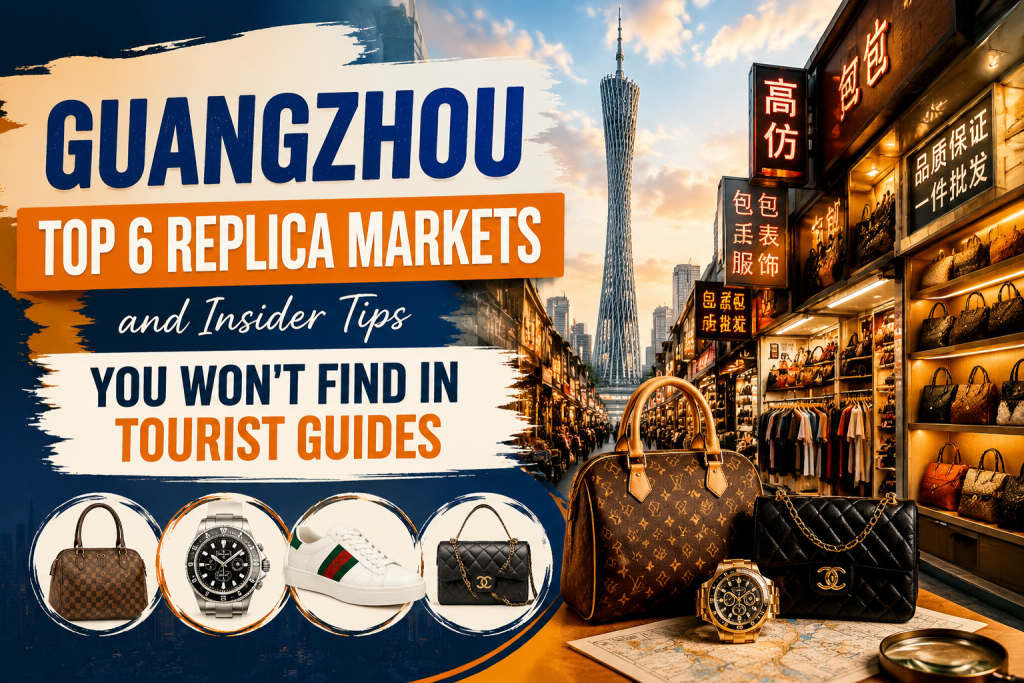
So here’s the deal. Within about two kilometers of Guangzhou Railway Station, there’s this entire commercial ecosystem built around replica goods. We’re talking dozens of multi-story buildings. Thousands of individual stalls. Watches, bags, shoes, clothes, belts, sunglasses. Pretty much anything that carries a brand name, somebody in this area makes a copy of it.
And it’s not hidden. Not underground. Not some sketchy back-alley operation. These buildings have names on them. Security guards at the doors. Working elevators. Regular business hours posted outside. It’s a full commercial district that’s been running like this for decades.
Why is everything clustered around the railway station? Simple logistics. The station connects to China’s national rail network. Buyers from all over the country and neighboring regions roll in by train, fill up their bags, and ship everything home. The whole infrastructure supports this flow. Shipping agents, packaging services, customs brokers. All within walking distance.
Getting there is straightforward. Metro Line 2 or Line 5 drops you at Guangzhou Railway Station. Walk out the exit and the markets are basically across the street. You’ll know you’re in the right area because the activity level makes it obvious. People hauling goods. Vendors calling out. The whole scene hits you immediately.
Quick geography breakdown. Watch markets sit west of the station along Zhanxi Road. Clothing markets cluster in the same zone across several buildings. Shoe markets are a bit south. Leather goods and bags concentrate further north toward Sanyuanli and Baiyun. Each area has its thing, though there’s overlap.
Two Points to Consider When Shopping
Before you walk into any building, I need you to understand two things. These two points will shape your entire experience and determine whether you leave happy or frustrated.
Point 1: Quality Tiers Are Real and They Matter
Not all replicas are the same. This sounds obvious but most first-timers don’t grasp what it means in practice. The Guangzhou replica markets run on a tiered system. Understanding which tier you’re looking at prevents the most common disappointment I see from new visitors.
Low tier. Some people call it street quality. Obvious fakes. Wrong fonts. Cheap materials that feel plasticky. Stitching that’s already coming loose on the shelf. These are what vendors push on tourists walking through ground floors. A watch might run 50 to 150 RMB. A bag maybe 80 to 200 RMB. You’re not getting quality here. You’re getting something that looks like the real thing from across a room if you squint.
Mid tier. Vendors call these AAA or 1:1 depending on who you talk to. Better materials. More accurate details. Construction that actually holds up to daily use. Most people on the street wouldn’t clock these as fakes without really examining them up close. Watches go for 300 to 800 RMB. Bags range from 400 to 1,500 RMB. This is where most serious buyers shop.
High tier. Super clone. Mirror quality. Whatever the vendor wants to call it. These get genuinely close to authentic products. Real leather. Accurate hardware weight and finish. Correct packaging. Often these aren’t even displayed openly. You need to ask. You need to show you’re willing to pay. You need the vendor to trust you a little bit before they pull these out. Watches hit 1,500 to 5,000+ RMB. Bags run 2,000 to 8,000 RMB.
The point I’m making is this. Know which tier you want before you start shopping. If you want high-tier stuff, don’t waste your afternoon haggling with ground-floor vendors over low-tier products. Go to the right floors. Ask the right questions. Save yourself time.
Point 2: These Markets Serve Wholesale Buyers First
The Guangzhou replica markets weren’t built for tourists buying one handbag as a souvenir. They exist primarily for wholesale buyers. African traders loading up hundreds of watches. Russian buyers filling shipping containers with bags. Middle Eastern merchants stocking their retail shops back home. Southeast Asian resellers buying bulk.
What does this mean for you as a visitor?
Vendors prioritize quantity buyers. If you’re grabbing one or two pieces for yourself, you’ll get less attention and higher per-unit prices than the guy next to you buying fifty of the same item. That’s just how it works here.
Prices assume bulk. The “real” price for most items is based on buying multiple units. Single-piece buyers pay more. Accept it or buy more.
Peak hours get intense. Professional buyers move fast. They know what they want. They don’t browse. If you want vendors to actually spend time with you, come during off-peak windows. Early morning or late afternoon on weekdays. That’s when you get attention.
Communication is mostly Mandarin. Some vendors speak basic English, especially in buildings with more international foot traffic. But don’t expect detailed conversations about product specifications in English. Download a translation app. Google Translate’s camera feature that reads text through your phone camera is genuinely useful for signs and labels.
Zhanxi Watch Market (站西手表市场)
Where: Zhanxi Road, west side of Guangzhou Railway Station
Metro: Line 2 or Line 5, Guangzhou Railway Station
Hours: Roughly 10:00 AM to 6:00 PM
What they sell: Replica watches, all tiers
This is probably the most well-known replica watch market on the planet. Multiple buildings along Zhanxi Road packed with thousands of watch stalls spread across several floors. The sheer concentration of watch vendors here is wild. You could spend three solid days just looking at watches and still miss stalls.
Every major brand gets replicated. Rolex. Omega. Patek Philippe. Audemars Piguet. Hublot. Tag Heuer. Breitling. IWC. Panerai. Cartier. If a company makes watches, someone in Zhanxi makes copies. The range goes from laughably obvious 50 RMB fakes with misspelled names all the way up to super clones running Swiss movements and sapphire crystals.
Here’s what I learned about the building layout. Ground floors stock the cheap stuff. That’s where they catch tourists and casual walkers. The higher you climb, the better things get. Some of the best stalls operate on upper floors or tucked into corners that you’d walk past without knowing they’re there. This is by design. The good vendors don’t want random foot traffic. They want buyers who specifically came looking for quality.
My first Zhanxi visit, I spent the whole day on ground floors and left thinking everything was garbage. Came back a week later with a local guy who took me up to the third and fourth floors of a building I’d literally walked past before. Completely different universe up there. Better movements. Better materials. Vendors who could actually discuss the technical specs of what they were selling. Night and day.
What you’ll pay:
- Low tier: 50 to 200 RMB
- Mid tier: 300 to 1,000 RMB
- High tier: 1,500 to 5,000+ RMB
- Super clone with Swiss movement: 3,000 to 15,000+ RMB
What I wish someone told me: Skip the guys who approach you outside the buildings. They’re runners working on commission. They lead you to specific stalls that pay them referral fees. Those stalls charge you more to cover the referral cost. Walk past them. Enter buildings on your own. Browse independently. You’ll find better prices without the middleman markup.
Zhanxi Clothing Markets (站西服装市场)
Where: Zhanxi Road area, multiple buildings near the watch markets
Metro: Same stop, Guangzhou Railway Station
Hours: About 9:30 AM to 6:00 PM
What they sell: Replica branded clothing, streetwear, sportswear
The clothing markets occupy several large buildings within walking distance of the watch markets. Some buildings mix clothing with other categories. Others are wall-to-wall garments.
You’ll find replica versions of Nike, Adidas, Gucci, Louis Vuitton, Balenciaga, Off-White, Supreme, Stone Island, Moncler, Canada Goose, and basically every other fashion and streetwear brand that exists. T-shirts, hoodies, jackets, pants, tracksuits, jerseys, outerwear. Men’s streetwear and sportswear dominate the selection but women’s options exist too.
Quality has jumped dramatically in the past five years. The best replica clothing now uses fabrics that feel nearly identical to retail versions. Stitching on higher-tier pieces is genuinely impressive. Tags, labels, packaging, hang tags. All replicated with increasing accuracy.
But sizing will trip you up. Chinese sizing runs smaller than Western sizing. A “Large” here might fit like a Western “Medium.” Don’t trust size labels. They mean different things to different vendors. Try everything on. Or bring a measuring tape and know your measurements in centimeters.
Stick to the bigger multi-story buildings. More variety. More competition between vendors. Competition works in your favor on pricing. Smaller buildings with fewer stalls tend to charge more because there’s less pressure to compete.
What you’ll pay:
- T-shirts: 40 to 150 RMB
- Hoodies: 80 to 300 RMB
- Jackets (non-down): 150 to 500 RMB
- Down jackets (Canada Goose, Moncler type): 300 to 1,500 RMB
What I wish someone told me: Go on weekday mornings when the wholesale buyers from Africa and the Middle East are doing their rounds. Watch which stalls they spend time at. Watch which ones they skip. These people do this for a living. They know which vendors offer the best ratio of quality to price. If a stall is packed with repeat wholesale buyers, that tells you more about quality than anything a vendor says verbally.
Guangzhou Guoda Shoes Mall (广州国大鞋城)
Where: South of Guangzhou Railway Station area
Metro: Guangzhou Railway Station, then short walk
Hours: 9:00 AM to 6:00 PM
What they sell: Replica sneakers, dress shoes, boots, sandals
Guoda is a massive multi-floor building dedicated entirely to shoes. If replica sneakers are what you’re after, this is the place. Hundreds of stalls across multiple floors. Each one specializing in different brands or styles.
Nike Air Jordans dominate. Every model from 1 through the latest drops gets replicated here in multiple quality levels. Nike Dunks. Air Force 1s. Air Max. Adidas Yeezy in every colorway. New Balance. Converse. Balenciaga sneakers. Alexander McQueen. Gucci. Prada. Designer dress shoes. Work boots. If it goes on a foot and has a brand name, somebody in Guoda sells a version of it.
The sneaker replica world has its own language that you’ll hear vendors throw around.
“Budget batch” is the cheapest option. Wrong materials. Visible flaws. Fine for photos from a distance. Not great for actually wearing daily.
“Mid tier” or “GET batch” or “OG batch” is decent. Correct shape and colors. Materials that approximate the real thing. Comfortable enough for regular wear. Most people can’t tell these apart from retail at normal distance.
“Top tier” or “LJR batch” or “PK batch” is the closest to retail you’ll get. Correct materials. Proper cushioning. Accurate details down to stitching patterns and box labels. Only dedicated sneaker authenticators examining them next to retail pairs would catch these.
What you’ll pay:
- Budget sneakers: 80 to 150 RMB
- Mid-tier sneakers: 200 to 400 RMB
- Top-tier sneakers: 400 to 800 RMB
- Designer shoes: 300 to 1,200 RMB
- Boots: 200 to 600 RMB
What I wish someone told me: Know exactly which shoes you want before walking in. Have reference photos on your phone. The sheer volume creates sensory overload otherwise. Show vendors the specific model and colorway. This saves hours of aimless wandering and helps them understand your quality expectations immediately.
Also, the best vendors have WeChat accounts where they post new arrivals and comparison photos. Find a good vendor, add them on WeChat before leaving. This lets you order remotely later without flying back to Guangzhou. Many ship domestically or arrange international delivery through agents. One market visit can turn into an ongoing relationship if you make the connection.
Ling Long International (领龙国际)
Where: Near Guangzhou Railway Station
Metro: Guangzhou Railway Station
Hours: 10:00 AM to 6:00 PM
What they sell: Mid to high-tier replica bags, wallets, belts, leather accessories
Ling Long focuses on leather goods and accessories. Smaller than Baiyun Leather City but carries a reputation for higher average quality among its vendors.
You’ll find replica handbags from Louis Vuitton, Chanel, Gucci, Hermes, Dior, Prada, Celine, Bottega Veneta, YSL. Plus wallets, cardholders, belts, key cases, phone cases, and small accessories. Some vendors carry luggage and travel bags too.
The building positions itself in the mid-to-high tier range. You won’t find the cheapest bags here. That’s not what Ling Long is about. Vendors here generally stock better materials and more accurate replicas than random ground-floor stalls elsewhere. Many use genuine leather rather than PU. Hardware quality runs better. Stitching is cleaner.
Shopping here feels more organized. Less chaotic. Stalls arranged in a grid. Vendors are less aggressive than street-level markets. You can actually browse without getting grabbed or shouted at. Makes the whole experience more comfortable, especially if the bigger markets feel overwhelming.
I prefer Ling Long for bag sourcing when I want mid-tier quality without spending hours filtering through low-quality junk. The quality floor is higher here. Even ground-level stalls carry reasonable products because the building’s reputation attracts vendors who want to be associated with better goods.
What you’ll pay:
- Wallets and cardholders: 100 to 400 RMB
- Belts: 80 to 300 RMB
- Crossbody bags: 200 to 800 RMB
- Handbags (mid tier): 400 to 1,500 RMB
- Handbags (high tier): 1,500 to 5,000+ RMB
- Luggage: 500 to 2,000 RMB
What I wish someone told me: Show vendors a photo from the brand’s official website rather than a photo of another replica. They match you with their best version more accurately when they see the authentic reference. And some vendors keep their highest-quality pieces in back rooms. Showing genuine interest in quality and willingness to pay gets you invited to see stuff that casual browsers never access.
Sanyuanli (三元里) and Baiyun Leather City (白云皮具城)
Where: Sanyuanli area, about 2km north of Guangzhou Railway Station
Metro: Line 2, Sanyuanli Station
Hours: 10:00 AM to 5:30 PM
What they sell: Replica luxury bags, luggage, leather goods, all quality tiers
Baiyun Leather City is the big one. The largest and most famous replica bag market in Guangzhou. Possibly the largest in the world. Multiple enormous buildings. Thousands of vendors. Floors upon floors of bags. The scale genuinely doesn’t compute until you’re standing inside one of these buildings looking at rows of stalls stretching further than you can see.
Every luxury bag brand. Every model. Every quality tier. Louis Vuitton Neverfull, Speedy, Alma, Keepall. Chanel Classic Flap, Boy Bag, Gabrielle. Hermes Birkin, Kelly, Constance. Gucci Marmont, Dionysus, Jackie. Dior Lady Dior, Saddle Bag, Book Tote. The selection is genuinely endless.
Beyond bags, there’s replica luggage (Rimowa, Louis Vuitton, Tumi), briefcases, laptop bags, backpacks, travel accessories. Some vendors also carry wholesale unbranded leather goods for buyers who want to add their own branding.
Sanyuanli feels different from the railway station markets. More established. More organized. Buildings are larger and more modern. Many vendors have proper showrooms rather than cramped stalls. The clientele skews toward serious wholesale buyers and international traders rather than casual tourists.
Security is tighter here. Some buildings ask you to register at the entrance or show ID. Don’t freak out about this. It’s because periodic government crackdowns target these markets and building management wants records of who’s inside. Routine stuff. Not aimed at you personally.
Quality covers the full spectrum. Cheap PU leather bags at 50 RMB all the way up to premium replicas using imported Italian leather at 5,000+ RMB. The key is knowing which floors and buildings serve which quality level.
Newer, more modern-looking buildings generally house higher-quality vendors. Older buildings with cramped stalls lean toward lower-quality, higher-volume goods. But exceptions exist everywhere. Some of the best vendors I’ve found work from modest stalls in older buildings because they’ve been there for years and their reputation brings buyers regardless of showroom appearance.
What you’ll pay:
- Budget bags (PU leather): 50 to 200 RMB
- Mid-tier bags: 300 to 1,000 RMB
- High-tier bags (genuine leather): 1,000 to 3,000 RMB
- Premium super clone bags: 3,000 to 8,000+ RMB
- Hermes Birkin replicas (top tier): 5,000 to 15,000+ RMB
- Luggage: 400 to 3,000 RMB
What I wish someone told me: Baiyun is too big for one visit. Don’t even try. Pick one or two specific products. Focus your energy on finding the best version at the best price. Come back another day for different items. Trying to see everything leads to decision fatigue, impulse buys, and missed opportunities because you rushed through buildings that deserved more time.
Many Baiyun vendors now operate primarily through WeChat and ship directly to international buyers. If you can’t visit in person, connecting with vendors through WeChat groups or through contacts who’ve been there gives you access to the same products remotely. Quality verification gets harder without seeing items physically, but experienced vendors send detailed photos and videos before you commit.
Negotiation Tips from Someone Who Learned the Hard Way
Generic bargaining advice doesn’t work well in Guangzhou replica markets. These vendors deal with professional buyers every single day. They’ve heard every tactic. The “walk away and they’ll chase you” thing? Works sometimes. Doesn’t work often. These vendors have enough business that they genuinely don’t need yours if you’re being difficult.
Here’s what actually works. Learned all of this through trial and error over years.
Research prices before you go. Check online forums. Reddit communities like r/FashionReps and r/RepLadies have tons of pricing data from recent buyers. Knowing realistic price ranges prevents you from both overpaying and insulting vendors with ridiculous lowball offers.
Tell them your quality tier immediately. Don’t waste time looking at budget stuff if you want high tier. Say it upfront. “I want your best quality for this model.” This signals you’re serious and willing to pay fair prices. Vendors respond by showing better inventory instead of trying to offload whatever’s cheapest.
Buy multiple items from one vendor. Quantity leverage is real. Three bags instead of one. Ten watches instead of two. Your negotiating position improves with every additional unit. Vendors give better per-piece prices to buyers who represent more revenue per transaction.
Don’t lowball on premium items. Counterintuitive but important. High-tier replicas have real material costs. Trying to negotiate a 3,000 RMB bag down to 1,000 just tells the vendor you don’t understand quality tiers. They’ll either refuse or switch you to a lower-quality item at your demanded price. Reasonable negotiation on high-tier means 10 to 20 percent off asking. Not 70 percent.
Use WeChat Pay or Alipay. Cash works but digital payment is preferred now. Faster. Leaves a record. Signals you know how business works in China. Set up WeChat Pay before your trip if possible.
Come back to the same vendor. Relationships matter enormously in Chinese business culture. A vendor who sees you return gives better prices, shows better products, and provides more honest quality assessments. Even returning the next day shifts things in your favor.
Learn basic numbers in Mandarin. You don’t need fluency. Just numbers 1 through 10. Hundred (bai). Thousand (qian). “Too expensive” (tai gui le). “Best price” (zui di jia). This small effort earns genuine respect and makes negotiation smoother.
Getting There and Moving Around
Flying in. Guangzhou Baiyun International Airport has connections worldwide. From the airport, Metro Line 3 to Tianhe Coach Terminal, transfer to Line 1 or Line 2 toward Guangzhou Railway Station. About 45 to 60 minutes total. Taxis from airport to railway station area run roughly 120 to 150 RMB depending on traffic.
Metro. Guangzhou’s metro system is excellent. Clean. Efficient. Cheap. Covers the whole city. For replica markets, you need Line 2 or Line 5 to Guangzhou Railway Station (Zhanxi markets, Guoda, Ling Long) or Line 2 to Sanyuanli Station (Baiyun Leather City). Single rides cost 2 to 7 RMB. Grab a Yangcheng Tong transit card at any station.
Walking between markets. Zhanxi watches, Zhanxi clothing, Guoda shoes, and Ling Long are all walkable from each other near the railway station. Cover all four in a single day on foot. Sanyuanli and Baiyun need a short metro ride or taxi. One stop north on Line 2. About 5 minutes.
Hotels. Stay near the railway station if you’re spending multiple days. Budget options run 150 to 200 RMB per night. Mid-range business hotels 300 to 500 RMB. Staying close means you can start early, drop purchases at your room midday, and head back out without wasting time on transport.
Shipping stuff home. If you buy in quantity, luggage won’t cut it. Shipping agents operate throughout the market area. They pack your goods, handle customs paperwork, and ship via sea freight (cheapest, slowest) or air freight (faster, pricier). Get quotes from multiple agents. Prices vary a lot. A good shipping agent saves enormous hassle versus figuring out international shipping yourself.
For businesses sourcing at scale or needing help with logistics coordination, working with an experienced sourcing partner who knows the Guangzhou landscape saves time and reduces shipping headaches significantly.
Stuff That Can Go Wrong
The Guangzhou replica markets are generally safe. Violent crime targeting foreigners is extremely rare. But other problems exist that you should know about going in.
Bait and switch. You inspect a nice sample. Agree on price. Vendor packs a different, lower-quality item in the bag. Always watch them pack your purchase. Open the bag and verify before walking away. Once you leave the stall, you have zero recourse. None.
Hidden defects. Check zippers. Check stitching. Check hardware. Open and close every zipper. Look at stitching under good light. Test clasps and buckles. Look for glue residue, loose threads, alignment problems. Vendors expect thorough inspection. Taking your time isn’t rude here. It’s normal.
Fake quality claims. Every vendor says “top quality” and “1:1.” These words mean nothing without your own verification. Judge with your eyes and hands. Compare the same model across five different stalls. Quality differences become obvious when you see them side by side.
Police raids. Periodic crackdowns happen. Markets close suddenly for a day or two. Vendors hide branded items and display only unbranded goods during sensitive periods. If things seem unusually quiet or vendors won’t show branded stuff, a recent raid probably happened. Wait a day. Things return to normal.
Sketchy shipping agents. Not all are honest. Some quote low then add hidden fees. Others handle goods carelessly causing transit damage. Get recommendations from vendors you trust or from other buyers. Established agents with physical offices are more reliable than random people offering services on the street.
Customs seizure risk. Importing replicas is illegal in most countries. Customs can seize shipments containing counterfeit branded items. Small quantities in personal luggage rarely attract attention. Large commercial shipments face higher scrutiny. Understand the legal risks in your country before buying quantity. This guide provides market information. Purchasing decisions and legal compliance are on you.
Questions People Always Ask Me
Is it physically safe to visit these markets?
Yeah. Guangzhou is a major international city. Low violent crime. The market areas are busy commercial zones with security. Normal travel precautions apply. Watch your stuff in crowds. Don’t wave cash around. Keep your phone secure. But safety concerns shouldn’t stop you. Thousands of international buyers visit daily without problems.
Best time to visit?
Weekday mornings between 10 and noon. Markets are open but not peak crowded yet. Vendors have patience for browsers. Avoid weekends and Chinese holidays when domestic buyers flood in. Definitely avoid the weeks around Chinese New Year (late January or February usually) when most vendors close up and travel home.
How much cash do I need?
Depends what you’re buying. Casual shopping, a few personal items, 2,000 to 5,000 RMB per day covers most people. Serious wholesale buying, bring 10,000 to 50,000+ RMB or arrange WeChat transfers. ATMs exist nearby but withdrawal limits and foreign card fees are annoying. Withdraw a big amount at your hotel’s bank branch before heading out.
Can I negotiate in English?
Partially. Many vendors know basic transaction English. Numbers. Prices. “Good quality.” “Best price.” But real negotiation works better in Mandarin or through translation apps. Typing your offer into your phone calculator and showing the screen works universally regardless of language barriers. Both sides use technology to bridge the gap.
Do they take credit cards?
Almost never. Individual stalls run on cash, WeChat Pay, and Alipay. Credit card terminals basically don’t exist at stall level. Some larger showrooms in Baiyun might accept cards for big purchases but don’t count on it. Come with cash or Chinese mobile payment apps ready.
How do I get purchases home if I buy a lot?
Three ways. Pack items in checked luggage if quantities are small. Remove packaging and tags to save space. Use a shipping agent in the market area for air or sea freight. Or ask vendors if they ship directly. Many established vendors have their own international shipping channels. Agents charge roughly 30 to 60 RMB per kilogram for air freight to Western countries. Sea freight costs less but takes 3 to 6 weeks.
What if something is defective after I leave?
Options are limited without vendor contact info. This is why you inspect before paying. But if you added the vendor on WeChat (always do this), you can reach out about defects. Reputable vendors who want repeat business sometimes offer replacements or partial refunds for genuine defects. Those who refuse don’t deserve future business. Move on.
Markets open year-round?
Mostly. Chinese New Year shuts everything down for roughly two weeks. Some vendors close during National Day (first week of October) and other major holidays. Outside those periods, markets run daily including weekends. Weekdays are better for international visitors wanting personal attention.
Can I do this on a layover?
If you have a full day, absolutely. The railway station area markets (Zhanxi watches, clothing, Guoda shoes, Ling Long) are all walkable and can be sampled in one day. Baiyun Leather City needs a separate trip due to size and location. For limited time, pick your priority category, hit the relevant market, and make the most of it rather than trying to see everything superficially.
Is quality improving over time?
Significantly. Top-tier replicas in 2025 are dramatically better than what existed three or five years ago. Manufacturing tech improves constantly. Materials sourcing gets more sophisticated. Competition drives quality up because buyers compare across dozens of stalls easily. The gap between authentic luxury goods and top-tier replicas has narrowed considerably, especially for leather goods and watches.
The Unbranded Alternative Worth Knowing About
Here’s something most replica market guides skip entirely. The same factories and vendors making branded replicas also produce unbranded versions of identical products. Same materials. Same craftsmanship. Same quality. Just without the logo stamped on it.
For business buyers, this opens a completely legitimate path. Source high-quality leather goods, watches, shoes, or clothing from Guangzhou manufacturers without any trademark issues. Add your own branding. Build your own label. Sell legally anywhere in the world without worrying about customs seizures or intellectual property lawsuits.
Many vendors in Baiyun Leather City and other markets actively welcome custom branding orders. They’ll produce bags using the same premium leather and hardware they use for replica luxury brands, but stamp your logo instead. Minimum orders for custom branding typically start at 50 to 100 units depending on the product and vendor.
This gives you access to the manufacturing quality these markets are famous for while operating completely within legal boundaries. Your products benefit from skilled craftsmanship without carrying legal risk.
I’ve watched several small brands grow from exactly this model. They visited Guangzhou, found vendors making incredible quality leather goods, ordered unbranded versions with their own logo, and built legitimate businesses selling premium products at prices that undercut established luxury brands while maintaining healthy margins.
If developing your own branded product line using Guangzhou’s manufacturing capabilities interests you, a product development partner can help navigate the process from initial concept through finished production. They handle vendor relationships, quality control during manufacturing, and make sure your custom products match the specifications you defined rather than whatever the factory feels like producing that week.
Shipping and Logistics for Bulk Buyers
If you’re visiting with business intentions rather than personal shopping, logistics deserves serious attention. Getting products from a market stall to your home country involves steps that trip up inexperienced buyers constantly.
Consolidation warehouses. Most shipping agents run consolidation warehouses where they collect purchases from multiple market visits before shipping everything together. This saves money versus shipping individual packages after each buy. Purchase over several days. Have everything delivered to the consolidation warehouse. Ship once when you’re done buying.
Packaging matters more than you think. How goods get packed affects both shipping cost and customs clearance. Experienced agents know how to pack efficiently to minimize volumetric weight charges. They also know packaging approaches that reduce customs scrutiny. Removing branded packaging. Mixing items. Using generic outer boxes. Standard practices that experienced agents handle automatically.
Documentation. International shipments need commercial invoices, packing lists, sometimes certificates of origin. Your shipping agent handles this paperwork but you should understand what’s being declared. Under-declaring value reduces import duties but increases seizure risk if customs inspects and finds the declared value unrealistic. Over-declaring means paying more duties than necessary. Find the balance that works for your situation.
Insurance. Insure valuable shipments. Sea freight takes weeks and containers occasionally get damaged, delayed, or lost. Air freight is faster and safer but not bulletproof. Insurance costs a small percentage of declared value and provides peace of mind.
For businesses wanting professional handling of the entire procurement and logistics process, working with a dedicated sourcing company eliminates guesswork. They handle consolidation, documentation, customs clearance, and delivery coordination so you focus on selling rather than wrestling with international shipping logistics.
Legal Reality Check
I need to address this directly because pretending it doesn’t exist would be irresponsible.
Replica goods sit in a legal gray area that varies dramatically by country. Manufacturing replicas in China operates under Chinese law, where enforcement against replica production is inconsistent and market-level sales continue largely unimpeded despite periodic crackdowns.
Importing replica goods into most Western countries violates trademark and intellectual property laws. The United States, European Union, United Kingdom, Australia, Canada, and most other developed nations prohibit importing counterfeit goods. Customs authorities can seize shipments. In some jurisdictions, buyers face fines or legal consequences for commercial-scale importation.
Personal use quantities (one or two items in your suitcase) rarely attract customs attention or legal consequences in practice. Most countries focus enforcement on commercial shipments rather than individual travelers carrying a single replica bag.
Commercial quantities face significantly higher risk. Large shipments of branded replicas get flagged by customs scanning systems. Seizure means losing both the goods and the money you paid. Repeated seizures can trigger investigations.
This guide provides information about markets that exist and operate openly in Guangzhou. It does not constitute legal advice or encouragement to violate intellectual property laws anywhere. Understanding the legal framework in your home country before making purchasing decisions is entirely your responsibility.
My Honest Recommendations for First-Time Visitors
After years of walking through these markets, here’s what I’d tell someone going for the very first time.
Day one is for looking, not buying. I know this is hard. You’ll see stuff you want immediately. Resist. Walk through the markets. Get a feel for layout. See what’s available. Note which stalls catch your eye. Compare prices across multiple vendors for identical items. The markets will still be there tomorrow. First-day purchases almost always mean overpaying because you haven’t calibrated your sense of fair pricing yet.
Day two is for buying. Return to stalls that impressed you. Now you have context. You know what prices look like across the market. You know which vendors had better quality. You know which buildings house what you want. Buy with confidence because you did your homework yesterday.
Day three is for relationships. If you plan to buy regularly or in quantity, spend time building vendor connections. Add them on WeChat. Discuss future orders. Ask about custom options. Express interest in ongoing business. Vendors who see long-term potential treat you completely differently than one-time tourists. Better prices. Better products. Priority access to new stock.
Bring a portable battery pack. Your phone is your translator, calculator, camera, payment device, and navigation tool all at once. It will die by mid-afternoon without backup power. A portable charger is as essential as your wallet.
Wear comfortable shoes. You’ll walk 15,000 to 25,000 steps per day. Concrete floors. Stairs between levels. Standing while inspecting products. Your feet will hurt regardless but comfortable shoes make the difference between manageable tiredness and genuine suffering.
Eat before you go. Food options inside market buildings are limited and generally unappetizing. Eat a solid breakfast at your hotel. Carry snacks and water. The nearest decent restaurants are outside the market buildings and taking a food break means losing momentum.
Trust your gut about vendors. If someone feels pushy, dishonest, or uncomfortable to deal with, walk away. Thousands of other stalls sell similar products. You never need to buy from someone who makes you uneasy. The best vendors are confident in their products, patient with questions, and honest about quality limitations. They exist. Find them and stick with them.
Wrapping This Up
The Guangzhou replica markets near the railway station represent one of the most concentrated commercial districts anywhere on earth for replica goods. Zhanxi Watch Market for timepieces. Zhanxi Clothing Markets for branded apparel. Guoda Shoes Mall for sneakers and footwear. Ling Long International for mid-to-high tier leather goods. And Sanyuanli’s Baiyun Leather City for the largest selection of replica bags you’ll find anywhere.
Whether you’re visiting for personal shopping or exploring business angles, these markets reward preparation and punish ignorance. Know what you want before you go. Understand quality tiers and realistic pricing. Inspect everything before paying. Build vendor relationships for long-term advantage. And respect whatever legal boundaries apply in your home country.
The markets aren’t going anywhere. They’ve operated for decades and keep evolving. Quality improves. Vendors adapt to changing buyer preferences. First-time visitors who approach with realistic expectations and basic preparation consistently have positive experiences. Those who walk in blind expecting luxury quality at street-vendor prices consistently leave disappointed.
Prepare properly. Shop smart. And enjoy one of the most unique commercial experiences available anywhere in the world.
📌 Important Note from eSourcingSolution:
As a leading sourcing company in China with 7+ years of experience, we do not provide services for replica product sourcing. This guide is for informational purposes only.
If you’re looking to source everyday products or create your own branded line, feel free to chat with us. We’d love to help!