
Look, I’ve been in the garment sourcing game for over a decade now. Touched probably ten thousand hoodies across factories in China, Turkey, Bangladesh, Portugal. And if there’s one thing that separates a hoodie people love from one they shove to the back of their closet, it’s the material.
Not the logo. Not the color. The fabric.
I learned this the hard way back in 2017 when I sourced 500 hoodies for a client’s streetwear brand. Went with the cheapest polyester fleece the factory offered because the client wanted to maximize margins. Those hoodies looked great on the website. Photographed beautifully. But the moment customers touched them? Returns started flooding in within two weeks. “Feels cheap.” “Not what I expected.” “Scratchy against my skin.”
That experience taught me something I’ll never forget. Hoodie materials tell the whole story before a customer even puts the thing on. And choosing wrong costs you way more in returns and reputation damage than spending a bit extra on better fabric ever would.
So here’s my complete breakdown of the ten hoodie materials I’ve worked with personally, with honest pros and cons based on real sourcing experience rather than some textbook definition nobody cares about.
Table of Contents
- Why Your Hoodie Material Choice Actually Matters
- Cotton Fleece
- French Terry
- Polyester Fleece
- Cotton-Polyester Blend
- Tri-Blend (Cotton/Polyester/Rayon)
- Bamboo Fabric
- Hemp Blend
- Organic Cotton
- Sherpa Fleece
- Nylon Blend
- Side-by-Side Comparison Table
- Picking the Right Material for Your Situation
- Questions I Get Asked All the Time
1. Why Your Hoodie Material Choice Actually Matters
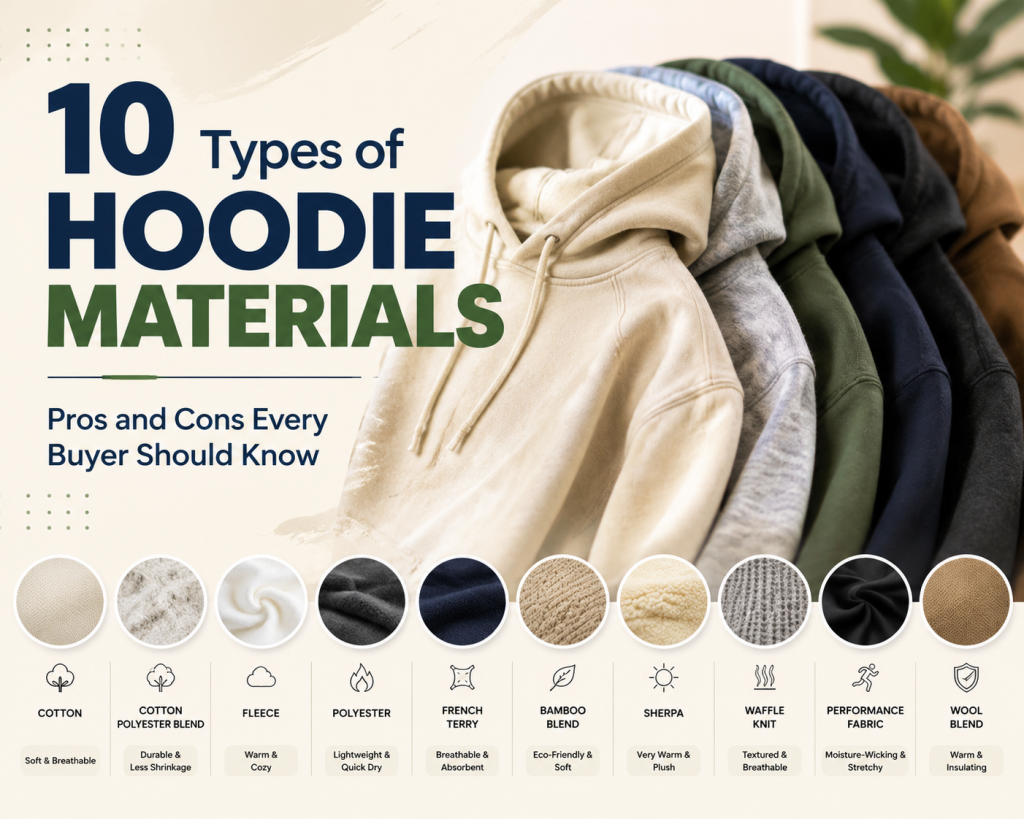
Before jumping into each fabric, let me explain why this decision carries so much weight. Especially if you’re sourcing for a brand or buying wholesale.
People judge in three seconds flat. Someone picks up your hoodie at a pop-up shop or pulls it from a shipping mailer. Their fingers register the fabric before their eyes even process the design. Soft and thick? They’re already half sold. Thin and plasticky? Doesn’t matter how fire your graphics are. That first touch impression is nearly impossible to overcome once it goes negative.
Your printing options depend on it. I’ve seen brand owners design incredible artwork only to discover their chosen fabric won’t hold the ink properly. Cotton takes screen printing like a dream. Polyester causes dye migration nightmares with certain methods. Blends fall somewhere in between. Pick your material wrong and your decoration options shrink dramatically.
Weight changes everything about perception. A 180 GSM hoodie feels like wearing a t-shirt with a hood attached. A 400 GSM heavyweight feels like getting hugged by a cloud. GSM (grams per square meter) tells you the density. Higher number means heavier, thicker, warmer. But heavier isn’t automatically better. Depends entirely on climate, use case, and what your customer expects.
Shrinkage will bite you if you ignore it. Pure cotton shrinks. Sometimes a lot. Polyester doesn’t shrink at all. Blends land somewhere in the middle. Bamboo behaves differently than hemp. Each material ages its own way through wash cycles. Some get softer. Some pill up. Some lose their shape entirely. Knowing this stuff upfront saves you from angry customer emails six weeks after launch.
Cost swings are massive between materials. Organic cotton runs way more than conventional. Tri-blends cost more than basic two-fiber mixes. Bamboo and hemp carry serious premiums. Your fabric choice directly hits your cost of goods, your margins, and ultimately what you can charge at retail. Can’t price a hoodie at $45 if your material cost alone eats half that number.
2. Cotton Fleece
This is the OG. The classic. When somebody pictures a hoodie in their head, they’re picturing cotton fleece whether they know the term or not. Champion invented the hoodie back in the 1930s using this exact type of fabric for athletes training in cold weather. Nearly a century later, it’s still the standard everything else gets measured against.
What it actually is: Cotton fibers knitted into a loop structure on the inside with a smooth face on the outside. Those interior loops get brushed during manufacturing to create the fuzzy, soft lining that makes cotton fleece feel cozy against bare skin. That brushing step is what makes it “fleece” rather than “terry.” Same base construction, different finishing treatment.
Weight range: Usually 280 to 400 GSM for hoodies. You can find lightweight versions around 220 GSM but they feel thin and unsubstantial. The premium heavyweight stuff hits 380 to 450 GSM and feels absolutely luxurious in hand.
The touch test: Soft fuzzy interior against skin. Smooth exterior that drapes nicely. Gets even softer after the first few washes as fibers relax. Breathes reasonably well for a heavier fabric. Absorbs moisture though, so it can feel damp during intense exercise. For casual everyday wear? Perfect.
What’s Good About Cotton Fleece
Screen printing and DTG printing look incredible on this fabric. The smooth cotton face absorbs ink cleanly. Colors pop. Details stay sharp. Fine lines hold. If your brand lives and dies by printed graphics, cotton fleece gives you the best possible canvas. I’ve compared the same design printed on cotton fleece versus polyester fleece side by side and the difference is night and day.
Breathability beats synthetic options hands down. Cotton fibers naturally let air move through them. You don’t get that clammy, overheated, trapped-in-plastic feeling that polyester creates during even moderate activity. For hoodies worn around the house, running errands, grabbing coffee, cotton fleece keeps you comfortable without thinking about it.
Durability holds up when the GSM is right. A 320+ GSM cotton fleece hoodie survives years of regular wear and washing without falling apart. The fabric actually develops character over time. Gets softer. Molds to your body. Lots of people prefer how a broken-in cotton fleece hoodie feels compared to a brand new one. There’s a reason people hold onto their favorite cotton hoodies for a decade.
Sensitive skin loves it. No synthetic fibers causing irritation. No weird chemical treatments needed to make it soft. People with eczema, allergies, or general skin sensitivity can wear cotton fleece without issues in most cases.
What’s Not Great About Cotton Fleece
Shrinkage. This is the big one. Pure cotton fleece shrinks anywhere from 3 to 5 percent after the first wash. Sometimes more depending on the specific cotton source and how the factory processed it. You either pre-shrink during production (adds cost and time) or you size up slightly to account for it. Either way, it’s a headache you have to actively manage.
Gets heavy when wet. Cotton soaks up water like a sponge. A cotton fleece hoodie caught in a rainstorm turns into a heavy, clingy, uncomfortable mess that takes forever to dry. Not the fabric you want for outdoor activities where weather is unpredictable.
Pilling happens over time. Especially in friction zones like underarms and where backpack straps rub. Higher quality cotton with longer fiber staples pills less, but you can’t eliminate it completely. It’s just part of the material’s nature.
Colors fade gradually. Cotton doesn’t grip dye as permanently as synthetic fibers. Dark colors especially show fading after repeated washes. Washing inside-out in cold water helps slow it down but some fading over the garment’s lifetime is unavoidable.
Who should use it: Everyday casual hoodies. Printed merch. Brand hoodies where graphic quality matters most. Customers who value natural fiber comfort over performance features.
3. French Terry
Think of French terry as cotton fleece’s lighter, more versatile sibling. Same family. Different personality. And honestly? For certain applications, I prefer it over traditional fleece.
What it actually is: A knit fabric with loops on the interior (like fleece) but here’s the key difference. Those loops stay unbrushed. No fuzzy napped interior. Instead you get visible loop piles on the inside and a smooth jersey-like face on the outside. Skipping the brushing step creates a lighter, more breathable fabric that works across way more temperature conditions.
Weight range: Usually 220 to 350 GSM. Lighter than most fleece options. This lower weight is exactly why French terry works for transitional seasons and year-round wear in moderate climates.
The touch test: Smooth on both sides compared to fleece. The loop interior gives gentle texture without heavy insulation. Drapes more fluidly. Feels less bulky when worn. Has a slightly more polished, less “I just rolled out of bed” look than traditional fleece hoodies.
What’s Good About French Terry
Seasonal versatility is where French terry really shines. Light enough for spring mornings. Works through fall without overheating you. Not so heavy that summer evenings become uncomfortable. Layers beautifully under a jacket when winter hits. A French terry hoodie gets pulled from the closet eight or nine months of the year. A heavyweight fleece? Maybe four or five months tops.
Shape retention is impressive. French terry resists the stretching and sagging that kills other knit fabrics over time. Necklines stay where they should. Cuffs keep their snap. The overall silhouette holds consistent wash after wash after wash. I’ve seen French terry hoodies maintain their shape after 50+ washes where cotton fleece equivalents started looking baggy.
Printing works great on it. The smooth exterior face takes screen printing, DTG, and embroidery cleanly. Colors come through vibrant. Details hold. For decorated hoodies, French terry performs nearly as well as cotton fleece. Maybe 95% as good in my experience.
Moisture moves through it faster than brushed fleece. The unbrushed loop structure allows more airflow and quicker evaporation. French terry hoodies feel less clammy during light activity. This is why athleisure brands love the fabric. Their customers want comfort during movement, not just while sitting on a couch.
What’s Not Great About French Terry
Less warm than fleece. Full stop. The unbrushed interior and lighter weight mean less insulation when temperatures drop seriously. If your customers live somewhere that gets genuinely cold and they want a hoodie that actually keeps them warm, French terry might leave them shivering. It’s a three-season fabric. Not a winter fabric.
The loop interior can snag. Rings, watch bands, bracelets, rough surfaces. They catch on those interior loops and pull them out of alignment. Once a loop gets pulled, it’s visible and basically permanent. Minor issue for most people but worth mentioning.
Some customers perceive thinner as cheaper. People who associate hoodie quality with weight and thickness might pick up a French terry hoodie and think “this feels insubstantial” compared to a heavyweight fleece. That’s a perception problem, not a quality problem. But perception drives purchases.
Who should use it: Year-round hoodie lines. Athleisure brands. Warmer climate markets. Fashion-forward designs where drape and silhouette matter more than raw warmth.
4. Polyester Fleece
The synthetic route. Made entirely from polyester fibers. Offers a completely different performance profile than cotton. Popular for athletic wear, outdoor gear, and brands that need to hit aggressive price points.
What it actually is: Synthetic polyester fibers knitted and brushed to create a soft, insulating fabric. The manufacturing process creates tiny air pockets within the fiber structure that trap body heat efficiently. Originally developed as a lightweight wool alternative for hikers and outdoor athletes. Now widespread in casual clothing too.
Weight range: 180 to 350 GSM typically. Polyester achieves warmth at lower weights than cotton because those synthetic fiber air pockets trap heat more efficiently per gram.
The touch test: Soft and plush when new. Lighter than cotton fleece of equivalent warmth. Slightly slippery texture. Doesn’t absorb moisture so it feels dry against skin even during activity. Some people find the synthetic feel less pleasant than natural cotton. Others genuinely prefer it. Personal preference thing.
What’s Good About Polyester Fleece
Moisture wicking is the standout feature. Polyester fibers don’t absorb water. Moisture moves through the fabric and evaporates off the surface. Keeps the wearer feeling dry during physical activity. For gym hoodies, running layers, outdoor performance pieces, polyester fleece crushes cotton in moisture management. Not even close.
Zero shrinkage. Polyester does not shrink. What you buy is what you get forever. This eliminates sizing headaches entirely. For brands, fewer returns due to fit issues after washing. For consumers, consistent fit throughout the garment’s entire life. I cannot overstate how much easier this makes production planning and size chart accuracy.
Tough as nails. Polyester resists abrasion, stretching, and tearing better than cotton. Holds color without fading. Maintains appearance through hundreds of wash cycles. The fabric looks the same on wash number 200 as it did on wash number 2.
Dries incredibly fast. A polyester fleece hoodie caught in rain dries in maybe an hour. A cotton equivalent? Still damp the next morning. For travel, outdoor activities, or just unpredictable weather, quick drying is a genuine practical advantage.
Cheapest option for production. Polyester costs less to manufacture than cotton. Lower per-unit costs for brands sourcing at wholesale. Budget hoodie lines use polyester fleece to hit lower retail price points while still delivering acceptable quality and warmth.
What’s Not Great About Polyester Fleece
Breathability takes a hit. Polyester doesn’t let air circulate through the fabric as freely as natural fibers. During moderate to intense activity, it can feel stuffy. Traps heat in ways that become uncomfortable. The moisture wicking helps compensate but overall breathability is just inferior to cotton. No way around it.
Environmental problems are real and growing. Polyester is plastic. Made from petroleum. Sheds microplastics during every single wash cycle. Those microplastics enter waterways and ecosystems. Research from Plymouth University has documented the scale of this problem extensively. For brands positioning as sustainable or eco-conscious, polyester creates a contradiction that informed customers will absolutely call out.
Printing gets complicated. Polyester causes dye migration issues with water-based screen printing inks. The dye in polyester fibers bleeds through the ink layer, showing up as discoloration in printed areas. Particularly problematic with lighter inks on darker polyester. Specialized inks and processes exist to fix this but they add cost and complexity to production.
Static electricity. Polyester fleece hoodies cling to other clothing and generate annoying static shocks. Especially bad in dry winter conditions. Drives some people crazy.
Holds onto smell. Polyester fibers grip body odor more stubbornly than cotton. Bacteria that cause smell adhere to synthetic fibers and resist normal washing. Over time, polyester hoodies can develop persistent odor issues that cotton hoodies simply don’t.
Who should use it: Athletic and performance brands. Budget product lines. Outdoor wear. Travel garments. Situations where moisture management and quick drying outweigh breathability and natural feel.
5. Cotton-Polyester Blend
Here’s the thing about blends. They’re the most common hoodie material on the planet right now. Walk into any retail store, flip the tag on most hoodies, and you’ll see some ratio of cotton to polyester. There’s a reason for that. Blends take the best parts of both fibers and smash them together.
What it actually is: Cotton and polyester fibers blended during the spinning process, then knitted into fleece or terry structures. Common ratios: 80/20 (cotton heavy), 65/35, 60/40, 50/50. The ratio determines which fiber’s personality dominates.
Quick terminology lesson. CVC means “Chief Value Cotton” and indicates the blend is more than 50% cotton. TC means “Tetron Cotton” and indicates more polyester than cotton. These terms come up constantly when you’re talking to factories.
Weight range: 250 to 400 GSM depending on intended use.
The touch test: Heavily depends on ratio. An 80/20 blend feels almost identical to pure cotton. Most people can’t tell the difference without being told. A 50/50 blend has a noticeably different hand feel. Smoother. Slightly more synthetic. Less of that natural cotton warmth against skin.
What’s Good About Cotton-Polyester Blend
Shrinkage drops significantly. The polyester component acts like an anchor, stabilizing the fabric dimensionally. An 80/20 blend might shrink 1 to 2 percent versus 3 to 5 percent for pure cotton. A 50/50 blend barely shrinks at all. For brands, this means fewer sizing complaints. For production planning, this means more predictable outcomes.
Colors last longer. Polyester holds dye more permanently than cotton. Blended fabrics fade less over repeated washing. Dark colors especially benefit. That black hoodie still looks black after thirty washes instead of fading to dark gray like pure cotton tends to do.
Wrinkles less. Pure cotton fleece creases when packed or stored folded. Blends bounce back from compression more readily. Pull a blended hoodie from a suitcase and it looks presentable without ironing. Pure cotton? Wrinkled mess.
Cost flexibility for brands. Adjusting the cotton-to-polyester ratio lets manufacturers hit specific price targets. Need cheaper production? Bump polyester percentage up. Want to maintain that premium cotton feel? Keep cotton dominant at 80/20. This tunability gives brands real control over their cost structure without completely changing the product.
Wears well long-term. Cotton brings comfort and breathability. Polyester brings abrasion resistance and shape retention. Together they create something that handles extended daily wear without either fiber’s individual weaknesses taking over.
What’s Not Great About Cotton-Polyester Blend
Breathability compromised. Better than pure polyester, sure. But not as good as pure cotton. The polyester component reduces overall air circulation. In warm conditions, blended hoodies feel slightly less comfortable than pure cotton options. The difference is subtle but real.
Printing quality depends on your ratio. Higher polyester content increases dye migration risk during printing. Blends above 50% polyester need careful ink selection and technique to avoid sublimation ghosting. If printed designs are central to your brand, stay at 80/20 or higher cotton content. Safer bet.
Environmental middle ground that satisfies nobody. Contains polyester, so microplastic shedding still happens during washing. Less than pure polyester but the concern doesn’t vanish. Plus, blended fabrics are nearly impossible to recycle because separating the fibers at end of life is technically difficult and economically pointless at current scale.
Boring marketing story. Pure cotton has a narrative: natural, breathable, classic, heritage. Pure polyester has a narrative: performance, athletic, technical. Blends? They’re practical. Functional. But not exciting. Hard to build brand identity around “we use a 65/35 cotton-poly blend.” Nobody’s writing that on their About page.
Who should use it: General purpose hoodies. Wholesale blanks for decoration. Brands balancing quality against cost. Anyone who needs moderate shrinkage control without paying premium material prices.
6. Tri-Blend (Cotton/Polyester/Rayon)
Tri-blend has become the golden child of premium casual wear over the past decade. And honestly? The hype is mostly justified. Three fibers working together create something none of them achieve alone.
What it actually is: Typically 50% polyester, 25% cotton, 25% rayon. Ratios vary by manufacturer but that’s the most common split. Each fiber contributes something specific. Cotton gives natural softness and breathability. Polyester gives durability and shape retention. Rayon gives drape, silkiness, and a luxurious hand feel that elevates the whole fabric beyond what any two-fiber blend manages.
Weight range: Usually 180 to 280 GSM. Tri-blends lean lighter. They’re fashion pieces, not heavyweight winter armor.
The touch test: Noticeably softer and more fluid than cotton-poly blends. The rayon component gives it this silky quality that people register immediately. It drapes against the body rather than standing stiff. Feels more refined. More expensive. More intentional. I’ve watched people at trade shows pick up tri-blend samples and their expression changes instantly. You can see them thinking “oh, this is different.”
What’s Good About Tri-Blend
Hand feel is genuinely superior. Not marketing fluff. Actually superior. People touch a tri-blend hoodie and something clicks. The softness and drape create an immediate premium impression that justifies charging more at retail. If your brand competes on perceived quality and luxurious feel, tri-blend delivers that impression every single time someone touches your product.
Vintage look happens naturally. Tri-blend has a slightly heathered appearance because the three fibers absorb dye differently. Creates visual texture and depth that looks like a well-loved vintage piece even when it’s brand new off the production line. Brands chasing that worn-in, lived-in aesthetic love tri-blend because it achieves the look without artificial distressing treatments.
Lightweight comfort spans seasons. Lower GSM and excellent drape make tri-blend hoodies comfortable across a wide temperature range. Layer under jackets in winter. Wear alone in spring and fall. The fabric moves with your body rather than fighting against it.
Minimal shrinkage. Polyester component keeps dimensions stable through wash cycles. Fit stays consistent over time.
What’s Not Great About Tri-Blend
Less durable than heavier options. The lighter weight and rayon content make tri-blend less resistant to hard wear. These are fashion pieces. Not work hoodies. Not gym beaters. They won’t survive the same abuse a 400 GSM cotton fleece hoodie handles without showing wear and thinning.
Costs more to produce. Three-fiber blends are more expensive than two-fiber or single-fiber fabrics. Rayon adds cost. Manufacturing complexity increases. Per-unit costs run 15 to 30 percent higher than equivalent cotton-poly blends. That premium needs to be justified through higher retail pricing.
Not warm. The lighter weight means less insulation. Tri-blend hoodies are layering pieces and mild weather garments. Customers expecting genuine winter warmth will be disappointed and might leave negative reviews about the hoodie being “too thin.”
Rayon’s environmental story is messy. Rayon comes from wood pulp, which sounds natural and eco-friendly. But manufacturing it requires harsh chemicals including carbon disulfide, which is toxic. The Changing Markets Foundation has published detailed reports exposing the environmental damage from viscose and rayon production. Brands marketing tri-blend as “sustainable” based on rayon content are stretching truth thin.
Prints look different. Mixed fiber content means different parts of the fabric absorb ink differently. Creates a slightly muted, vintage-looking print rather than crisp vibrant graphics. Some brands love this effect intentionally. Others find it frustrating when they want bold saturated colors.
Who should use it: Fashion-forward brands. Premium positioning. Lightweight layering pieces. Streetwear and athleisure markets where hand feel drives purchasing decisions and customers willingly pay more for it.
7. Bamboo Fabric
Bamboo entered the hoodie market as the sustainable darling and it’s been growing steadily ever since. Still niche compared to cotton and polyester. But the performance characteristics are genuinely unique and the sustainability angle resonates with a growing customer segment.
What it actually is: Fabric made from bamboo plant fibers. Processed either mechanically (bamboo linen, rare and expensive) or chemically (bamboo viscose/rayon, which is what 99% of “bamboo fabric” actually is). The chemical process converts bamboo pulp into spinnable fibers using a method similar to rayon production.
Weight range: 200 to 320 GSM for hoodie applications.
The touch test: Exceptionally soft. Bamboo viscose has this silky, smooth texture that lots of people find more pleasant against skin than even high-quality cotton. Drapes well. Has a subtle sheen that gives garments a slightly elevated appearance without looking shiny or synthetic.
What’s Good About Bamboo Fabric
Softness is remarkable and I don’t use that word lightly. Bamboo fabric is genuinely one of the softest materials available for hoodies. The fiber structure creates a smooth surface that feels gentle against even the most sensitive skin. People with eczema, allergies, or general skin reactivity often find bamboo more comfortable than anything else they’ve tried.
Natural antibacterial properties keep odor down. Bamboo fibers contain a bio-agent called bamboo kun that resists bacterial growth. Bamboo hoodies develop less smell between washes than cotton or polyester. For active wear applications or people who don’t want to wash after every single wear, this matters.
Temperature regulation works in both directions. Keeps you cool when it’s warm. Retains warmth when it’s cool. The fiber structure creates micro-gaps that ventilate in heat and insulate in cold. Makes bamboo hoodies comfortable across a wider temperature range than most single-purpose fabrics I’ve worked with.
Sustainability story connects with customers. Bamboo grows rapidly without pesticides. Requires minimal water compared to cotton. Regenerates from its root system without replanting. The World Wildlife Fund recognizes bamboo as one of the most sustainable raw materials for textiles. That story sells. Customers who care about environmental impact respond to it.
Absorbs moisture better than cotton. Bamboo fibers pull moisture away from skin more effectively and release it through evaporation faster. Keeps the wearer feeling drier during light to moderate activity.
What’s Not Great About Bamboo Fabric
Processing undermines the green narrative. While bamboo the plant is sustainable, converting it into viscose fabric requires sodium hydroxide and carbon disulfide. Harsh chemicals. Toxic waste. The “eco-friendly” marketing around bamboo fabric often conveniently skips over this manufacturing reality. Brands need transparency here or risk getting called out for greenwashing by informed customers and watchdog organizations.
Durability is lower. Bamboo viscose fibers weaken when wet and damage more easily during washing. Bamboo hoodies need gentler care than cotton. Aggressive machine wash cycles degrade the fabric faster than customers expect. This leads to disappointment and returns if you don’t communicate care instructions clearly.
Expensive. Bamboo fabric costs significantly more to produce than cotton or polyester. That premium flows through to final garment cost. Bamboo hoodies retail higher, which limits your market to consumers willing to pay for sustainability and softness. Not everyone is.
Fewer factories work with it. Not all hoodie manufacturers have experience with bamboo fabric. Sourcing bamboo hoodies means finding suppliers who know the material’s quirks during cutting and sewing. Narrows your options compared to cotton or polyester. For businesses exploring bamboo hoodies, a sourcing partner with specialty fabric experience can identify capable manufacturers faster than searching alone.
Wrinkles more than synthetic blends. Bamboo creases when packed or stored folded. Needs more careful handling and storage.
Who should use it: Eco-conscious brands. Sensitive skin markets. Premium positioning where sustainability story drives marketing and customer loyalty.
8. Hemp Blend
Hemp is literally the oldest textile fiber humans have used. Thousands of years of history. And now it’s making a serious comeback in modern apparel. For hoodies specifically, hemp shows up in blends with cotton rather than pure hemp fabric, which tends to be too stiff for comfortable hoodie construction.
What it actually is: Fiber from the Cannabis sativa plant (industrial hemp, grown for fiber not for anything else) blended with cotton. Common ratios: 55% hemp/45% cotton or 40% hemp/60% cotton. The blend softens hemp’s natural stiffness while keeping its strength and durability advantages.
Weight range: 280 to 380 GSM typically. Hemp fibers are naturally dense, giving hemp blend hoodies a substantial, weighty feel that communicates quality immediately.
The touch test: Slightly rougher than pure cotton when brand new. Here’s the thing though. Hemp develops remarkable softness over time. The break-in period is real. First few wears feel stiffer than you’d expect. After five to ten washes? The fabric transforms. Softens dramatically. Develops a character that cotton alone never achieves. Long-term hemp hoodie owners become almost evangelical about how the fabric evolves.
What’s Good About Hemp Blend
Durability is exceptional. Hemp is one of the strongest natural fibers on earth. Hemp blend hoodies resist abrasion, stretching, and tearing better than pure cotton. They last longer. Hold shape longer. Develop character with age rather than falling apart. A well-made hemp blend hoodie easily lasts five to ten years of regular wear. I’ve personally seen hemp garments that look better at year seven than they did at year one.
Built-in UV protection. Hemp blocks ultraviolet radiation more effectively than cotton or synthetics. For outdoor wear, this provides functional sun protection without chemical UV treatments that wash out over time. The protection is inherent to the fiber itself.
Environmental credentials are genuinely strong. Hemp grows without pesticides in most climates. Requires dramatically less water than cotton. Improves soil health rather than depleting it. Captures carbon dioxide efficiently during growth. From a raw material perspective, hemp might be the most honestly sustainable textile fiber available. No asterisks. No “well, except for the processing” caveats like bamboo has.
Gets better with age. Unlike most fabrics that degrade, hemp blend hoodies improve. Soften. Develop patina. Mold to the wearer’s body shape. Long-term owners describe their hemp hoodies as irreplaceable favorites specifically because of how the fabric evolves. You can’t buy that character new. You earn it through wearing.
Naturally antimicrobial. Similar to bamboo, hemp fibers resist bacterial growth. Hemp blend hoodies stay fresher between washes. Less odor buildup over time.
What’s Not Great About Hemp Blend
Initial stiffness scares people off. The break-in period is a genuine barrier to first-time buyers. Customers used to the instant softness of cotton or tri-blend pick up a new hemp hoodie and think “this is rough.” Brands selling hemp need to educate customers about the break-in process. Include a card in the packaging. Put it on the product page. Set expectations properly or you’ll get returns from people who didn’t give the fabric time to develop.
Higher cost. Hemp fiber costs more than cotton or polyester. Farming infrastructure for textile hemp is still developing in many regions. Supply stays limited. Prices stay elevated. Hemp blend hoodies cost more to produce and need premium retail pricing to maintain margins.
Limited color palette. Hemp fibers don’t accept dye as readily or vibrantly as cotton. Colors lean toward muted, earthy tones. Bright saturated colors are difficult to achieve. Works perfectly for brands with natural, earthy aesthetics. Limits options for brands wanting bold vibrant colorways.
Wrinkles readily. Hemp fibers crease and don’t bounce back from compression like polyester-containing fabrics do. Hemp blend hoodies look rumpled after being packed or stored. Not a deal-breaker but worth knowing.
Sourcing takes more effort. Not all manufacturers work with hemp. The material requires different handling during cutting and sewing.
Who should use it: Sustainability-focused brands. Premium outdoor and lifestyle markets. Customers who value longevity over instant gratification. Brands with earthy, natural aesthetics.
9. Organic Cotton
Organic cotton is regular cotton’s more responsible sibling. Same fiber. Same feel. Same performance characteristics. But grown without synthetic pesticides, herbicides, or genetically modified seeds. The difference is in the farming, not the fabric itself.
What it actually is: Cotton grown according to organic agricultural standards. No synthetic chemicals during cultivation. No GMO seeds. Crop rotation required to maintain soil health. Third-party certification (GOTS, OCS, or similar) verifies compliance throughout the supply chain from farm to finished fabric.
Weight range: Same as conventional cotton. 220 to 450 GSM depending on the fleece or terry construction chosen.
The touch test: Feels identical to conventional cotton in most cases. Some people claim organic cotton feels softer. Honestly? In blind tests, most people can’t tell the difference. The feel depends more on fiber length, GSM, and finishing treatment than whether the cotton was grown organically. What you’re paying for with organic is the farming practice, not a different tactile experience.
What’s Good About Organic Cotton
Environmental impact is genuinely lower. Organic cotton farming uses 88% less water than conventional cotton in many regions according to the Textile Exchange. No synthetic pesticides contaminating soil and waterways. No GMO seeds creating dependency on chemical companies. Healthier working conditions for farmers who aren’t handling toxic chemicals daily. The environmental story is real and documented.
Certification provides verifiable claims. GOTS (Global Organic Textile Standard) certification means the entire supply chain has been audited. From farm to spinning to dyeing to sewing. Brands can make organic claims with confidence because third-party verification backs them up. This matters in an era where consumers are increasingly skeptical of unverified sustainability claims.
Printing and decoration work exactly like conventional cotton. Same smooth face. Same ink absorption. Same vibrant color reproduction. Switching from conventional to organic cotton doesn’t require changing your decoration methods or suppliers at all.
Customer willingness to pay premium exists. Research consistently shows a segment of consumers (growing every year) who actively seek organic products and willingly pay 15 to 30 percent more for them. If your brand targets this demographic, organic cotton hoodies command higher margins than conventional equivalents.
All the comfort benefits of regular cotton. Breathable. Soft. Hypoallergenic. Gets softer with washing. Natural fiber comfort without compromise.
What’s Not Great About Organic Cotton
Costs more. Period. Organic cotton fiber costs 20 to 50 percent more than conventional cotton depending on origin and certification level. This premium flows through every step of production. Your cost of goods increases. Your margins shrink unless you raise retail prices. Not every market segment absorbs that premium willingly.
Same shrinkage issues as conventional cotton. Organic doesn’t mean shrink-proof. Same 3 to 5 percent shrinkage after first wash. Same need for pre-shrinking or size adjustment. The organic certification addresses farming practices, not fabric performance.
Same durability profile as conventional cotton. No stronger. No weaker. Same pilling tendencies. Same color fading over time. Same moisture absorption making it heavy when wet. You’re paying more for identical physical performance.
Supply chain complexity increases. Organic cotton requires certified suppliers at every stage. Finding factories that hold GOTS certification and produce hoodies at your required quality level narrows your options. Lead times can be longer. Minimum order quantities sometimes higher because factories batch organic production separately from conventional to maintain certification integrity.
Greenwashing risk if you’re not careful. Slapping “organic” on marketing without proper certification invites scrutiny. Customers and competitors will ask for proof. Make sure your supply chain documentation is airtight before making organic claims publicly.
Who should use it: Brands with genuine sustainability commitments. Premium market positioning. Customers who research materials before purchasing. Brands targeting eco-conscious demographics willing to pay more.
10. Sherpa Fleece
Sherpa is the heavyweight champion of hoodie warmth. Named after the Sherpa people of Nepal who live in extreme cold, this fabric delivers serious insulation in a soft, plush package. You’ll find it as hoodie linings, full construction material for winter hoodies, or as accent panels on collars and hoods.
What it actually is: A knitted polyester (sometimes polyester-cotton blend) fabric with one smooth side and one deeply textured, curly pile side that resembles sheep’s wool. The pile side creates significant loft, trapping air in its textured surface to provide insulation. Think of it as faux shearling. Looks like wool. Feels like wool. Made from synthetic fibers.
Weight range: 280 to 450 GSM. The pile adds significant weight and bulk compared to flat fleece fabrics.
The touch test: Incredibly soft and plush on the pile side. Almost impossibly cozy. Running your hand across sherpa feels like touching a stuffed animal. The smooth reverse side feels like standard polyester fleece. When used as a hoodie lining, the pile sits against your skin and creates immediate warmth and comfort.
What’s Good About Sherpa Fleece
Warmth is unmatched among common hoodie materials. The deep pile traps body heat in air pockets created by the textured surface. A sherpa-lined hoodie keeps you genuinely warm in cold conditions where other hoodie materials fall short. For winter hoodies, cold climate markets, and customers who want a hoodie that actually functions as outerwear, sherpa delivers.
Visual and tactile luxury. Sherpa looks expensive. The textured pile surface communicates premium quality immediately. Customers perceive sherpa-lined or sherpa-constructed hoodies as higher value items. This perception supports higher retail pricing.
Lightweight relative to warmth provided. Despite being warm, sherpa weighs less than you’d expect for its insulation level. Lighter than actual wool or shearling while providing comparable warmth. This makes sherpa hoodies more comfortable for extended wear than genuinely heavy winter garments.
Moisture resistant. Being primarily polyester, sherpa doesn’t absorb water. Stays dry. Dries quickly if it does get wet. Maintains insulating properties even in damp conditions, unlike cotton which loses warmth when wet.
Durable pile holds up. Quality sherpa maintains its plush texture through many wash cycles without matting or flattening significantly. The curly pile structure is resilient.
What’s Not Great About Sherpa Fleece
Bulk. Sherpa adds significant thickness to any garment. Sherpa-lined hoodies are bulky. They don’t layer well under fitted jackets. They take up more closet space. They’re harder to pack for travel. The warmth comes at the cost of sleekness.
Seasonal limitation. Sherpa hoodies are winter garments. Period. Wearing one in temperatures above 10 degrees Celsius (50 Fahrenheit) means overheating quickly. This limits the wearing window to cold months only. Your inventory sits unsold during warm seasons unless you’re selling to southern hemisphere markets during their winter.
Microplastic shedding. Same environmental concern as all polyester fabrics. Sherpa’s deep pile structure may actually shed more microplastics per wash than flat polyester fleece due to greater surface area. Environmentally conscious customers may avoid it for this reason.
Pilling can occur on the pile surface over time, especially in areas of friction. Once sherpa pills, the plush appearance degrades noticeably. Quality varies significantly between manufacturers. Cheap sherpa pills quickly. Premium sherpa resists pilling much longer.
Printing is essentially impossible on the pile side. The textured surface doesn’t accept screen printing or DTG. Decoration options are limited to the smooth reverse side, embroidery on flat panels, or patches and labels. If your brand relies on printed graphics, sherpa construction limits your design options severely.
Who should use it: Winter hoodie lines. Cold climate markets. Brands positioning hoodies as outerwear alternatives. Premium cozy loungewear. Sherpa works as full construction or as lining material paired with cotton or polyester exterior.
11. Nylon Blend
Nylon doesn’t get talked about much in hoodie conversations but it deserves attention. Particularly for performance-oriented and technical hoodie designs that need to handle weather, abrasion, and active use better than pure cotton or standard fleece.
What it actually is: Nylon (polyamide) fibers blended with cotton, polyester, or spandex to create hoodie fabrics with enhanced durability and weather resistance. Common configurations include nylon-cotton blends for the outer face with fleece interior, or nylon-polyester-spandex blends for stretch performance hoodies. Nylon typically appears at 10 to 40 percent of the blend.
Weight range: 220 to 380 GSM depending on construction and intended use.
The touch test: Smoother and slightly more structured than pure cotton or polyester fleece. The nylon component gives fabric a subtle sheen and a more technical feel. Less cozy-casual than cotton fleece. More purposeful. More “I’m going to do something active in this” rather than “I’m watching movies on the couch.”
What’s Good About Nylon Blend
Abrasion resistance is dramatically higher than cotton or polyester alone. Nylon is one of the toughest textile fibers available. Adding it to hoodie fabric creates garments that resist wear in high-friction areas. Elbows. Shoulders where backpack straps sit. Anywhere the fabric rubs against surfaces repeatedly. For hoodies intended for outdoor activities, commuting, or physical work, nylon blend outlasts other options.
Wind resistance improves. Nylon’s tighter fiber structure blocks wind more effectively than cotton or standard polyester fleece. A nylon blend hoodie provides better protection on windy days without needing a separate windbreaker layer. This functional advantage matters for customers who wear hoodies as light outerwear.
Water resistance (not waterproof, but resistant). Nylon fibers repel water better than cotton. Light rain beads on the surface rather than soaking through immediately. The hoodie won’t keep you dry in a downpour but handles drizzle and light precipitation without becoming a soggy mess.
Shape retention is excellent. Nylon has natural elasticity and memory. It bounces back to its original shape after stretching. Nylon blend hoodies maintain their silhouette and structure over time without the sagging that affects pure cotton garments.
Quick drying. Similar to polyester, nylon doesn’t absorb much moisture. Dries faster than cotton when it does get wet. Practical for active use and unpredictable weather.
What’s Not Great About Nylon Blend
Less breathable than cotton. Nylon’s tighter structure that blocks wind also restricts airflow. In warm conditions or during intense activity, nylon blend hoodies can feel stuffy. The wind resistance that’s an advantage in cold weather becomes a disadvantage in warmth.
Less soft against skin. Nylon doesn’t have the natural softness of cotton. The fabric feels more technical, more structured. Some people find this less comfortable for lounging and casual wear. Nylon blend hoodies are functional garments, not cozy blankets.
Higher cost than basic cotton or polyester. Nylon fiber is more expensive than polyester. Blending it into hoodie fabric increases per-unit production cost. The performance benefits justify the premium for the right market segment but price-sensitive customers may not see the value.
Printing limitations similar to polyester. Nylon content can cause issues with certain printing methods. Heat sensitivity means heat transfer and sublimation need careful temperature control to avoid damaging the nylon fibers. Screen printing works but requires testing to ensure adhesion and durability on the specific blend.
Static buildup. Like polyester, nylon generates static electricity. Can be annoying in dry conditions.
Environmental concerns. Nylon is synthetic, petroleum-derived, and sheds microplastics. Same category of environmental issues as polyester. Not suitable for brands with strong sustainability positioning.
Who should use it: Technical and performance hoodie brands. Outdoor and adventure wear. Commuter-focused designs. Brands where durability and weather resistance matter more than pure softness. Athletic brands wanting hoodies that handle physical activity and elements.
12. Side-by-Side Comparison Table
| Material | Warmth | Softness | Durability | Breathability | Shrinkage | Print Quality | Cost | Sustainability |
| Cotton Fleece | High | High | Good | Good | High (3-5%) | Excellent | Medium | Medium |
| French Terry | Medium | High | Good | Very Good | Medium (2-3%) | Very Good | Medium | Medium |
| Polyester Fleece | High | Medium | Excellent | Low | None | Poor | Low | Low |
| Cotton-Poly Blend | Medium-High | Medium-High | Very Good | Medium | Low (1-2%) | Good | Medium-Low | Low-Medium |
| Tri-Blend | Low-Medium | Very High | Medium | Good | Very Low | Medium | High | Low-Medium |
| Bamboo | Medium | Very High | Medium | Very Good | Low-Medium | Good | High | Medium-High |
| Hemp Blend | Medium-High | Medium (improves) | Excellent | Good | Low | Good | High | High |
| Organic Cotton | High | High | Good | Good | High (3-5%) | Excellent | High | High |
| Sherpa Fleece | Very High | Very High | Good | Low | None | Very Poor | Medium-High | Low |
| Nylon Blend | Medium-High | Medium | Excellent | Low-Medium | Very Low | Medium | Medium-High | Low |
13. Picking the Right Material for Your Situation
After working with all ten of these materials across hundreds of production runs, here’s how I think about material selection. It comes down to answering a few key questions honestly.
What climate are your customers in?
Cold climate customers need warmth. Cotton fleece at 350+ GSM, sherpa-lined options, or heavyweight hemp blends serve them well. Warm climate customers need breathability. French terry, lightweight tri-blend, or bamboo keep them comfortable without overheating. If you’re selling globally across climate zones, consider offering the same design in multiple material weights rather than forcing one fabric to serve everyone.
What’s your price positioning?
Budget brands lean toward polyester fleece or 50/50 cotton-poly blends. Mid-range brands do well with cotton fleece or CVC blends. Premium brands justify their pricing with tri-blend, organic cotton, bamboo, or hemp. Your material choice needs to align with what your customer expects at your price point. A $90 hoodie better not feel like polyester fleece. A $30 hoodie can’t be made from organic hemp blend and still turn a profit.
How important is printing?
If printed graphics drive your brand, cotton fleece or organic cotton give you the best canvas. French terry works nearly as well. Polyester and nylon create complications. Sherpa makes printing essentially impossible on the pile side. Tri-blend gives a vintage muted print effect that works for some aesthetics but not others. Match your material to your decoration strategy.
What story does your brand tell?
Sustainability brands need organic cotton, hemp, or bamboo (with honest communication about processing). Performance brands need polyester, nylon blends, or technical constructions. Heritage and classic brands align with cotton fleece. Fashion-forward brands gravitate toward tri-blend and French terry. Your material should reinforce your brand narrative, not contradict it.
What’s your tolerance for customer education?
Some materials need explanation. Hemp requires communicating the break-in period. Bamboo needs transparency about processing. Tri-blend needs context about why it’s lighter than expected. Cotton needs shrinkage warnings. If you don’t want to educate customers, stick with materials that meet expectations immediately. Cotton-poly blends and cotton fleece require the least explanation because people already know what to expect.
For brands sourcing hoodies at scale and needing help navigating material selection alongside quality control during production, working with experienced procurement partners who’ve handled these materials across multiple factories saves costly trial-and-error.
14. Questions I Get Asked All the Time
What’s the best hoodie material overall?
No single answer works for everyone. For everyday comfort and versatility, I recommend cotton fleece at 320+ GSM or an 80/20 CVC blend. These satisfy the widest range of customers without requiring explanation or special care. If I had to pick one material for a brand launching its first hoodie, I’d say 80/20 cotton-poly fleece at 350 GSM. Comfortable. Durable. Prints well. Doesn’t shrink much. Reasonably priced. Checks every box adequately even if it doesn’t excel at any single thing.
What GSM should I look for?
Depends on intended use. Lightweight layering: 200 to 280 GSM. All-purpose everyday: 280 to 350 GSM. Premium heavyweight: 350 to 450 GSM. Higher GSM costs more per unit because you’re using more material. But customers perceive heavier hoodies as higher quality almost universally. If budget allows, err toward heavier rather than lighter.
Does material affect how long a hoodie lasts?
Absolutely. Hemp blends and nylon blends last longest. Cotton fleece and cotton-poly blends offer good longevity at 320+ GSM. Tri-blend and bamboo are less durable due to lighter weight and fiber characteristics. Polyester lasts forever in terms of not degrading but can develop odor and pilling issues that make people stop wearing it before it actually wears out.
What material is best for screen printing?
Cotton. Pure cotton fleece gives the cleanest, most vibrant prints. Organic cotton performs identically. 80/20 CVC blends work nearly as well. Avoid high polyester content (above 50%) for screen printing unless you’re using specialized low-bleed inks. Avoid sherpa entirely for printing.
Can I mix materials in one hoodie?
Yes and many brands do. Cotton fleece body with sherpa-lined hood. Nylon blend shoulders and elbows with cotton fleece everywhere else. French terry body with ribbed cotton cuffs and hem. Mixing materials lets you optimize different parts of the garment for different functions. More complex to manufacture but creates unique products that stand out.
What’s the most sustainable hoodie material?
Hemp blend wins on raw material sustainability. Organic cotton wins on certification and verifiability. Bamboo wins on resource efficiency during farming but loses points for chemical processing. No material is perfect. The most honest answer is: the most sustainable hoodie is one that gets worn hundreds of times before being discarded. Durability is sustainability. A hemp blend hoodie worn for ten years has lower environmental impact per wear than an organic cotton hoodie that falls apart in two years.
How do I test material quality when sourcing?
Request samples before committing to production. Wash them five times. Check for shrinkage, pilling, color fading, and shape retention. Feel the fabric after washing, not just when new. Pull on seams. Stretch the fabric and see if it recovers. Rub the surface vigorously and check for pilling. These simple tests reveal more about long-term performance than any spec sheet. For businesses needing systematic quality verification, a product development and testing partner can run standardized tests across multiple supplier samples.
What material do premium brands like Essentials and Represent use?
Most premium streetwear brands use heavyweight cotton fleece (380 to 450 GSM) or heavyweight CVC blends. Some use French terry for lighter seasonal pieces. The “premium” feel in these brands comes primarily from high GSM (weight and thickness) combined with quality cotton that has long fiber staples for softness. You can achieve similar fabric quality through proper sourcing without paying brand markup.