
I ruined my sleep for three months because of fabric. Sounds dramatic. It’s not.
Back in 2019, I sourced a batch of polyester satin pajamas for a client launching a sleepwear brand. The photos looked gorgeous. Silky. Luxurious. The kind of thing you’d see on an Instagram ad with soft lighting and a model stretching in bed looking impossibly well-rested. My client was thrilled when samples arrived.
Then customers started sleeping in them. Reviews trickled in within weeks. “Woke up sweating.” “Fabric sticks to my skin.” “Looks beautiful but I can’t actually sleep in these.” Returns hit 34 percent in the first month. The brand nearly folded before it got off the ground.
That experience burned a lesson into my brain that I carry into every sleepwear sourcing project now. Sleepwear fabrics aren’t like other garment fabrics. You can’t just pick something that looks nice and call it done. People spend six to nine hours wrapped in this material every single night. Their body temperature fluctuates. They sweat. They move. They need the fabric to work with their biology, not against it.
I’ve sourced sleepwear from factories across China, India, Turkey, and Portugal over the past decade. Handled every fabric on this list hundreds of times. Tested them personally. Watched customer feedback roll in across dozens of brands. And the gap between sleepwear fabrics that actually help people sleep well versus ones that just photograph nicely is enormous.
So here’s my honest breakdown of seven common sleepwear fabrics with real pros and cons based on years of hands-on experience. Not textbook definitions. Not marketing fluff. Just what actually matters when fabric meets skin at 2 AM.
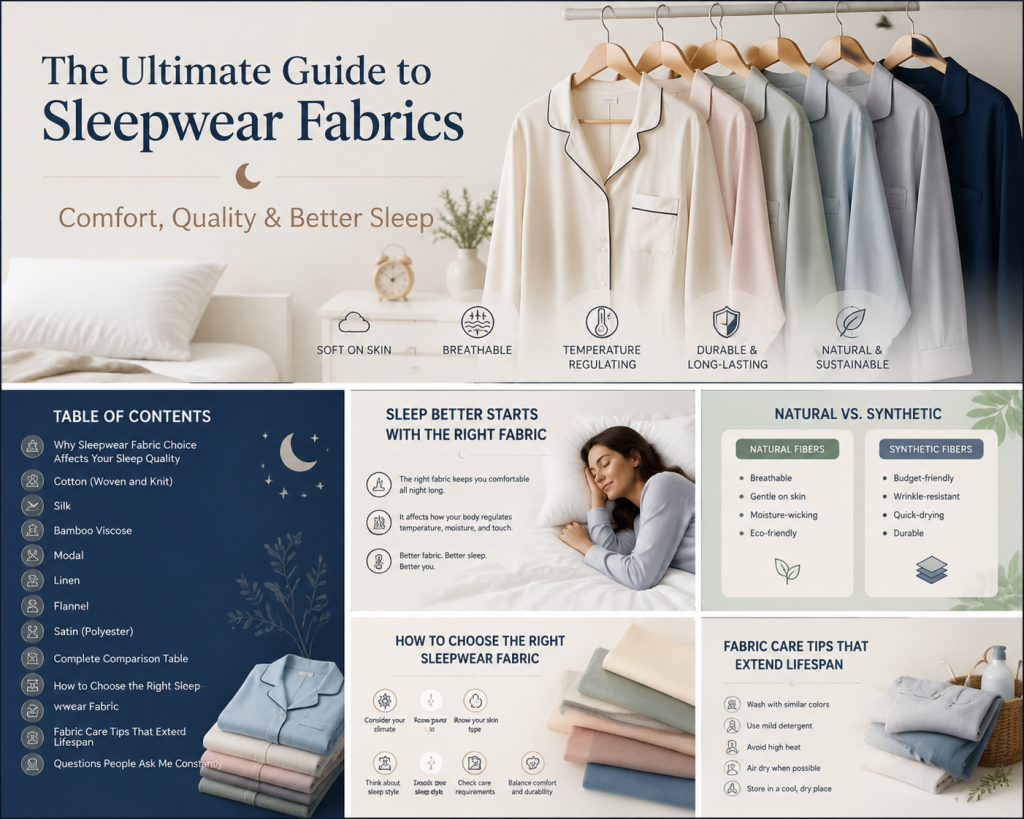
1. Why Sleepwear Fabric Choice Affects Your Sleep Quality
Most people grab whatever pajamas feel okay in the store and never think about it again. But fabric choice directly impacts sleep quality in ways that research has documented extensively. The National Sleep Foundation has published multiple studies connecting sleepwear material to thermoregulation and sleep disruption patterns.
Here’s what’s happening while you sleep that makes fabric matter so much.
Your body temperature drops. During sleep, your core temperature decreases by about 1 to 2 degrees. This temperature drop is essential for deep sleep stages. Fabric that traps heat prevents this natural cooling process. You don’t fully wake up, but your sleep quality degrades. You cycle through lighter sleep stages instead of reaching the restorative deep sleep your body needs. Morning comes and you feel unrested without understanding why.
You sweat more than you realize. The average person loses about 200 to 700 ml of moisture through sweat during a typical night. Some people lose even more. Your sleepwear fabric either absorbs and releases that moisture (keeping you comfortable) or traps it against your skin (waking you up feeling clammy and gross). Moisture management might be the single most important performance characteristic for sleepwear fabrics.
Skin sensitivity increases at night. Your skin’s barrier function changes during sleep. Sensitivity increases. Irritants that you’d barely notice during the day can disrupt sleep at night. Rough textures, chemical residues from fabric treatments, synthetic fibers that create friction. All of these register more intensely against sleeping skin than waking skin.
You move constantly. The average person changes position 20 to 40 times per night. Your sleepwear needs to move with you without bunching, riding up, twisting, or creating uncomfortable pressure points. Fabric drape, stretch, and weight all influence how well pajamas accommodate nighttime movement.
Temperature regulation varies by season and person. Hot sleepers need breathable, moisture-wicking fabrics year-round. Cold sleepers need insulation without overheating. Most people need different sleepwear for summer versus winter. Understanding which fabrics serve which temperature needs prevents the common mistake of buying one type of pajamas and suffering through half the year.
Understanding these biological realities is what separates good sleepwear sourcing from bad sleepwear sourcing. Every fabric on this list performs differently across these five dimensions. Some excel at moisture management but lack warmth. Others provide warmth but trap moisture. Knowing the tradeoffs lets you make informed decisions whether you’re buying for yourself or sourcing for a brand.
2. Cotton (Woven and Knit)
Cotton is the most popular sleepwear fabric on the planet and has been for generations. Your grandmother’s pajamas were probably cotton. Your hotel room pajamas are almost certainly cotton. There’s a reason it dominates the sleepwear market so completely.
What it actually is: Natural cellulose fiber from the cotton plant, either woven into a structured fabric (like poplin or percale for traditional pajama sets) or knitted into a stretchy jersey (like a soft t-shirt material for more casual sleepwear). The construction method changes how the fabric performs even though the fiber is identical.
Woven cotton (poplin, percale, sateen weave) creates structured pajamas with a crisp, smooth feel. Think classic button-down pajama sets. Knit cotton (jersey, interlock) creates stretchy, casual sleepwear that moves like a t-shirt. Think jogger-style sleep pants and relaxed tops.
Weight range: 120 to 200 GSM for woven cotton sleepwear. 150 to 220 GSM for knit cotton sleepwear. Lighter than most daywear fabrics because breathability matters more than insulation for sleep.
The touch test: Woven cotton feels crisp and smooth when new. Softens with washing. Knit cotton feels immediately soft and stretchy. Both feel natural against skin without any synthetic slipperiness or plasticky quality. Familiar. Comfortable. Unobtrusive. Cotton doesn’t demand attention. It just works quietly.
What’s Good About Cotton Sleepwear
Breathability is excellent. Cotton fibers have a natural structure that allows air to circulate freely through the fabric. Heat escapes. Fresh air reaches skin. This prevents the overheating that disrupts sleep cycles. For hot sleepers and warm climate markets, cotton’s breathability makes it the safest default choice.
Moisture absorption is high. Cotton absorbs up to 27 times its weight in water. During sleep, this means sweat gets pulled away from your skin into the fabric rather than sitting on your body surface creating that clammy feeling. The moisture then evaporates from the fabric’s outer surface. This absorption-evaporation cycle keeps sleepers feeling dry and comfortable through the night.
Hypoallergenic and gentle on sensitive skin. No synthetic chemicals needed to achieve softness. No plastic fibers creating micro-friction against skin. Cotton is naturally gentle. People with eczema, psoriasis, contact dermatitis, or general skin sensitivity can wear cotton sleepwear without triggering reactions in most cases. Dermatologists recommend cotton sleepwear more than any other fabric for patients with skin conditions.
Durability through hundreds of wash cycles. Cotton sleepwear lasts years with proper care. The fabric actually improves with washing during the first dozen cycles, becoming softer and more comfortable. A well-made cotton pajama set easily survives three to five years of regular use and weekly washing.
Affordable across all quality tiers. Cotton sleepwear exists at every price point from budget to luxury. Basic cotton jersey sleep sets retail for $15 to $30. Premium long-staple cotton (Pima, Supima, Egyptian) pajamas retail for $80 to $200+. Whatever your market positioning, cotton works within your price structure.
Easy care. Machine washable. Tumble dry. No special handling required. Customers don’t need to read complicated care labels or hand-wash their pajamas. This practical advantage matters more than people realize. Sleepwear gets washed frequently. Complicated care requirements lead to either damaged garments or customers who stop washing properly and develop hygiene issues.
What’s Not Great About Cotton Sleepwear
Moisture retention is the flip side of moisture absorption. Cotton absorbs sweat readily but releases it slowly. In humid climates or for very heavy sweaters, cotton can become saturated and feel damp against skin rather than dry. The fabric holds moisture rather than moving it away efficiently. This is where synthetic moisture-wicking fabrics and bamboo outperform cotton.
Shrinkage affects fit over time. Cotton shrinks 3 to 5 percent after initial washing. For sleepwear, this means pajamas that fit perfectly in the store might feel slightly tighter after the first wash. Pre-shrunk cotton reduces this issue but doesn’t eliminate it entirely. Brands need to account for shrinkage in their sizing or communicate it clearly to customers.
Wrinkles easily. Cotton sleepwear comes out of the dryer wrinkled. Woven cotton (poplin, percale) wrinkles more than knit cotton (jersey). For brands, this means product photos need to show the fabric realistically. For consumers, it means either ironing (who irons pajamas?) or accepting a slightly rumpled look.
Not the warmest option for cold sleepers. Cotton breathes so well that it doesn’t retain much body heat. In cold bedrooms during winter, cotton sleepwear alone might not provide enough warmth. Cold sleepers in cool climates often need to layer cotton with heavier blankets or switch to flannel during winter months.
Basic cotton can feel rough. Not all cotton is created equal. Short-staple cotton (the cheapest variety) can feel scratchy and stiff. The softness people associate with cotton comes from longer fiber staples (Pima, Supima, Egyptian cotton) or from specific finishing treatments (mercerization, enzyme washing). Budget cotton sleepwear sometimes disappoints on softness because the raw material quality is low.
Who should use it: Hot sleepers. Warm climate markets. Sensitive skin customers. Budget to mid-range brands. Classic pajama set designs. Year-round sleepwear lines (with seasonal weight adjustments). Anyone who wants a safe, proven, universally acceptable sleepwear fabric.
3. Silk
Silk is the luxury standard for sleepwear. Has been for centuries. There’s a reason “silk pajamas” is shorthand for wealth and indulgence in popular culture. But beyond the luxury positioning, silk has genuine performance characteristics that make it arguably the best sleepwear fabric from a pure sleep quality perspective.
What it actually is: Natural protein fiber produced by silkworms (Bombyx mori) during cocoon formation. Each cocoon produces a single continuous filament up to 900 meters long. These filaments get twisted together into thread, then woven into fabric. The most common silk weave for sleepwear is charmeuse (satin weave using silk fibers), which creates that signature glossy surface on one side and matte finish on the other.
Mulberry silk is the highest quality, produced by silkworms fed exclusively on mulberry leaves. Momme weight measures silk density (similar to GSM for other fabrics). Sleepwear typically uses 16 to 22 momme silk. Higher momme means denser, more durable, more opaque fabric.
The touch test: Nothing else feels like silk. Smooth. Cool to the touch. Fluid. It glides across skin rather than gripping or dragging. The sensation is immediately recognizable and immediately luxurious. Lightweight but substantial. Delicate but not flimsy at proper momme weights.
What’s Good About Silk Sleepwear
Thermoregulation is exceptional. Silk naturally adapts to body temperature. Keeps you cool when you’re warm. Provides gentle insulation when you’re cool. This dual-direction temperature management means silk sleepwear works year-round without seasonal switching. The protein fiber structure contains amino acids that respond to temperature changes, adjusting the fabric’s insulating properties dynamically. Research published in the Journal of Physiological Anthropology has documented silk’s superior thermoregulatory properties compared to cotton and synthetic fabrics during sleep.
Moisture management is superior to cotton. Silk absorbs moisture (up to 30% of its weight without feeling wet) and releases it through evaporation faster than cotton. You stay drier through the night. Less clammy waking. Less disrupted sleep from moisture discomfort. For heavy sweaters, silk outperforms cotton significantly.
Incredibly gentle on skin and hair. Silk’s smooth surface creates minimal friction against skin and hair. Less irritation for sensitive skin. Less hair breakage and frizz (which is why silk pillowcases became so popular). Less sleep creasing on facial skin. Dermatologists and hair specialists recommend silk for patients concerned about skin aging and hair damage during sleep.
Naturally hypoallergenic and resistant to dust mites. Silk fibers contain sericin, a protein that naturally repels dust mites, mold, and fungus. For allergy sufferers, silk sleepwear reduces exposure to common bedroom allergens. This isn’t marketing spin. The antimicrobial properties of silk are well-documented in textile science literature.
Lightweight and non-restrictive. Silk drapes against the body without weight or bulk. Moves with you during sleep position changes without bunching or twisting. The fabric’s natural fluidity means it accommodates movement better than stiffer woven fabrics.
Luxury positioning commands premium pricing. For brands, silk sleepwear justifies high retail prices. Customers expect to pay more for silk and perceive the purchase as an investment in sleep quality and self-care. Margins on silk sleepwear can be excellent when sourced properly.
What’s Not Great About Silk Sleepwear
Cost is the obvious barrier. Silk is expensive. Raw silk fiber costs dramatically more than cotton, polyester, or bamboo. A silk pajama set costs 5 to 10 times more to produce than an equivalent cotton set. This limits your market to customers with disposable income for luxury sleepwear. Mass market brands can’t use silk and maintain accessible pricing.
Delicate care requirements frustrate customers. Most silk sleepwear requires hand washing or gentle machine cycles with special detergent. No tumble drying. No bleach. No high heat ironing. These care requirements are realistic barriers for busy people who want to throw their pajamas in the wash without thinking about it. Some customers damage silk sleepwear through improper care and blame the brand rather than their own handling.
Durability is lower than cotton or synthetic options. Silk fibers weaken when wet. Friction causes surface damage over time. Silk sleepwear doesn’t last as long as cotton equivalents with regular use and washing. A silk pajama set might last two to three years with careful handling versus five+ years for quality cotton.
Staining is problematic. Silk stains easily from body oils, lotions, perfumes, and even water spots. Stains are difficult to remove without professional cleaning. Customers who apply skincare products before bed (which is most people) may find their silk sleepwear developing discoloration over time.
Temperature sensitivity during storage. Silk degrades when exposed to prolonged sunlight or stored in humid conditions. Moths can damage silk garments in storage. Requires more careful storage than cotton or synthetic sleepwear.
Sourcing complexity. Quality silk comes primarily from China (about 80% of world production). Finding reliable silk suppliers who deliver consistent quality at fair prices requires established relationships or experienced sourcing partners. The silk market has quality variation issues where lower-grade silk gets sold as premium. For brands entering the silk sleepwear market, working with a sourcing partner experienced in luxury textiles reduces the risk of quality disappointments.
Who should use it: Luxury sleepwear brands. Premium gifting market. Customers prioritizing sleep quality and willing to invest in it. Brands targeting the self-care and wellness market. Hot sleepers who need superior thermoregulation.
4. Bamboo Viscose
Bamboo viscose has exploded in the sleepwear market over the past five years. And honestly? For good reason. The performance characteristics align almost perfectly with what sleepwear needs to do. I’ve watched multiple sleepwear brands build their entire identity around bamboo fabric and succeed because the product genuinely delivers on comfort promises.
What it actually is: Fabric made from bamboo plant pulp processed through a chemical conversion into viscose (rayon) fibers. The bamboo pulp gets dissolved in chemicals, extruded through spinnerets into filaments, then spun into thread and knitted or woven into fabric. The resulting fiber is technically a regenerated cellulose fiber, similar to modal and lyocell. Most bamboo sleepwear uses a jersey knit construction for stretch and softness.
Weight range: 150 to 220 GSM for sleepwear. Lightweight and fluid.
The touch test: Remarkably soft. Silky smooth without being slippery like actual silk or satin. Has a cool-to-the-touch quality that registers immediately when you pick it up. Drapes beautifully against the body. Feels more luxurious than its price point suggests. I’ve handed bamboo viscose samples to people who guessed the price at double what it actually costs based on feel alone.
What’s Good About Bamboo Viscose Sleepwear
Thermoregulation rivals silk. Bamboo viscose naturally adjusts to body temperature. The fiber structure contains micro-gaps that ventilate in warm conditions and insulate in cool conditions. Sleepers stay comfortable across temperature fluctuations throughout the night without waking up hot or cold. For year-round sleepwear, bamboo viscose performs exceptionally well.
Moisture wicking outperforms cotton significantly. Bamboo viscose absorbs moisture 40% faster than cotton and releases it through evaporation more efficiently. Heavy sweaters who find cotton sleepwear damp by morning often switch to bamboo and notice immediate improvement. The fabric pulls moisture away from skin and disperses it across a larger surface area for faster evaporation.
Softness is genuinely exceptional. Not marketing exaggeration. Bamboo viscose is one of the softest fabrics available for sleepwear at any price point. The fiber surface is naturally smooth without requiring chemical softening treatments. People with sensitive skin, fibromyalgia, or tactile sensitivity often find bamboo viscose more comfortable than any other option including silk.
Natural antibacterial properties reduce odor. Bamboo fibers retain a bio-agent called bamboo kun even after processing into viscose. This agent inhibits bacterial growth on the fabric surface. Bamboo sleepwear stays fresher between washes than cotton or synthetic alternatives. Less odor development means less frequent washing needed, which extends garment lifespan.
Hypoallergenic. No harsh chemicals remain in the finished fabric (despite chemical processing during manufacturing). The smooth fiber surface doesn’t irritate skin. Suitable for eczema sufferers, allergy-prone individuals, and people with chemical sensitivities.
UV protection built into the fiber. Bamboo viscose blocks harmful ultraviolet radiation naturally. Less relevant for sleepwear specifically but matters for loungewear pieces that might be worn near windows or outdoors.
Price point sits between cotton and silk. Bamboo viscose sleepwear costs more than basic cotton but significantly less than silk. This creates a sweet spot for brands positioning as “affordable luxury” or “premium comfort without the luxury price tag.” Customers get a noticeably superior sleep experience compared to cotton without paying silk prices.
What’s Not Great About Bamboo Viscose Sleepwear
Processing contradicts the sustainability narrative. Bamboo the plant is sustainable. Growing it requires minimal water, no pesticides, and it regenerates without replanting. But converting bamboo into viscose fiber requires sodium hydroxide and carbon disulfide. These are harsh, toxic chemicals. The manufacturing process generates chemical waste. Brands marketing bamboo sleepwear as “eco-friendly” or “natural” without acknowledging the processing reality risk greenwashing accusations from informed consumers and watchdog organizations.
Durability is moderate. Bamboo viscose fibers are weaker than cotton, especially when wet. The fabric pills more readily than cotton over time. Aggressive machine washing degrades bamboo viscose faster than cotton. Sleepwear gets washed frequently (weekly for most people), which means durability matters. Bamboo viscose pajamas typically last two to four years with regular use versus four to six years for quality cotton.
Wrinkles noticeably. Bamboo viscose creases when folded or packed. Comes out of the dryer (if you even put it in the dryer, which many care labels advise against) looking rumpled. For brands, this means product photography needs careful styling. For consumers, it means accepting wrinkles or spending time smoothing garments.
Shrinkage occurs. Bamboo viscose shrinks 3 to 5 percent after initial washing, similar to cotton. Brands need to account for this in sizing. Customers need to follow care instructions carefully to minimize shrinkage.
Limited supplier base. Not all sleepwear factories have experience working with bamboo viscose. The fabric handles differently during cutting and sewing than cotton. Finding manufacturers who produce quality bamboo sleepwear consistently requires research or working with experienced sourcing professionals who know which factories handle bamboo well.
Who should use it: Hot sleepers. Heavy sweaters. Sensitive skin markets. Brands positioning between cotton and silk on the luxury spectrum. Year-round sleepwear lines. Wellness and self-care brand positioning.
5. Modal
Modal is bamboo viscose’s more refined cousin. Same family of regenerated cellulose fibers but manufactured with a modified process that creates a stronger, more stable fabric. If bamboo viscose is the popular choice, modal is the connoisseur’s choice.
What it actually is: A type of rayon made from beech tree pulp using a modified viscose process. Developed by the Austrian company Lenzing (who brands their version as “MicroModal”). The manufacturing process is similar to standard viscose but uses a different chemical bath that produces fibers with higher wet strength and better dimensional stability. The result is a fabric that shares many of bamboo viscose’s positive qualities while addressing some of its weaknesses.
Weight range: 130 to 200 GSM for sleepwear. Lightweight and fluid, similar to bamboo viscose.
The touch test: Incredibly soft. Possibly the softest fabric on this entire list. Modal has a buttery quality that’s difficult to describe without touching it. Smooth without being slippery. Cool against skin. Drapes like liquid. The hand feel is what sells modal sleepwear. People touch it and their decision is basically made.
What’s Good About Modal Sleepwear
Softness that actually improves with washing. Modal starts soft and gets softer. Unlike cotton which can become rough or bamboo which can pill, modal fabric becomes more pleasant with each wash cycle. After ten washes, modal sleepwear feels even better than it did new. This is a genuine differentiator that creates customer loyalty. People who try modal sleepwear rarely go back to cotton.
Superior moisture management. Modal absorbs 50% more moisture than cotton by weight. Releases it through evaporation efficiently. Keeps sleepers dry through the night even during heavy sweating. The fiber structure is specifically engineered for moisture transport, making it one of the best performing sleepwear fabrics for thermoregulation.
Better durability than bamboo viscose. The modified manufacturing process gives modal fibers higher wet strength. Less prone to damage during washing. Less pilling over time. Modal sleepwear maintains its appearance and softness longer than bamboo viscose equivalents. Expect three to five years of regular use with proper care.
Minimal shrinkage. Modal shrinks less than cotton or standard bamboo viscose. Typically 1 to 2 percent versus 3 to 5 percent for cotton. Better dimensional stability means more consistent fit over the garment’s lifetime.
Color retention is excellent. Modal fibers absorb dye deeply and hold it permanently. Colors stay vibrant through dozens of wash cycles without the fading that affects cotton. Dark colors remain dark. Bright colors stay bright. For brands, this means products look good longer, reducing the perception of wear and aging.
Biodegradable at end of life. Modal is made from plant cellulose and biodegrades naturally when disposed of. Unlike polyester which persists in landfills for centuries, modal breaks down within a reasonable timeframe. This gives brands a genuine end-of-life sustainability story.
Wrinkle resistant compared to cotton and bamboo. Modal bounces back from compression better than natural cellulose fabrics. Less ironing needed. Comes out of the wash looking smoother. Practical advantage for everyday sleepwear that gets washed weekly.
What’s Not Great About Modal Sleepwear
Cost is higher than cotton or bamboo viscose. Modal fiber (especially branded MicroModal from Lenzing) costs more to produce. The beech tree pulp sourcing, modified chemical process, and quality control standards all add cost. Modal sleepwear sits at a premium price point that limits market accessibility.
Chemical processing still applies. Like bamboo viscose, modal is a chemically processed fiber. The manufacturing involves chemicals that generate waste. Lenzing’s process is more environmentally controlled than generic viscose production, but it’s not chemical-free. The sustainability story is better than standard viscose but not as clean as organic cotton or linen.
Less warmth than heavier fabrics. Modal’s lightweight nature means minimal insulation. Cold sleepers in cool climates might find modal sleepwear insufficient during winter without heavy blankets. It’s a warm-weather and temperature-neutral fabric, not a cold-weather solution.
Limited awareness among consumers. Many customers don’t know what modal is. They know cotton. They know silk. They’ve heard of bamboo. But “modal” requires explanation. Brands using modal need to invest in customer education about what the fabric is and why it’s worth paying more for. This education cost (through marketing, product descriptions, and content) adds to the overall investment.
Availability from manufacturers varies. Not all sleepwear factories stock modal fabric or have experience sewing it. The material handles slightly differently than cotton during production. Sourcing modal sleepwear requires finding the right manufacturing partners.
Who should use it: Premium sleepwear brands. Customers who prioritize softness above all else. Hot sleepers and heavy sweaters. Brands targeting the “affordable luxury” segment. Repeat purchase markets where fabric quality drives loyalty.
6. Linen
Linen is the oldest textile fiber in human history. People have been sleeping in linen for literally thousands of years. And despite all the modern fabric innovations on this list, linen still holds its own as a sleepwear material. Particularly for hot climates and summer months.
What it actually is: Natural fiber from the flax plant (Linum usitatissimum). The fibers are extracted from the plant’s stem through a process called retting, then spun into thread and woven into fabric. Linen fibers are longer and stronger than cotton fibers, creating a fabric with distinctive texture and performance characteristics. The weave is typically plain weave, creating a structured fabric with visible texture.
Weight range: 120 to 200 GSM for sleepwear. Lightweight despite feeling substantial due to the fiber’s natural stiffness.
The touch test: Crisp and textured when new. Not immediately soft like cotton jersey or modal. Has a distinctive “hand” that some people love and others find too rough initially. The texture is part of linen’s character. It softens dramatically with washing and wear. After five to ten washes, linen develops a buttery softness that’s completely different from its new state. Long-term linen owners describe the broken-in feel as irreplaceable.
What’s Good About Linen Sleepwear
Breathability is unmatched. Linen is the most breathable common textile fiber. Period. The flax fiber structure allows more air circulation than cotton, bamboo, silk, or any synthetic. For hot sleepers, warm climates, and summer months, nothing keeps you cooler during sleep than linen. The fabric actively promotes airflow against skin, preventing heat buildup that disrupts sleep.
Moisture absorption and release is rapid. Linen absorbs up to 20% of its weight in moisture before feeling damp. More importantly, it releases that moisture through evaporation faster than cotton. The absorption-release cycle happens quickly, keeping sleepers feeling dry even during heavy sweating. The European Confederation of Linen and Hemp has documented linen’s superior moisture management properties extensively.
Thermoregulation keeps you cool. Linen feels cool to the touch due to the fiber’s high thermal conductivity. Heat transfers away from your body through the fabric rather than being trapped. This cooling effect is immediate and sustained throughout the night. In hot weather, linen sleepwear can feel 3 to 4 degrees cooler against skin than cotton.
Durability is exceptional. Linen is one of the strongest natural fibers. It actually gets stronger when wet (opposite of silk and bamboo viscose). Linen sleepwear lasts decades with proper care. Not years. Decades. The fabric improves with age, becoming softer and more comfortable while maintaining structural integrity. Vintage linen is prized specifically because aged linen feels better than new linen.
Naturally antibacterial and antifungal. Flax fibers resist bacterial and fungal growth. Linen sleepwear stays fresh between washes longer than cotton. Less odor development. Less need for frequent washing. This extends garment lifespan further.
Sustainability credentials are strong. Flax grows in temperate climates without irrigation in most cases. Requires minimal pesticides. The entire plant gets used (fiber, seeds, oil). Linen is biodegradable at end of life. The environmental footprint is lower than cotton, significantly lower than polyester, and cleaner than bamboo viscose processing.
Gets better with every wash. This isn’t marketing language. It’s literally true. Linen softens with each wash cycle. The fabric at wash number 50 feels dramatically different (better) than at wash number 1. Customers who push through the initial stiffness become lifelong linen converts.
What’s Not Great About Linen Sleepwear
Initial stiffness and roughness. New linen feels crisp and textured. Some people find this uncomfortable for sleeping, especially if they’re used to the immediate softness of cotton jersey or modal. The break-in period is real and takes multiple washes. Brands selling linen sleepwear need to set expectations clearly. Include care cards explaining the softening process. Otherwise, first-time buyers might return the product before giving it a chance.
Wrinkles aggressively. Linen wrinkles more than any other fabric on this list. It wrinkles when you fold it. It wrinkles when you sleep in it. It wrinkles when you look at it wrong. Some people embrace the rumpled linen aesthetic. Others find it sloppy looking. For brands, product photography requires careful styling or embracing the wrinkled look as part of the brand identity.
Not warm. Linen’s exceptional breathability means minimal heat retention.
This is a warm-weather fabric. Trying to use it year-round in cold climates leads to uncomfortable nights and disappointed customers.
Higher cost than cotton. Flax cultivation and linen processing are more labor-intensive than cotton production. Linen fabric costs 2 to 4 times more than equivalent cotton fabric. This premium limits linen sleepwear to mid-range and premium market positioning.
Limited stretch. Linen has very little natural elasticity. It doesn’t stretch and recover like knit cotton or modal. Linen sleepwear needs to be cut with enough ease for comfortable movement during sleep. Fitted styles don’t work well in linen because the fabric won’t accommodate body movement without feeling restrictive.
Color options lean limited. Linen takes dye differently than cotton. Colors tend toward muted, natural tones. Achieving bright, saturated colors on linen is difficult and expensive. Works perfectly for brands with natural, earthy, minimalist aesthetics. Limits options for brands wanting bold colorways.
Who should use it: Hot sleepers. Warm climate markets. Summer sleepwear collections. Sustainability-focused brands. Premium positioning. Customers who value longevity and natural materials. Minimalist and natural lifestyle brand aesthetics.
7. Flannel
Flannel is the winter sleepwear champion. When temperatures drop and bedrooms get cold, flannel pajamas come out of storage and deliver warmth that no other common sleepwear fabric matches. There’s a reason flannel pajamas are the default holiday gift and the go-to choice for cold weather sleeping.
What it actually is: Not a fiber type but a fabric construction. Flannel can be made from cotton, wool, or synthetic fibers. For sleepwear, cotton flannel dominates the market almost entirely. The fabric is woven (usually plain or twill weave) and then brushed on one or both sides to raise the fiber surface into a soft, fuzzy nap. This brushing process creates the characteristic flannel texture and traps air within the raised fibers for insulation.
Weight range: 150 to 220 GSM for sleepwear flannel. The brushed surface adds perceived weight and warmth beyond what the GSM number suggests. A 170 GSM flannel feels warmer than a 200 GSM unbrushed cotton because of how the napped surface traps body heat.
The touch test: Soft, fuzzy, warm. Immediately cozy. The brushed surface feels gentle against skin and registers as “warm” even before you put it on. There’s a psychological comfort component to flannel that goes beyond its physical properties. It feels like being taken care of. Like hot chocolate in fabric form.
What’s Good About Flannel Sleepwear
Warmth without excessive weight. Flannel’s brushed surface traps air in tiny pockets between the raised fibers. This trapped air acts as insulation, retaining body heat efficiently. You get significant warmth from a relatively lightweight fabric. Flannel pajamas keep you warm without feeling heavy or suffocating. The insulation is gentle and breathable rather than oppressive.
Softness is immediate. Unlike linen which needs breaking in, flannel feels soft from the first wear. The brushing process creates a plush surface that’s gentle against skin right out of the package. No waiting period. No adjustment needed. Customers get the comfort they expect immediately.
Breathability remains good (for cotton flannel). Because the base fabric is cotton, flannel retains cotton’s natural breathability. Air still moves through the fabric. You get warmth without the clammy, trapped feeling that synthetic insulating fabrics create. The warmth is dry warmth. Comfortable warmth. Not stuffy, overheated warmth.
Affordable. Cotton flannel is inexpensive to produce. Flannel sleepwear sits at accessible price points that work for budget and mid-range markets. A quality flannel pajama set can retail for $25 to $60 depending on cotton quality and construction details. This accessibility makes flannel sleepwear a volume product with broad market appeal.
Durable with proper care. Cotton flannel sleepwear lasts three to five years of seasonal use (assuming you’re wearing it during cold months only, not year-round). The fabric holds up to regular washing without significant degradation. The brushed surface may flatten slightly over many washes but the fabric remains functional and comfortable.
Emotional and nostalgic appeal. Flannel pajamas carry cultural associations with comfort, warmth, family, holidays, and cozy winter evenings. These emotional connections drive purchasing decisions beyond pure fabric performance. Flannel sleepwear sells well as gifts specifically because of these associations. Brands can leverage this emotional positioning in marketing.
What’s Not Great About Flannel Sleepwear
Seasonal limitation is severe. Flannel is too warm for anything except cold weather. Wearing flannel pajamas when bedroom temperature exceeds 18 degrees Celsius (65 Fahrenheit) means overheating, sweating, and disrupted sleep. This limits flannel sleepwear to winter months in most markets. Your inventory sits unsold for six to eight months of the year unless you’re selling to consistently cold climates.
Pilling is the biggest long-term issue. The brushed surface that makes flannel soft also makes it prone to pilling. Friction from body movement during sleep creates small fiber balls on the fabric surface over time. Pilling makes flannel look worn and feel less smooth. Higher quality flannel with longer cotton fibers pills less, but some pilling is essentially inevitable with regular use.
Shrinkage happens. Cotton flannel shrinks 3 to 5 percent after first washing, same as other cotton fabrics. The brushed surface can also become slightly less fluffy after repeated washing as fibers compress. Brands need to account for shrinkage in sizing.
Can feel too warm for some sleepers. People who naturally sleep hot or who use heavy blankets may find flannel pajamas push them past comfortable warmth into overheating territory. The insulating properties that cold sleepers love become a problem for hot sleepers. Know your customer’s temperature preferences before recommending flannel.
Not suitable for printing detailed graphics. The brushed surface texture interferes with fine print detail. Screen printing on flannel produces softer, less crisp results than printing on smooth cotton. Embroidery works fine. Simple prints work acceptably. But detailed, multi-color graphics lose sharpness on flannel’s textured surface.
Lint and fiber shedding. New flannel sheds loose fibers during the first several washes. These fibers cling to other garments in the wash and create lint on dark clothing. Customers should wash new flannel separately for the first few cycles. This is a minor annoyance but worth communicating to prevent frustration.
Who should use it: Cold climate markets. Winter sleepwear collections. Holiday and gifting markets. Budget to mid-range positioning. Customers who prioritize warmth above all other fabric characteristics. Family sleepwear lines (flannel’s wholesome associations work well for matching family sets).
8. Satin (Polyester)
I need to be upfront about something. Satin isn’t a fiber. It’s a weave structure. You can make satin from silk, polyester, nylon, or other fibers. But in the sleepwear market, when brands say “satin,” they almost always mean polyester satin. And polyester satin is the fabric that nearly killed my client’s brand back in 2019 (the story I opened with). So I have complicated feelings about it.
That said, polyester satin has legitimate uses in sleepwear when positioned correctly and when customers understand what they’re getting.
What it actually is: Polyester fibers woven in a satin weave structure (where warp threads float over multiple weft threads before interlacing). This weave creates the characteristic glossy, smooth surface on one side and matte surface on the other. The long fiber floats reflect light, giving satin its signature sheen and luxurious appearance.
Weight range: 100 to 180 GSM for sleepwear. Lightweight and fluid.
The touch test: Smooth and slippery. Cool to initial touch. Glossy appearance that photographs beautifully. Feels luxurious in a surface-level way. The slipperiness is distinctive. Some people love the sensation of satin sliding against skin. Others find it annoying because the fabric moves around during sleep rather than staying in place.
What’s Good About Polyester Satin Sleepwear
Visual luxury at accessible prices. Polyester satin looks expensive in photos and on hangers. The glossy surface, fluid drape, and light-catching sheen create an appearance of luxury that rivals silk visually. For brands targeting customers who want the look of luxury sleepwear without silk’s price tag, polyester satin delivers that visual promise at a fraction of the cost.
Smooth surface benefits hair and skin. Like silk, satin’s smooth weave creates less friction against hair and skin than textured fabrics. Less hair breakage during sleep. Less facial creasing. Less irritation from fabric rubbing. These benefits are real regardless of whether the satin is silk or polyester. The smoothness comes from the weave structure, not the fiber content.
Wrinkle resistant. Polyester doesn’t wrinkle. Satin sleepwear comes out of the wash smooth and ready to wear without ironing. Packs flat for travel without creasing. Maintains its appearance with minimal care effort.
Extremely affordable to produce. Polyester is the cheapest textile fiber. Satin weave is a standard construction. Production costs for polyester satin sleepwear are among the lowest of any sleepwear fabric. This allows brands to offer “luxury-looking” sleepwear at mass market prices. Retail price points of $15 to $40 are achievable with healthy margins.
Durable and easy care. Polyester doesn’t shrink, doesn’t fade, doesn’t degrade with washing. Machine washable. Quick drying. Polyester satin sleepwear maintains its appearance through hundreds of wash cycles without visible aging.
Color vibrancy is excellent. Polyester holds dye permanently. Colors stay bright and saturated indefinitely. Deep jewel tones, rich blacks, and vibrant colors that would fade on cotton remain stable on polyester satin. For brands using color as a design element, polyester satin delivers consistent color throughout the product’s lifetime.
What’s Not Great About Polyester Satin Sleepwear
Breathability is poor. This is the critical failure point. Polyester fibers don’t allow air to circulate effectively. The tight satin weave further restricts airflow. Body heat gets trapped between skin and fabric. Sleepers overheat. Sweat accumulates. Sleep quality degrades. This is exactly what happened with my client’s brand. The pajamas looked beautiful but made people uncomfortably hot during sleep.
Moisture management is terrible. Polyester doesn’t absorb moisture. Sweat sits on the fabric surface rather than being absorbed and evaporated. In a satin weave, this creates a clammy, sticky feeling against skin. For anyone who sweats during sleep (which is everyone to some degree), polyester satin creates discomfort that disrupts rest.
Static electricity. Polyester satin generates significant static, especially in dry conditions. The fabric clings to skin and other clothing. Creates annoying shocks. The slippery surface combined with static makes the fabric feel clingy and uncomfortable rather than smooth and luxurious.
Looks cheap up close despite looking expensive in photos. There’s a quality gap between how polyester satin appears in product photography versus how it looks and feels in person. Experienced consumers can identify polyester satin immediately and associate it with cheap lingerie rather than luxury sleepwear. This perception issue limits brand positioning.
Environmental problems. Polyester is plastic derived from petroleum. Doesn’t biodegrade. Sheds microplastics during washing. For environmentally conscious consumers, polyester satin contradicts sustainability values regardless of how it’s marketed.
Slipperiness causes practical issues. The smooth surface means the fabric slides around during sleep. Pajama tops ride up. Pants twist. The fabric doesn’t stay where you put it. Some sleepers find this constant movement annoying enough to abandon satin sleepwear entirely.
Odor retention. Like all polyester fabrics, satin holds onto body odor more stubbornly than natural fibers. Bacteria that cause smell adhere to synthetic fibers and resist normal washing temperatures. Over time, polyester satin sleepwear can develop persistent odor issues.
Who should use it: Budget “luxury look” positioning. Gift market where appearance matters more than performance. Customers in cool, dry climates where overheating is less likely. Short-term wear (honeymoon sets, special occasions) rather than nightly use. Brands should be transparent about polyester content rather than implying silk-like performance. For brands wanting to explore better satin options, working with sourcing specialists can help identify silk-blend satins that perform better while maintaining accessible pricing.
9. Complete Comparison Table
| Fabric | Breathability | Moisture Management | Softness | Warmth | Durability | Cost | Best Season |
| Cotton | Very Good | Good | Good-High | Medium | Good | Low-Medium | Year-round |
| Silk | Excellent | Excellent | Very High | Medium | Low-Medium | Very High | Year-round |
| Bamboo Viscose | Very Good | Excellent | Very High | Medium | Medium | Medium-High | Year-round |
| Modal | Very Good | Excellent | Highest | Low-Medium | Good | High | Spring/Summer/Fall |
| Linen | Excellent | Very Good | Medium (improves) | Low | Excellent | High | Summer |
| Flannel | Good | Good | High | High | Good | Low-Medium | Winter |
| Satin (Polyester) | Poor | Poor | Medium | Low | High | Low | Cool/Dry climates |
10. How to Choose the Right Sleepwear Fabric
After a decade of sourcing sleepwear and watching customer feedback patterns across dozens of brands, I’ve developed a simple framework for matching people to fabrics. It comes down to three primary questions.
Question one: Are you a hot sleeper or cold sleeper?
Hot sleepers need fabrics that release heat and manage moisture aggressively. Best options: linen (summer), bamboo viscose (year-round), modal (year-round), silk (year-round). Avoid: flannel, polyester satin, heavyweight cotton.
Cold sleepers need fabrics that retain warmth without creating moisture problems. Best options: flannel (winter), heavyweight cotton (year-round), silk (year-round, provides gentle warmth). Avoid: linen (too cool), lightweight modal (insufficient warmth).
Question two: What’s your skin sensitivity level?
Highly sensitive skin needs the smoothest, most natural options. Best choices: silk, bamboo viscose, modal, organic cotton. These create minimal friction and contain no irritating synthetic components. Avoid: polyester satin (static and chemical content), new linen (initial roughness), low-quality cotton (short staple roughness).
Normal skin tolerance opens up all options. Choose based on temperature preference and budget rather than sensitivity concerns.
Question three: What’s your budget and care willingness?
High budget, willing to hand-wash: Silk delivers the best overall sleep performance.
Medium budget, machine wash preferred: Bamboo viscose or modal give excellent performance with reasonable care requirements.
Budget-conscious, easy care needed: Cotton (knit jersey for softness, woven for structure) or flannel (winter) deliver solid performance at accessible prices with zero special care requirements.
Minimal budget, appearance focused: Polyester satin looks luxurious at the lowest cost but compromises sleep comfort.
For brands sourcing sleepwear at scale:
Your material choice needs to align with your brand positioning, target customer profile, and price architecture simultaneously. A sustainability brand can’t use polyester satin regardless of cost savings. A budget brand can’t use silk regardless of performance benefits. A year-round brand can’t rely solely on flannel regardless of how well it sells in winter.
The most successful sleepwear brands I’ve worked with offer two to three fabric options across their line. A cotton or bamboo viscose core collection for year-round sales. A flannel or heavyweight option for winter. Possibly a silk or modal premium tier for customers willing to pay more. This multi-fabric approach maximizes market coverage without overcomplicating inventory.
For brands navigating material selection alongside production quality management, having clear fabric specifications documented before approaching manufacturers prevents miscommunication and quality issues during production.
11. Fabric Care Tips That Extend Lifespan
Every sleepwear fabric lasts longer with proper care. And since sleepwear gets washed more frequently than most garments (weekly for most people, sometimes more), care practices compound over time. Small improvements in how you wash and dry sleepwear translate into months or years of additional garment life.
Cotton sleepwear care: Wash in cold or warm water (not hot). Tumble dry on medium heat. Remove promptly to minimize wrinkles. Washing inside-out preserves color and surface quality. Avoid bleach on colored items. Cotton tolerates aggressive washing but lasts longer with moderate settings.
Silk sleepwear care: Hand wash in cool water with pH-neutral detergent (or gentle machine cycle in a mesh bag). Never wring or twist. Lay flat to dry away from direct sunlight. Never tumble dry. Never bleach. Store away from light and moths. Iron on low heat with a pressing cloth if needed. Yes, this is high maintenance. That’s the tradeoff for silk’s performance benefits.
Bamboo viscose care: Machine wash on gentle cycle in cold water. Tumble dry on low heat or lay flat to dry. Avoid high heat which damages fibers. Don’t use fabric softener (unnecessary and can coat fibers reducing moisture-wicking ability). Wash inside-out to reduce pilling.
Modal care: Machine wash cold on gentle cycle. Tumble dry low or hang dry. Modal is more forgiving than bamboo viscose but still benefits from gentle handling. Avoid high heat. Colors stay vibrant without special treatment.
Linen care: Machine wash warm or hot (linen handles heat well). Tumble dry on low or hang dry. Remove from dryer slightly damp and smooth by hand to reduce wrinkles. Linen softens with every wash so don’t be afraid to wash it. Avoid bleach on colored linen. White linen can handle occasional bleaching.
Flannel care: Wash in cold water to minimize shrinkage and pilling. Tumble dry on low heat. Wash new flannel separately for the first three washes to contain lint shedding. Avoid fabric softener which can reduce flannel’s brushed texture over time. Wash inside-out to protect the napped surface.
Polyester satin care: Machine wash cold on gentle cycle. Tumble dry low or hang dry. Avoid high heat which can damage the satin weave structure and create permanent creasing. Wash inside-out to protect the glossy surface from abrasion. Polyester is generally low-maintenance but the satin weave is more delicate than standard polyester constructions.
For brands including care instructions with their sleepwear products, clear and accurate care labels reduce customer complaints about premature fabric degradation. Investing in proper packaging that includes care information protects both the product and the customer relationship.
12. Questions People Ask Me Constantly
What is the best fabric for sleepwear overall?
For most people in most climates, bamboo viscose or modal delivers the best combination of comfort, temperature regulation, moisture management, and reasonable care requirements. If budget is tight, cotton jersey is the reliable default that works for everyone. If budget is unlimited and you’re willing to hand-wash, silk is objectively the highest-performing sleepwear fabric across all metrics except durability.
What sleepwear fabric is best for night sweats?
Bamboo viscose and modal handle night sweats best among affordable options. Their moisture-wicking capacity significantly exceeds cotton. Silk performs even better but costs much more. Avoid polyester satin and flannel entirely if you experience night sweats. These fabrics trap moisture and heat, making sweating worse.
Is bamboo better than cotton for pajamas?
For temperature regulation and moisture management, yes. Bamboo viscose outperforms cotton in both areas. For durability and affordability, cotton wins. For environmental transparency, cotton (especially organic) has a cleaner story than bamboo viscose once you account for chemical processing. Neither is universally “better.” They serve different priorities.
Why do my pajamas make me sweat?
Almost certainly a fabric issue. Polyester-based sleepwear (including polyester satin, polyester fleece, and polyester-blend knits) traps body heat and doesn’t absorb moisture. Switch to natural or regenerated cellulose fibers (cotton, bamboo viscose, modal, linen) and the sweating problem typically resolves immediately. Also check your blanket material. A breathable pajama under a polyester comforter still creates overheating.
What fabric is best for sensitive skin sleepwear?
Silk is the gold standard for sensitive skin. Bamboo viscose and modal are excellent alternatives at lower price points. Organic cotton works well for people who react to chemical residues in conventional fabrics. Avoid polyester (static and chemical content) and new linen (initial roughness) if your skin is highly reactive.
How often should you wash sleepwear?
The American Cleaning Institute recommends washing pajamas after three to four wears. However, if you sweat heavily during sleep, washing after every wear is more hygienic. Bamboo viscose and silk can go slightly longer between washes due to their natural antibacterial properties. Cotton and polyester should be washed more frequently as they harbor bacteria more readily.
What GSM is best for sleepwear?
Depends on the fabric and season. Summer sleepwear: 120 to 160 GSM. Year-round sleepwear: 160 to 200 GSM. Winter sleepwear (flannel): 170 to 220 GSM. Heavier isn’t always better for sleepwear. Unlike hoodies where weight signals quality, sleepwear needs to be light enough to not restrict movement or cause overheating during sleep.
Can you mix fabrics in one sleepwear garment?
Yes, and some brands do this effectively. Cotton body with modal trim. Bamboo viscose panels with cotton ribbing at cuffs and waistband. Satin accents on cotton pajama sets for visual interest. Mixing fabrics lets you optimize different parts of the garment for different functions while managing costs. More complex to manufacture but creates differentiated products.
What’s the difference between satin and silk for sleepwear?
Satin is a weave structure. Silk is a fiber. You can have silk satin (silk fibers woven in satin structure) or polyester satin (polyester fibers woven in satin structure). When brands say “satin” without specifying the fiber, they almost always mean polyester. Silk satin combines silk’s performance benefits with satin’s smooth surface. Polyester satin gives you the smooth surface without silk’s thermoregulation and moisture management. The performance gap between silk satin and polyester satin is enormous despite similar appearance.
What sleepwear fabric is most sustainable?
Linen wins on raw material sustainability (minimal water, no pesticides, biodegradable). Organic cotton wins on certification and supply chain transparency. Hemp blends (when available in sleepwear) offer excellent environmental credentials. Bamboo and modal fall in the middle due to chemical processing. Polyester is the least sustainable option (petroleum-derived, non-biodegradable, microplastic shedding). But remember: the most sustainable sleepwear is whatever lasts longest and gets worn most. A durable linen set worn for ten years beats an organic cotton set that pills out in two years.
How do I evaluate sleepwear fabric quality when sourcing?
Request fabric swatches and finished samples before committing to production orders. Sleep in the samples for at least three nights. Wash them five times and check for shrinkage, pilling, color fading, and softness changes. Feel the fabric when it’s damp (simulating sweat during sleep). Check seam quality under stress. Pull the fabric and see if it recovers shape. These real-world tests reveal more than any spec sheet or factory claim. For systematic quality evaluation across multiple suppliers, a product testing and development partner can run standardized comparisons.