
The Stuff Inside Your Kid’s Favorite Toy
My nephew has this ratty old elephant. Thing looks like it survived a war. He’s had it since he was two, drags it everywhere, sleeps with it every single night. The stitching is coming apart on one ear. And you know what’s falling out? Clumps of cheap polyester that look like dirty cotton candy.
That got me thinking. What actually goes inside these toys? And does it matter?
Turns out, yeah. It matters a whole lot.
Toy stuffing materials affect how long a toy lasts, how safe it is for little kids, how much it costs to ship, and whether it’ll pass inspection when customs opens your container. If you sell toys or you’re thinking about launching a plush product line, this is stuff you can’t afford to ignore.
I’ve spent years working with brands who develop product ideas from scratch. And I can tell you, the filling inside a toy is one of those decisions that seems tiny but ripples through your entire business.
Let me walk you through what I’ve learned.
Table of Contents
| No. | Section | Topic |
|---|---|---|
| 1 | Introduction | The Stuff Inside Your Kid’s Favorite Toy |
| 2 | Section 1 | What Exactly Are Toy Stuffing Materials? |
| 3 | Section 2 | Types of Toy Stuffing Materials on the Market |
| 4 | Section 3 | Safety Rules and Regulations Worth Knowing |
| 5 | Section 4 | Surprising Facts About Toy Stuffing |
| 6 | Section 5 | Health Risks and Environmental Problems |
| 7 | Section 6 | 10 Alternatives to Standard Toy Stuffing Materials |
| 8 | Section 7 | Picking the Right Stuffing for Your Toy Product |
| 9 | Section 8 | Buying Toy Stuffing Materials in Bulk |
| 10 | Conclusion | Wrapping It Up |
What Exactly Are Toy Stuffing Materials?
Pretty simple concept, really. Toy stuffing materials are whatever goes inside a plush toy to give it shape and squishiness. Without filling, a stuffed animal is just two pieces of fabric sewn together. Flat as a pancake. Nobody wants that.
The filling does a few things at once. It gives the toy its body. Makes it feel good to squeeze. And if it’s the right material, it holds up over time instead of going lumpy and sad after three months.
You’ve got two main camps here. Synthetic stuff like polyester fiber, which is what most factories use because it’s dirt cheap. Then natural stuff like cotton, wool, or bamboo, which costs more but has its own advantages.
Here’s what trips people up though. Not all synthetic filling is created equal. There are different grades, different textures, different levels of quality. Same goes for natural options. The word “cotton” on a label doesn’t tell you much about what you’re actually getting.
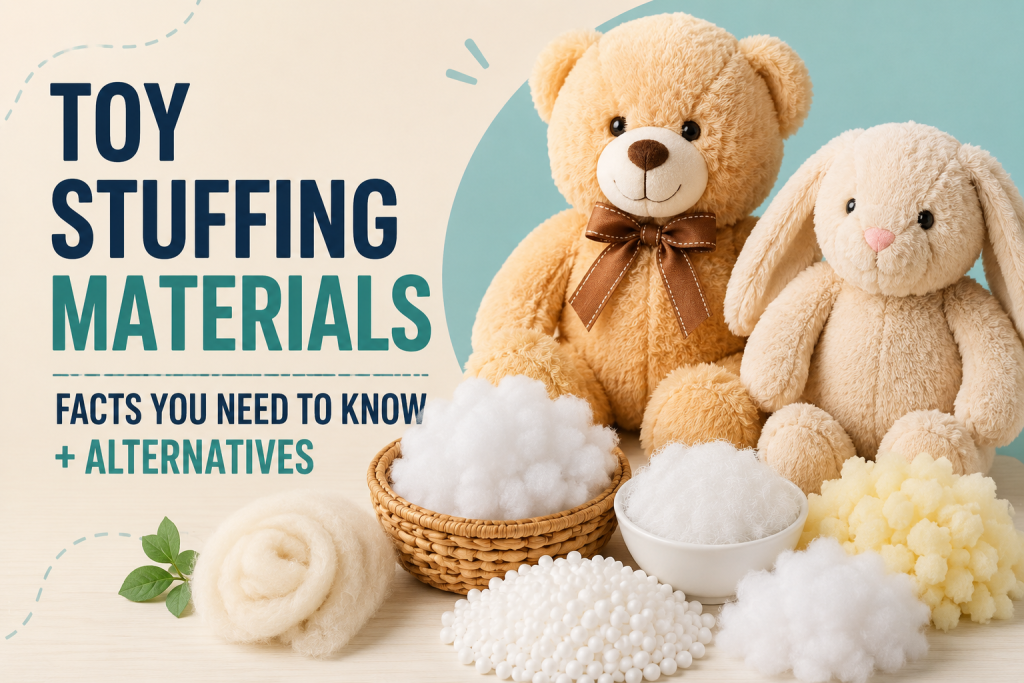
Types of Toy Stuffing Materials on the Market
Polyester Fiberfill
This is the workhorse. Something like 80% of all stuffed toys you see in stores use polyester fiberfill. It’s basically the same plastic that makes water bottles, just spun into fluffy fibers. Cheap to produce, light as air, doesn’t grow mold. Hard to beat on price.
But here’s the catch. It’s plastic. Full stop. Doesn’t break down. Ever. And the cheap versions from no-name suppliers? They clump up after one trip through the washing machine.
Cotton Filling
Old school option. Been around forever. Feels nice, breathes well, breaks down naturally when you toss it. Problem is, cotton soaks up water like a sponge. Leave a cotton-stuffed toy in a puddle and you might end up with mildew inside. Also weighs more than polyester, which adds up fast when you’re shipping thousands of units.
Wool
Fancy stuff. Naturally resists fire, regulates temperature, lasts ages. But man, it’s pricey. You mostly see wool filling in handmade or boutique toys. Not practical for mass production unless your price point supports it.
Bamboo Fiber
Relatively new player. Bamboo grows fast without chemicals, and the fiber is naturally antibacterial. Softer than cotton too. Supply is still catching up to demand though, so finding reliable bulk quantities can be tricky.
Recycled PET Fiber
Same performance as regular polyester, but made from old plastic bottles. Gives you a sustainability angle without changing how the toy feels or performs. More and more brands are switching to this because customers care about that stuff now.
Kapok
This one’s interesting. Comes from a tropical tree. Super light, silky feeling, naturally repels water. Doesn’t flatten out easily either. If you want a toy that keeps its shape without feeling stiff, kapok is worth looking at.
Safety Rules and Regulations Worth Knowing
Alright, pay attention here. This part isn’t exciting but it’ll save you from a very expensive headache.
Toy stuffing materials are regulated pretty much everywhere toys are sold. Mess this up and your shipment gets held at the border. Or worse, you get a recall notice.
In the US, the CPSC enforces ASTM F963 standards. Your stuffing can’t have sharp objects in it (sounds obvious, but contamination happens), can’t contain toxic chemicals, and can’t be a choking risk if the toy rips open. The CPSIA law adds rules about lead and phthalates, plus mandatory third-party lab testing.
In Europe, EN 71 is the standard. Part 1 covers physical safety, Part 3 deals with chemical migration. Basically, can bad stuff leach out of the filling material? If yes, you fail.
In China, GB 6675 applies. If you’re sourcing toys from Chinese factories, they need to meet this standard for domestic sales. For export, they need to meet whatever standard your target market requires.
Bottom line: your quality control process needs to include checking the stuffing. Not just the fabric, not just the stitching. The actual filling material inside the toy. Test it. Verify it. Document it.
Surprising Facts About Toy Stuffing
Let me share some things that caught me off guard when I first started digging into this topic.
Shipping costs change dramatically based on stuffing choice. Polyester-filled toys weigh about 40% less than cotton-filled ones. Same toy, same size, big difference on your freight invoice. When you’re moving full containers, that gap adds up to thousands of dollars. Smart brands think about packaging optimization and material weight together.
Polyester fiberfill comes in wildly different grades. There’s virgin fiber and recycled fiber. Within those, you’ve got different thicknesses (measured in denier), different coatings, different curl patterns. A 7D hollow siliconized fiber and a 3D solid fiber feel nothing alike. If your factory just says “polyester filling” without specifying the grade, that’s a red flag.
How much stuffing you use matters as much as what kind. Under-fill a toy and it feels like a deflated balloon. Over-fill it and it’s hard as a rock. Finding the right density takes actual testing with real people squeezing the thing. There’s no formula that works for every design.
Cheap stuffing can smell terrible. Low-grade synthetic filling sometimes releases chemical odors, especially right after production. Customers notice. They leave bad reviews. And those odors can signal the presence of VOCs that shouldn’t be near a kid’s face. Always ask your supplier for material safety data sheets.
Washing ruins certain stuffing types. Parents throw stuffed animals in the wash constantly. Cotton clumps. Wool shrinks and felts. Polyester handles it best, which is honestly the main reason it dominates the kids’ toy market.
Health Risks and Environmental Problems
Can’t talk about toy stuffing materials without addressing the elephant in the room. Pun intended.
Polyester is plastic. When you wash a polyester-stuffed toy, tiny plastic fibers break off and flow into the water system. One toy, one wash, thousands of microfibers released. Scale that up across millions of toys sold every year and you start to see the problem.
Then there’s the health angle. Bargain-basement synthetic stuffing from sketchy suppliers sometimes contains formaldehyde or flame retardant chemicals. These are things you absolutely do not want pressed against a toddler’s face for eight hours every night.
This is why supplier verification isn’t optional. Procurement intelligence helps you figure out which manufacturers actually meet safety and environmental standards before you wire them money. Not after your product fails testing.
Natural materials aren’t perfect either, to be fair. Growing cotton uses massive amounts of water. Raising sheep for wool has its own carbon footprint. Every option involves trade-offs. The key is knowing what those trade-offs are so you can make an informed call.
10 Alternatives to Standard Toy Stuffing Materials
Ready to move beyond basic polyester? Here’s what’s actually available and working in commercial production right now:
1. Recycled Polyester Fiber. Old plastic bottles turned into toy filling. Performs identically to virgin polyester. Available in bulk from factories across China.
2. Organic Cotton. GOTS-certified, no pesticides, biodegradable. Costs more and weighs more, but the eco-conscious market will pay for it.
3. Kapok Fiber. Harvested from trees, naturally floaty and water-resistant. Great for toys that need to stay puffy. Supplier options are more limited than synthetic.
4. Bamboo Fiber. Soft, antibacterial, grows without chemicals. Still a niche material but availability is improving year over year.
5. Corn Fiber (PLA). Made from corn starch, biodegrades in industrial compost facilities. Newer technology, not yet mainstream in toys but gaining ground.
6. Hemp Fiber. Tough, antimicrobial, pesticide-free. Texture is rougher so it works better in bigger toys where ultra-softness isn’t the priority.
7. Shredded Fabric Scraps. Factory textile waste repurposed as filling. Cheap and reduces waste, but consistency varies batch to batch.
8. Natural Latex Foam. Shredded into chunks for filling. Bouncy, durable, hypoallergenic. Premium price point but excellent for specialty products.
9. Buckwheat Hulls. Heavy, textured, used in weighted sensory toys. Not for regular plush but perfect for therapeutic products.
10. Tencel (Lyocell) Fiber. Wood pulp turned into silky fiber. Biodegradable, moisture-wicking, feels luxurious. Growing in popularity for high-end toy lines.
If you need help finding suppliers for any of these materials, global sourcing support can connect you with verified manufacturers across different regions.
Picking the Right Stuffing for Your Toy Product
There’s no universal answer here. The right toy stuffing material depends on who you’re selling to, where you’re making it, and what price you need to hit.
Selling at Walmart or Target? Polyester fiberfill. It’s cheap, it’s proven, it passes all the tests. Going after the Etsy crowd or premium boutique retailers? Organic cotton or kapok gives you a story worth telling. Building a brand around sustainability? Recycled PET lets you check that box without sacrificing performance.
Where you manufacture matters too. Most toy production happens in China, and polyester fiberfill is everywhere there. Specialty materials like kapok or corn fiber might need to come from specific regions, which complicates your supply chain. A China sourcing agent who knows the toy industry can point you toward the right suppliers without the runaround.
Don’t forget compliance. If you sell in multiple countries, your stuffing needs to pass testing for each market. US, EU, Australia, Japan, they all have different rules. Getting this wrong costs way more than getting it right the first time.
And honestly? Test everything physically. Order samples. Wash them ten times. Let kids beat them up for a month. Spec sheets tell you what a material should do. Real-world testing tells you what it actually does.
Buying Toy Stuffing Materials in Bulk
Sourcing at scale is where things get interesting. And by interesting I mean potentially frustrating if you don’t know what you’re doing.
The number one problem? Consistency. A supplier sends you beautiful samples. You place a big order. What arrives is noticeably different. Lower grade fiber, less fill per unit, maybe even a different material altogether. It happens more than you’d think.
This is why your product spec sheet needs to spell out every single detail about your stuffing requirements. Fiber type. Denier. Coating. Fill weight per toy. Acceptable tolerance range. If it’s not written down with specific numbers, you’re leaving room for interpretation. And interpretation usually means corners get cut.
Supplier negotiation isn’t just about getting a lower price. It’s about locking in quality standards with contractual teeth. Penalty clauses for non-conforming materials. Pre-shipment inspection rights. Third-party testing requirements.
If managing all this sounds like more than you want to handle, procurement outsourcing exists for exactly this reason. The benefits include better pricing through volume leverage, pre-vetted suppliers, and someone else dealing with the headaches of quality enforcement.
For brands already selling on Amazon or through e-commerce, bulk sourcing from China with proper oversight keeps your supply chain running without nasty surprises.
Protect Your Designs Before Sharing Specs
Quick but important point. If you’ve created a unique toy design or developed a special stuffing blend that sets your product apart, get legal protection in place before you hand detailed specifications to any manufacturer. Trademark and patent registration should come first. The toy industry has a copying problem, especially in regions with high-volume production. Once your specs are out there unprotected, they’re out there.
Wrapping It Up
Look, toy stuffing materials aren’t glamorous. Nobody’s posting about polyester fiberfill on Instagram. But this decision touches every part of your toy business. Safety. Cost. Shipping. Customer satisfaction. Environmental impact. Brand positioning.
There’s no magic answer that works for everyone. Polyester dominates for good reasons. Natural alternatives are gaining ground for equally good reasons. The right choice depends on your specific situation.
What I can tell you is this: don’t wing it. Test your options. Verify your suppliers. Get your specs in writing. And don’t cheap out on safety testing because one recall will cost you more than a lifetime of proper material sourcing.
Got questions about sourcing toy stuffing materials or need help finding the right manufacturer? Schedule a call or reach out directly. Happy to talk through your specific situation.