
| Table of Contents |
| The Problem: A Good Product With a Cost Problem |
| Why SouthernSaint VI Needed a Better Sourcing Strategy |
| How We Analyzed the Existing Supply Chain |
| Finding Better Factory Options in China |
| Negotiating Costs Without Sacrificing Quality |
| Reducing Hidden Costs Beyond Factory Pricing |
| Quality Control Before Mass Production |
| The Result: 20% Cost Reduction |
| What Other Brands Can Learn From This Project |
| Frequently Asked Questions |
The Problem: A Good Product With a Cost Problem
SouthernSaint VI had a product that customers liked. The branding was strong. The market opportunity was there. But there was one problem with better China sourcing.
The manufacturing cost was too high. This is something we see often with growing brands.
A founder finds a supplier, places the first order, and focuses on launching the product. At the beginning, that makes sense. Speed matters. But after sales start growing, another problem appears:
The product sells, but the margins are not where they should be. A $3 difference in manufacturing cost might not sound like much.
But when you are ordering thousands of units, that small difference can decide whether a product is profitable or not.
For SouthernSaint VI, the goal was simple:
Find a better China sourcing structure without lowering product quality. That meant looking beyond the supplier’s quoted price. Because the cheapest factory is not always the cheapest option.
A supplier with poor quality control can create:
- higher defect rates
- customer complaints
- returns
- production delays
- wasted inventory
The real goal is reducing total product cost while protecting the brand.
Why SouthernSaint VI Needed a Better Sourcing Strategy
Many first-time importers make the same mistake. They compare suppliers only by unit price.
Supplier A: $8.50 per unit
Supplier B: $7.90 per unit
The cheaper option looks obvious. But there are usually more costs hiding underneath. The real calculation should include:
| Cost Factor | Why It Matters |
| Factory price | Direct product cost |
| Packaging | Impacts customer experience and shipping |
| MOQ | Affects cash flow |
| Defect rate | Creates replacement costs |
| Production delays | Can affect launch dates |
| Shipping preparation | Impacts final landed cost |
A sourcing project is not about finding the lowest number on a quotation sheet. It is about building a supply chain that works.
How We Analyzed the Existing Supply Chain
The first step was understanding where money was being lost. Before contacting new factories, we reviewed:
- Current supplier pricing
- Product specifications
- Material choices
- Packaging requirements
- Production process
- Order quantities
- Quality expectations
This is where experience matters. Factories rarely tell you where costs can be reduced.
You need to understand the product. You need to know which parts affect the final price and which parts do not.
For example: A supplier may quote a premium material option because it is easier for them. But the customer may not notice the difference.
In that situation, the brand is paying extra without gaining additional value.
Finding Better Factory Options in China
After reviewing the product requirements, we compared multiple supplier options.
The goal was not simply finding a cheaper factory. The goal was finding a factory that could provide:
- consistent quality
- suitable production capacity
- reasonable MOQ
- export experience
- reliable communication
A common mistake among new importers is trusting online supplier profiles too quickly. A factory website does not always tell the full story.
Before working with a supplier, we recommend checking:
- business registration
- production capability
- previous export experience
- factory ownership
- production equipment
- quality systems
Supplier verification is one of the biggest reasons brands work with sourcing partners instead of contacting random suppliers online.
Negotiating Costs Without Sacrificing Quality
Once suitable factories were identified, we compared quotations and negotiated based on actual production factors.
The negotiation was not simply: “Give us a lower price.” That approach rarely works. Factories reduce prices when they understand the business opportunity.
The negotiation focused on:
- order volume
- production planning
- packaging adjustments
- material options
- payment terms
- long-term cooperation
Professional sourcing is usually about understanding factory costs. A supplier may reduce pricing when:
- production becomes more efficient
- unnecessary processes are removed
- packaging is optimized
- order planning improves
Industry research and sourcing providers commonly point to supplier benchmarking and negotiation as key methods for reducing procurement costs. (CJdropshipping)
Reducing Hidden Costs Beyond Factory Pricing
One of the biggest lessons from this project:
The factory price was not the only place where money was being lost. Many brands overlook smaller costs. Those costs add up.
We reviewed areas including:
Packaging Optimization
Packaging affects:
- manufacturing cost
- shipping volume
- warehouse fees
- customer perception
Sometimes a small packaging redesign can reduce unnecessary material usage while keeping the same customer experience.
Our packaging optimization service helps brands review these details before production.
Supplier Communication
Poor communication creates delays.
A factory misunderstanding can lead to:
- wrong production
- rework
- additional costs
Having someone locally communicate with suppliers reduces unnecessary back-and-forth.
Production Planning
Factories operate more efficiently when production requirements are clear.
We helped make sure:
- specifications were documented
- samples were approved
- expectations were clear before production
Quality Control Before Mass Production
Lower cost does not mean accepting lower quality. That is where many brands make mistakes.
They negotiate aggressively, then quality problems appear later. A proper quality control process should include several stages.
Pre-Production Inspection
Before production:
- confirm materials
- approve samples
- check packaging
- review specifications
During Production Inspection
While manufacturing:
- check production progress
- verify materials
- monitor consistency
- identify problems early
Pre-Shipment Inspection
Before shipment:
- inspect finished products
- check quantity
- test product functions
- verify packaging
Container Loading Inspection
Before goods leave:
- confirm cartons
- check shipping labels
- photograph loading process
Our quality control service helps brands catch problems before products leave the factory.
The Result: 20% Cost Reduction
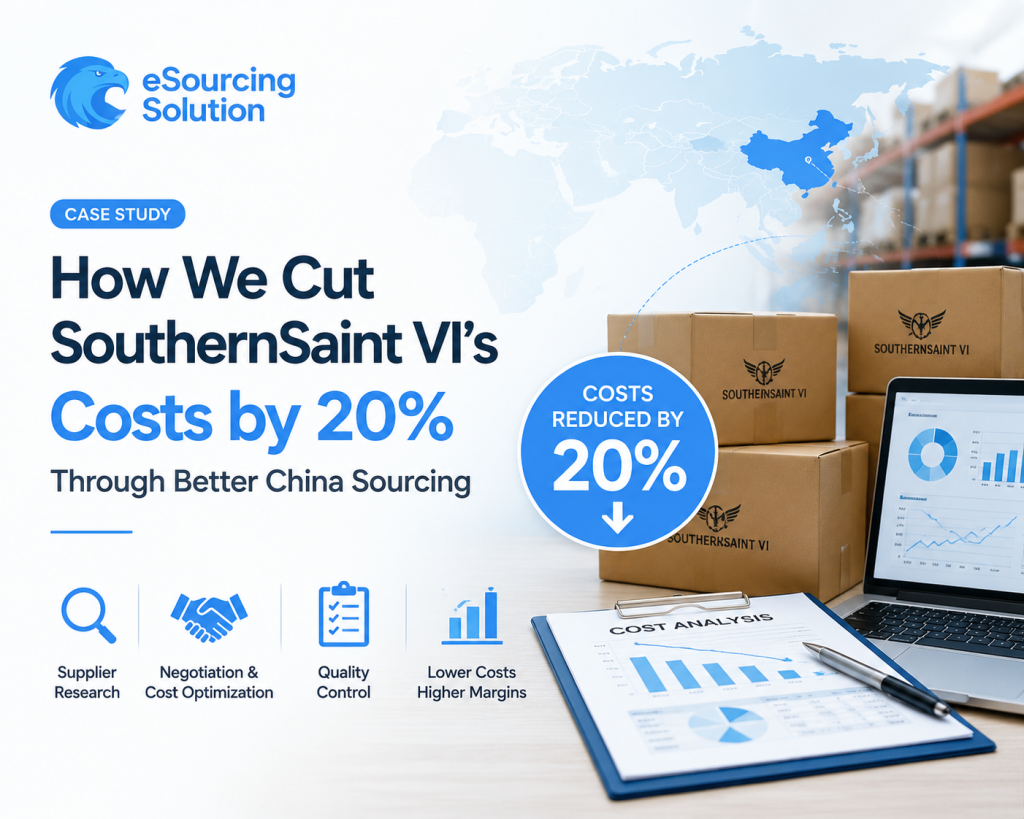
After reviewing suppliers, negotiating production terms, and improving the sourcing process, SouthernSaint VI achieved approximately 20% cost reduction compared with the previous sourcing arrangement.
The savings came from multiple improvements:
| Improvement Area | Impact |
| Supplier comparison | Better factory pricing |
| Negotiation | Improved production terms |
| Packaging review | Reduced unnecessary costs |
| Production management | Fewer mistakes and delays |
| Quality checks | Reduced costly problems |
The important point is this:
The savings did not come from choosing the cheapest supplier. They came from building a better sourcing process.
What Other Brands Can Learn From This Project
If you are building a private label brand, there are a few lessons worth remembering.
1. Your First Supplier Is Not Always Your Best Supplier
Many founders stay with their first factory because changing suppliers feels risky.
Sometimes it is. But staying with an inefficient supplier can cost more over time.
2. Price Negotiation Starts With Information
Factories negotiate differently when you understand:
- material costs
- production methods
- market pricing
- alternative suppliers
Knowledge creates better deals.
3. Quality Control Protects Your Savings
Saving $1 per unit means nothing if 10% of your inventory has problems. The best sourcing strategy balances cost and reliability.
Should You Use a China Sourcing Agent?
It depends.
| Situation | Need a Sourcing Partner? |
| First overseas order | Usually yes |
| Custom product development | Yes |
| Multiple supplier quotes needed | Yes |
| Existing trusted factory | Maybe not |
| Simple commodity product | Depends |
A good sourcing partner does not replace your factory. They help you build a better relationship with the right factory.
Frequently Asked Questions
How can I reduce manufacturing costs in China?
The biggest opportunities usually come from supplier comparison, negotiation, packaging improvements, and better production planning. Cutting quality is usually not the right solution.
Is a sourcing agent worth the cost?
For many new importers, yes. A sourcing agent can help with supplier verification, negotiation, inspections, and production management.
Can I negotiate directly with Chinese factories?
Yes. But many overseas buyers struggle because they do not know the local market, factory pricing, or production process.
How long does China sourcing usually take?
It depends on the product. Simple products may take weeks.
Custom products with tooling, packaging, or testing requirements usually take longer.
What industries benefit most from sourcing support?
Common industries include:
- Amazon FBA products
- apparel
- bags
- outdoor products
- consumer goods
- private label products
Final Thoughts
SouthernSaint VI’s cost reduction was not achieved through one simple trick.
There was no magic supplier. No shortcut.
The improvement came from understanding the product, comparing factories properly, negotiating with real information, and controlling quality before shipment. That is how successful brands build reliable supply chains.
If that’s you and you want wholesale pricing with real quality checks, you can book a free call and tell us what you’re after, or just reach out here with your product and quantity.
Book a free consultation or contact eSourcing Solution.