
Someone in a Facebook group last week posted a screenshot of a product on 1688.com. Same exact item they’d been buying on Alibaba for $4.50 a unit. Price on 1688? Roughly $1.20.
The comments went nuts. “Is this real?” “Why haven’t I been using this?” “Is 1688 safe?” “How do I even read this site it’s all in Chinese?”
I watched the thread fill up with 300+ comments in two days. Half excitement, half confusion, half bad advice from people who’d clearly never actually placed an order. Yeah that’s three halves. The thread was chaotic.
Buying from 1688 is one of those topics where the opportunity is real but the information online is mostly garbage. Either it’s someone who’s never used the platform writing a generic guide, or it’s a sourcing company trying to scare you into hiring them without actually explaining anything useful first.
I’ve been buying from 1688 for clients since 2018. Placed hundreds of orders. Had smooth transactions. Had disasters. Learned what works and what doesn’t through expensive trial and error. Here’s what I actually know, organized around the five questions everyone asks first.
Table of Contents
| # | Section |
| 1 | What 1688 Actually Is (And Why Everyone’s Talking About It) |
| 2 | Is 1688 Safe to Buy Products From? |
| 3 | Can Anyone Buy from 1688? |
| 4 | Can You Dropship from 1688.com? |
| 5 | What Are the Real Difficulties of Buying from 1688 Overseas? |
| 6 | Buy Bulk from 1688 Yourself or Hire a 1688 Buying Agent? |
| 7 | FAQ |
What 1688 Actually Is (And Why Everyone’s Talking About It)
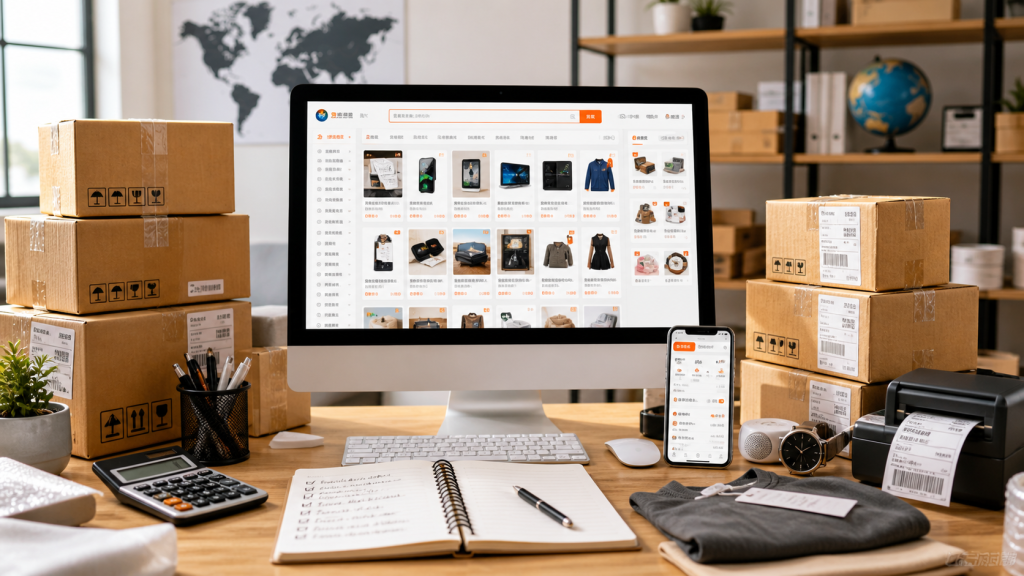
Quick context for the completely uninitiated. 1688.com is Alibaba’s domestic Chinese wholesale platform. Same parent company. Completely different marketplace.
Alibaba.com faces outward. It’s built for international buyers. English interface. USD pricing. Suppliers who expect to deal with foreigners. Trade assurance. All that.
1688 faces inward. Built for Chinese businesses buying from Chinese manufacturers and wholesalers. Chinese interface. RMB pricing. Suppliers who expect their buyers to speak Mandarin, pay through Alipay, and handle their own logistics within China.
Why are prices lower? Because you’re cutting out the export middleman. Many suppliers on Alibaba are actually trading companies who source from 1688 suppliers and mark up 30-100% for the convenience of dealing with international buyers in English. When you buy from 1688 directly, you’re buying at the price Chinese domestic businesses pay.
That price gap is real. I’ve verified it hundreds of times across dozens of product categories. Not always 60% cheaper like that Facebook post suggested, but consistently 20-50% less than Alibaba for identical or equivalent products.
So why isn’t everyone doing it? Because the barriers are real too. Let me walk through them honestly.
Is 1688 Safe to Buy Products From?
Short answer: the platform itself is safe. Individual transactions carry risk that you need to manage.
1688 is owned by Alibaba Group. It’s not some sketchy marketplace that appeared last year. It’s been operating since 2010 and processes millions of transactions daily between Chinese businesses. The platform infrastructure, payment processing, and basic buyer protections are legitimate.
But here’s what “safe” doesn’t mean. It doesn’t mean every supplier is honest. It doesn’t mean every product matches the listing photos. It doesn’t mean you’ll get exactly what you expect without doing due diligence.
The risk profile on 1688 is similar to Alibaba, maybe slightly higher because the platform wasn’t designed with international buyer protections in mind. There’s no Trade Assurance equivalent. Dispute resolution exists but it’s in Chinese and favors domestic norms.
What makes buying from 1688 safe in practice:
Start with small test orders. Don’t drop $10,000 on your first purchase from a supplier you’ve never worked with. Buy samples. Buy a small batch. Verify quality before scaling up.
Check supplier credentials on the platform. 1688 shows business registration years, transaction volume, repeat buyer rates, and ratings. A supplier operating for 7+ years with thousands of transactions and high repeat rates is probably legitimate. A brand new store with no history? Proceed carefully.
Use a quality inspection service before shipping internationally. This is the single most effective risk reduction step. Pay someone to physically check your goods before they leave China. Catches quality issues, quantity shortages, and outright scams before they become your problem.
Have I been burned on 1688? Twice in hundreds of orders. Once was a quality issue (product didn’t match sample). Once was a communication breakdown that resulted in wrong specifications. Both were recoverable. Neither would have happened if I’d been less lazy about inspection on those particular orders.
Can Anyone Buy from 1688?
Technically yes. Practically, there are barriers.
You need an account. Registration requires a Chinese phone number or you can use the international registration option that’s been available since 2022. Some people use virtual Chinese phone numbers. Some use agents who buy on their behalf.
You need to pay in RMB. Alipay is the primary payment method. International credit cards don’t work directly on most 1688 transactions. Some workarounds exist. Alipay has expanded international access somewhat. But payment remains one of the biggest friction points for overseas buyers.
You need to read Chinese. The entire platform, all product listings, all supplier communications, everything is in Mandarin Chinese. Google Translate helps but it’s not reliable for technical product specifications or negotiation nuances. Misunderstanding a material spec because of bad translation can mean receiving 5,000 units of the wrong thing.
You need a Chinese shipping address. 1688 suppliers ship domestically within China. They don’t typically handle international shipping. You need a warehouse or forwarding address in China where goods get consolidated and then shipped internationally to you.
So can “anyone” buy from 1688? Anyone with the patience to navigate these barriers, yes. Is it straightforward? Not remotely. Which brings us to the agent question. But first.
Can You Dropship from 1688.com?
People ask me this constantly. The honest answer is: sort of, but probably not the way you’re imagining.
Traditional dropshipping (customer orders on your store, supplier ships directly to your customer one piece at a time) doesn’t work well with 1688 for several reasons.
Most 1688 suppliers have minimum order quantities. Even “low MOQ” listings usually mean 50-100 pieces minimum. They’re wholesalers, not retail fulfillment centers. Asking them to ship one item to a random address in Ohio isn’t what they do.
Shipping times from China to end customers are long. We’re talking 15-30 days for standard shipping. Your dropshipping customer expects their package in a week. The math doesn’t work for customer satisfaction.
No integrated fulfillment system. Unlike AliExpress (which was literally built for dropshipping), 1688 has no automated order processing, no tracking integration with Shopify, no one-click fulfillment.
What does work: buying inventory in bulk from 1688 at those low prices, shipping it to a fulfillment warehouse (in your country or a third-party logistics center), and then dropshipping from that warehouse. You’re using 1688 as your procurement source, not your fulfillment source.
Some people also use Chinese fulfillment warehouses that buy from 1688 on your behalf, store inventory, and ship individual orders internationally. This hybrid model works but adds complexity and another middleman taking a cut.
If someone tells you they’re “dropshipping directly from 1688” with no inventory and fast shipping, they’re either using an agent/warehouse system they’re not mentioning, or their customers are waiting three weeks for packages and leaving bad reviews.
What Are the Real Difficulties of Buying from 1688 Overseas?
I’ve covered some of these already but let me consolidate. These are the actual pain points, ranked by how much they cost people.
Language barrier. Number one problem. Not just for reading listings but for communicating specifications, negotiating, handling problems. Technical product discussions through Google Translate go wrong regularly. I’ve seen clients order “stainless steel” and receive “steel with stainless coating” because the Chinese terms are similar and the translation was ambiguous.
Quality inconsistency. 1688 suppliers serve the domestic Chinese market where quality expectations and standards sometimes differ from export markets. What’s acceptable for domestic sale might not meet your customers’ expectations. Without clear product specifications communicated in Chinese, you get whatever the factory’s default standard is.
Payment complications. Getting money to Chinese suppliers when you’re overseas involves either Alipay (limited international access), bank wire transfers (slow, expensive for small amounts, requires supplier’s bank details), or paying through an agent. Each method has friction.
Logistics coordination. Domestic shipping to a consolidation warehouse. Quality inspection at the warehouse. International freight forwarding. Customs clearance. Last-mile delivery. That’s a lot of steps between “I clicked buy on 1688” and “product is in my hands.” Each step needs coordination.
No export documentation by default. 1688 suppliers don’t automatically provide commercial invoices, packing lists, or certificates of origin formatted for international customs. You or your agent need to arrange this. Without proper documentation, your shipment gets stuck at customs.
Intellectual property risks. 1688 has products that infringe on international trademarks and patents. The platform polices this less aggressively than Alibaba’s export-facing site. Buying branded or brand-adjacent products from 1688 for resale internationally can land you in serious legal trouble.
Buy Bulk from 1688 Yourself or Hire a 1688 Buying Agent?
This is the real question everyone’s building toward. And the answer depends on your volume, your Chinese language ability, and your tolerance for logistics headaches.
Do it yourself if:
You speak or read Mandarin (or have someone on your team who does). You’re comfortable managing international logistics. Your orders are simple, standard products without complex specifications. You have a Chinese bank account or reliable Alipay access. You’re willing to invest time learning the platform’s quirks.
Some people genuinely do this successfully. Usually they’re Chinese diaspora with language skills and family connections, or they’re experienced importers who’ve built their own systems over years.
Hire a 1688 buying agent if:
You don’t speak Chinese. Your products need specific customization or quality standards. You’re ordering from multiple suppliers and need consolidation. You want someone to physically inspect goods before international shipment. You value your time more than the agent’s fee (typically 5-10% of order value).
What a good agent actually does: communicates with suppliers in native Chinese, negotiates pricing, verifies supplier legitimacy, places orders, arranges domestic shipping to their warehouse, inspects quality, consolidates multiple supplier orders into one international shipment, handles export documentation, and coordinates freight forwarding.
That’s a lot of work. The 5-10% fee covers real labor. I’ve watched people try to save that fee, spend 40 hours on a single order fighting through translation issues and logistics confusion, and end up with wrong products anyway. The math usually favors the agent unless your orders are dead simple and you have language capability.
For bulk product sourcing from 1688, especially anything over $5,000 in value or anything requiring quality specifications beyond “whatever the listing shows,” an agent or sourcing company pays for itself in problems prevented.
1688 is a legitimate, powerful sourcing platform with real price advantages over Alibaba. It’s also not designed for you if you’re sitting in North America or Europe with no Chinese language skills and no logistics infrastructure in China. The opportunity is real. The barriers are real. How you navigate between those two realities determines whether 1688 becomes your competitive advantage or your most expensive lesson.
Figure out which side of that line you’re on before you start clicking “buy.”
Need help buying from 1688 without the headaches? eSourcingSolution acts as your buying agent on 1688, handling supplier communication, quality inspection, consolidation, and international shipping. Tell us what you need sourced.
FAQ
Is 1688 the same as Alibaba?
Same parent company (Alibaba Group), completely different platforms. Alibaba.com is the English-language export marketplace for international buyers. 1688.com is the Chinese-language domestic wholesale marketplace for Chinese businesses. Prices on 1688 are typically 20-50% lower because you’re buying at domestic wholesale rates without export middleman markup.
How much cheaper is 1688 compared to Alibaba?
Typically 20-50% cheaper for equivalent products. The exact savings depend on the product category and how many middlemen are between the 1688 supplier and the Alibaba listing you’re comparing against. Some products show minimal difference. Others show dramatic gaps.
Do 1688 suppliers ship internationally?
Most do not. 1688 suppliers ship domestically within China. You need a Chinese warehouse address, freight forwarder, or buying agent to receive goods in China and arrange international shipping to your location.
What is the minimum order quantity on 1688?
It varies wildly by supplier and product. Some listings show MOQs as low as 2-5 pieces. Others require 500+. Generally lower than Alibaba MOQs for the same products, but still wholesale quantities rather than single retail units.
How do I pay suppliers on 1688 from overseas?
Primary payment is through Alipay, which has limited international access. Alternatives include bank wire transfer (for larger orders), paying through a buying agent who handles payment on your behalf, or using third-party payment services that bridge international buyers with Chinese payment systems.