
I ruined a client’s first production run because of lining fabric. Not the outer material. Not the hardware. The lining.
She’d chosen this beautiful full-grain leather for the exterior. Spent weeks picking the perfect shade of cognac. Approved samples. Everything looked gorgeous. Then 500 bags arrived from the factory and the polyester lining inside was so cheap and slippery that nothing stayed put in the bag. Phone sliding around. Wallet impossible to find. Keys disappearing into corners.
Her customers noticed immediately. Reviews mentioned it. “Beautiful bag but the inside feels like a trash bag.” Brutal.
That’s when I learned something I now tell every client: handbag fabrics and materials aren’t just about what people see on the outside. Every layer matters. The body fabric, the lining, the hardware, the ornamental details. Each one affects how the bag looks, feels, functions, and lasts. Get one wrong and it drags the whole product down.
I’ve spent years sourcing handbags and materials from Chinese manufacturers. Visited tanneries in Guangzhou. Walked through hardware factories in Yiwu. Argued about thread tension with bag makers in Baigou. Here’s everything I know about the 23 materials that go into making handbags, organized so you can actually make decisions with this information.
Table of Contents
| # | Section |
| 1 | Why Material Choice Defines Your Handbag Brand |
| 2 | 10 Types of Handbag Body Fabrics (With Honest Pros and Cons) |
| 3 | 5 Types of Handbag Lining Fabrics |
| 4 | 8 Types of Handbag Ornamental Materials |
| 5 | How to Choose the Right Handbag Material |
| 6 | FAQ |
10 Types of Handbag Body Fabrics (With Honest Pros and Cons)
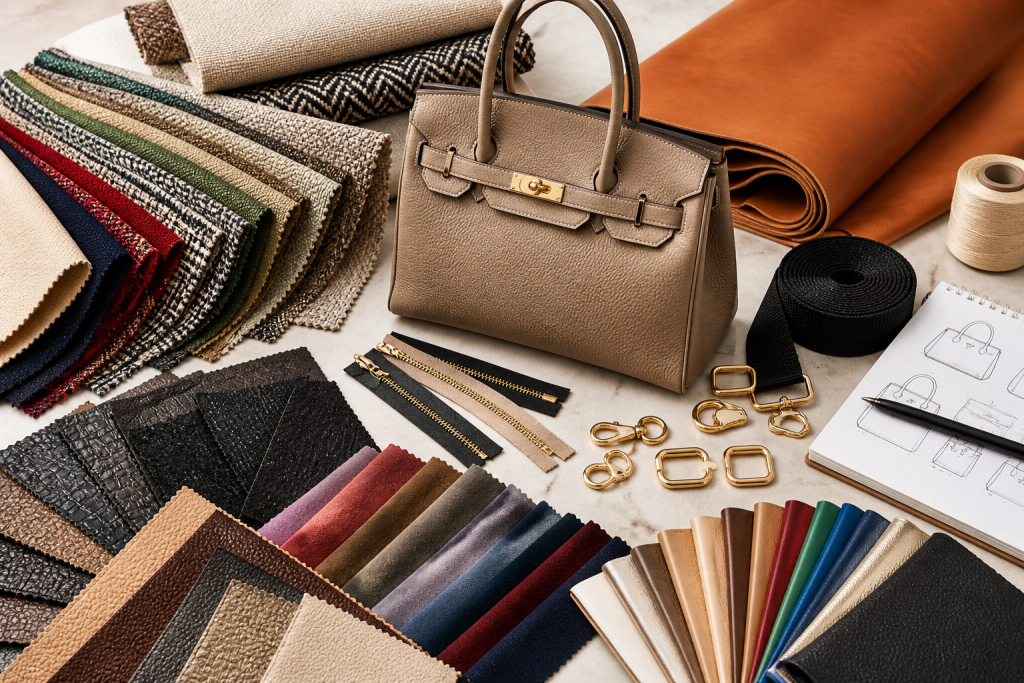
These are your exterior materials. What people see, touch, and judge your bag by in the first three seconds.
1. Full-Grain Leather
The top tier. The outer surface of the hide with natural grain intact. Shows the animal’s natural markings, which is considered a feature not a flaw in this world.
Pros: Ages beautifully (develops patina over time). Extremely durable. Repairable. Holds structure well. Communicates luxury instantly. Certified options available through Leather Working Group.
Cons: Expensive. Heavy. Requires maintenance (conditioning). Susceptible to water staining if untreated. Ethical concerns for vegan-conscious consumers. Price fluctuates with hide availability.
2. Top-Grain Leather
The second layer after full-grain’s surface gets sanded down and refinished. More uniform appearance. Still real leather, just processed more.
Pros: More affordable than full-grain. More consistent appearance (fewer natural marks). Still durable. Takes embossing and printing well. Easier to source in consistent batches.
Cons: Doesn’t develop patina the same way. Less breathable because of surface coating. Can peel over years if coating quality is poor. Less “authentic” feel to leather enthusiasts.
3. PU Leather (Polyurethane)
Synthetic leather. A fabric base (usually polyester) coated with polyurethane to mimic leather’s look and feel. The dominant material in affordable handbags worldwide.
Pros: Cheap. Lightweight. Water-resistant. Available in any color or texture imaginable. No animal products (vegan-friendly). Consistent quality batch to batch. Easy to clean.
Cons: Peels and cracks within 1-3 years. Doesn’t breathe. Looks and feels synthetic up close. Environmental concerns (petroleum-based, doesn’t biodegrade). Perceived as “cheap” by informed consumers.
4. Canvas
Tightly woven cotton or cotton-poly blend. Think tote bags, casual crossbodies, and those iconic luxury brand monogram bags (yes, those are coated canvas, not leather).
Pros: Durable. Lightweight. Takes printing beautifully. Washable. Affordable. Casual aesthetic that works for everyday bags. Can be organic/sustainable with GOTS certification.
Cons: Stains easily without coating. Not water-resistant unless treated. Can look cheap if quality is low. Frays at cut edges without proper finishing. Limited structure without internal reinforcement.
5. Nylon
Synthetic woven or knitted fabric. The material behind every practical, lightweight bag from backpacks to crossbodies to travel organizers.
Pros: Extremely lightweight. Water-resistant. Tear-resistant. Easy to clean. Folds flat for storage. Affordable. Durable for daily abuse.
Cons: Looks utilitarian, not luxurious. Can feel plasticky. Prone to pilling in lower grades. Petroleum-based. Limited color richness compared to natural materials. Zippers and hardware become the failure point before the fabric does.
6. Genuine Suede
The inner split of a leather hide, buffed to create that soft napped texture. Used for entire bags or as accent panels.
Pros: Beautiful soft texture. Unique aesthetic that photographs well. Lightweight for a leather product. Rich color saturation.
Cons: Stains incredibly easily. Water marks permanently. Difficult to clean. Wears shiny in high-friction areas. Requires protective spray. Not practical for everyday use in most climates.
7. Woven Straw/Rattan
Natural plant fibers woven into bag shapes. Summer bags, beach totes, structured basket bags.
Pros: Lightweight. Unique artisanal aesthetic. Sustainable material source. Strong trend appeal seasonally. Distinctive texture that stands out.
Cons: Seasonal (hard to sell in winter). Fragile at stress points. Can unravel. Not water-friendly. Difficult to clean. Limited color options without painting/dyeing. Inconsistent sizing in handmade versions.
8. Denim
Cotton twill weave. Repurposed or new. Casual bags, totes, crossbodies with that effortless look.
Pros: Durable. Familiar texture everyone likes. Can be recycled/upcycled (sustainability angle). Affordable. Ages well with a worn-in look. Takes embroidery and patches well.
Cons: Heavy. Absorbs water. Fades unevenly (feature or bug depending on your brand). Limited to casual positioning. Can bleed dye onto clothing when new.
9. Cork Fabric
Thin cork veneer bonded to a fabric backing. Increasingly popular as a sustainable leather alternative.
Pros: Lightweight. Water-resistant naturally. Sustainable and biodegradable. Unique texture. Hypoallergenic. Stain-resistant.
Cons: Limited structural rigidity. Can crack at fold points over time. Limited color range (mostly natural cork tones). Niche aesthetic that doesn’t appeal to everyone. Sourcing consistent quality is tricky.
10. Microfiber Leather
Ultra-fine synthetic fibers structured to mimic leather’s internal fiber arrangement. Higher quality than standard PU leather.
Pros: Very close to real leather in look and feel. More durable than PU leather. Consistent quality. Lighter than real leather. Stain-resistant. Doesn’t peel like cheap PU.
Cons: More expensive than PU (though cheaper than real leather). Still synthetic. Doesn’t develop patina. Environmental concerns similar to other synthetics. Some consumers feel deceived if it’s marketed ambiguously.
5 Types of Handbag Lining Fabrics
The inside of the bag. Where my client’s production run went wrong. Don’t skip this section.
1. Cotton Twill
Sturdy woven cotton with a diagonal weave pattern. The solid, reliable lining choice.
Pros: Durable. Doesn’t slide around. Breathable. Takes printing well (for branded linings). Feels quality to the touch. Moderate cost.
Cons: Can stain from spills inside the bag. Not water-resistant. Adds weight. Wrinkles.
2. Polyester Satin
Smooth, glossy synthetic lining. Common in mid-range bags.
Pros: Cheap. Smooth surface makes items easy to slide in and out. Available in any color. Lightweight. Resists wrinkles.
Cons: Feels cheap if too thin. Slippery (items move around inside). Tears easily at stress points. Static buildup. Can look and feel like a costume fabric if quality is low.
3. Suede Lining (Microfiber)
Soft, napped synthetic suede used inside luxury and mid-luxury bags.
Pros: Feels luxurious. Protects items inside (soft surface won’t scratch phones or sunglasses). Communicates quality instantly. Adds perceived value.
Cons: Shows dust and lint. Harder to clean than smooth linings. More expensive. Can wear shiny over time in high-use areas.
4. Pig Suede (Real)
Actual pig skin suede used as lining in premium leather goods.
Pros: Extremely durable. Genuine luxury material. Breathable. Develops character over time. The traditional choice for high-end leather goods.
Cons: Expensive. Not vegan. Adds weight. Limited color options compared to synthetic. Ethical concerns for some markets.
5. Nylon Lining
Lightweight synthetic. Common in sport bags, backpacks, and travel bags.
Pros: Lightweight. Water-resistant. Easy to wipe clean. Durable. Cheap. Practical for bags that get dirty inside (gym bags, diaper bags).
Cons: Feels utilitarian. No luxury perception. Can feel sticky in heat. Limited aesthetic appeal.
8 Types of Handbag Ornamental Materials
The details that elevate a bag from functional to desirable. Hardware, trim, closures, and decorative elements.
1. Metal Zippers (YKK or equivalent)
Function: Closure and security. YKK is the industry standard for reliability. Cheaper alternatives exist but failure rates increase.
Pros/Cons: YKK costs more but virtually never fails. Generic zippers save 40-60% but jamming and teeth separation happen. For bags over $50 retail, use YKK. Below that, your call.
2. Metal Buckles and Clasps
Function: Closure, strap adjustment, decoration. Available in brass, zinc alloy, stainless steel with various plating finishes.
Pros/Cons: Zinc alloy is affordable and takes plating well but can chip over time. Solid brass costs more but the plating lasts years longer. The finish (gold, silver, gunmetal, antique brass) needs to match across all hardware on the bag or it looks inconsistent.
3. Chain Straps
Function: Shoulder strap, decorative element. Aluminum chains are lightweight. Iron chains are heavier but cheaper. Brass chains are premium.
Pros/Cons: Chains add perceived luxury but add weight. Aluminum solves the weight problem but can feel flimsy. Iron chains are heavy enough to cause shoulder discomfort on larger bags. Plating quality determines whether the chain looks good after six months of use.
4. Rivets and Studs
Function: Reinforcement at stress points, decoration, brand identity. Bottom studs protect the bag base.
Pros/Cons: Functional rivets at strap connections are essential for durability. Decorative studs add edge but can scratch surfaces the bag rests on. Bottom studs protect the base but cheap ones fall off. Specify screw-back for anything load-bearing.
5. Magnetic Snaps
Function: Easy-open closure for flap bags and pockets.
Pros/Cons: Convenient one-hand operation. But weak magnets don’t hold bags closed when full. Strong magnets are hard to open. Finding the right strength matters. Also, magnets can affect credit cards and phones if not properly shielded with a metal plate behind the snap.
6. Turn Locks (Twist Locks)
Function: Secure closure with decorative presence. The classic “designer bag” closure.
Pros/Cons: Secure, satisfying to use, looks premium. But adds cost, requires precise installation, and cheap versions wear loose over time. The tongue and catch need to align perfectly or the bag won’t close flat.
7. Leather Tassels and Pulls
Function: Zipper pulls, decorative accents, brand signature elements.
Pros/Cons: Add movement and visual interest. Inexpensive to produce. But they wear, fray, and discolor over time. Cheap leather tassels look ratty within months. Quality ones last years. The difference is in the leather grade and how the top is finished.
8. Embroidery and Applique
Function: Brand logos, decorative patterns, texture variation.
Pros/Cons: Embroidery adds perceived value and uniqueness. Machine embroidery is affordable at scale. But thread colors can bleed when wet, dense embroidery adds stiffness to the panel, and placement needs to be precise or it looks amateur. Applique (fabric pieces sewn on) adds dimension but creates edges that can catch and peel.
How to Choose the Right Handbag Material
After all that information, here’s how to actually decide. Three questions.
Who’s your customer? Luxury buyer? Full-grain leather, suede lining, brass hardware. Budget-conscious everyday carrier? Quality PU or canvas, cotton twill lining, zinc alloy hardware. Eco-conscious millennial? Cork, organic canvas, recycled nylon with OEKO-TEX certified linings.
What’s the bag’s job? Daily commuter bag needs durability and weight consideration. Evening clutch needs aesthetics over practicality. Travel bag needs water resistance and cleanability. Match material properties to use case.
What’s your price point? Materials determine your cost of goods. Full-grain leather with brass hardware and suede lining puts your COGs at $40-80+ per bag. Canvas with polyester lining and zinc hardware puts you at $8-15. Know your retail price and work backward to figure out what materials your margins allow.
For custom handbag sourcing, your product spec sheet needs to specify every single material. Not just “leather bag” but which leather, which grade, which thickness, which finish. Not just “gold hardware” but which base metal, which plating thickness, which specific components. Vague specs get vague results from factories.
And always get pre-production samples inspected before committing to bulk orders. Material substitution is the most common factory shortcut. They quote you full-grain leather and deliver corrected-grain. They quote YKK zippers and install generics. A sourcing agent who checks materials before production saves you from discovering substitutions after 2,000 bags are already sewn.
Every handbag is a system of materials working together. The exterior creates first impressions. The lining creates daily experience. The hardware creates durability and tactile satisfaction. Get all three layers right and you have a bag people reach for every morning. Get one wrong and you have a beautiful object that disappoints in use.
Know your handbag fabrics and materials. Spec them precisely. Verify them physically. That’s how products get made right.
Need help sourcing handbag fabrics and materials from verified manufacturers? eSourcingSolution works with tanneries, fabric mills, and hardware suppliers across China’s bag manufacturing hubs. From material sourcing to final quality inspection, we handle the supply chain. Start your project.
FAQ
What is the most durable handbag material?
Full-grain leather is the most durable natural option, lasting decades with proper care. For synthetics, high-denier nylon (like Cordura) outlasts everything else. Canvas is the most durable budget option. PU leather is the least durable, typically degrading within 1-3 years regardless of care.
What handbag material looks like leather but isn’t?
Microfiber leather is the closest synthetic alternative, mimicking leather’s internal fiber structure. High-quality PU leather also resembles leather visually but doesn’t match the feel or durability. Cork fabric offers a unique alternative that doesn’t try to imitate leather but occupies a similar market position.
What lining material is best for handbags?
Cotton twill offers the best balance of durability, feel, and cost for most handbags. Microfiber suede is best for luxury positioning. Nylon is best for bags that need easy cleaning (gym bags, travel bags). Avoid ultra-thin polyester satin unless cost is your only priority.
How do I choose between real leather and vegan leather for my handbag brand?
Consider your target customer’s values, your price point, and your durability expectations. Real leather costs more but lasts 5-10x longer and develops character over time. Vegan leather (PU/microfiber) costs less and appeals to ethical consumers but has a shorter lifespan. Your brand positioning should drive this decision more than material properties alone.
What hardware material is best for handbags?
Solid brass with proper plating is the premium choice for durability and appearance retention. Zinc alloy is the standard mid-range option offering good plating adhesion at lower cost. Aluminum works for lightweight applications. Avoid unplated iron (rusts) and thin plating on any base metal (chips within months).