
My client Sarah showed up to our first call with a Pinterest board full of gorgeous lingerie. Delicate lace bralettes. Silk slip dresses. High-waisted panties in jewel tones. She wanted to launch her own line and she’d done her homework on branding, pricing, target audience. All of it.
Then I asked her what fabrics she planned to use.
Silence. Long pause. “Um… lace? And like, soft stretchy stuff?”
I didn’t laugh. I wanted to. But I didn’t. Because honestly? This is where everyone starts. Nobody outside the industry realizes how many different fabrics for making underwear and lingerie actually exist. Or how many tiny accessories hold a single bra together.
I grabbed her simplest design, a basic triangle bralette with lace cups, and listed what she’d need to actually produce it. Main body fabric. Lace for the cups. Lining for behind the lace. Elastic for the band. Different elastic for the straps. Rings. Sliders. A hook closure. Thread. Labels. A tiny satin bow because her design had one.
Eleven materials. For a triangle bralette. The “simplest” thing in lingerie.
Her face did this thing where you can see someone recalculating their entire business plan in real time.
I’ve been sourcing lingerie materials and components from Chinese manufacturers for a while now. Visited the lace mills in Shantou. Walked through elastic factories. Argued with hardware suppliers about minimum order quantities for rose gold sliders. I know this world pretty intimately at this point. And I’m going to dump everything I know into this post because I’m tired of watching new lingerie brands waste months figuring out what I could tell them in ten minutes.
Table of Contents
| # | Section |
| 1 | Body Fabrics: The Stuff That Touches Skin |
| 2 | Decorative Fabrics: What Makes Lingerie Look Like Lingerie |
| 3 | Structure Fabrics: The Invisible Engineering |
| 4 | Hardware and Accessories: The Twenty Things You’ll Forget |
| 5 | Elastic: It Deserves Its Own Section |
| 6 | Sourcing All of This Without Losing Your Mind |
| 7 | FAQ |
Body Fabrics: The Stuff That Touches Skin
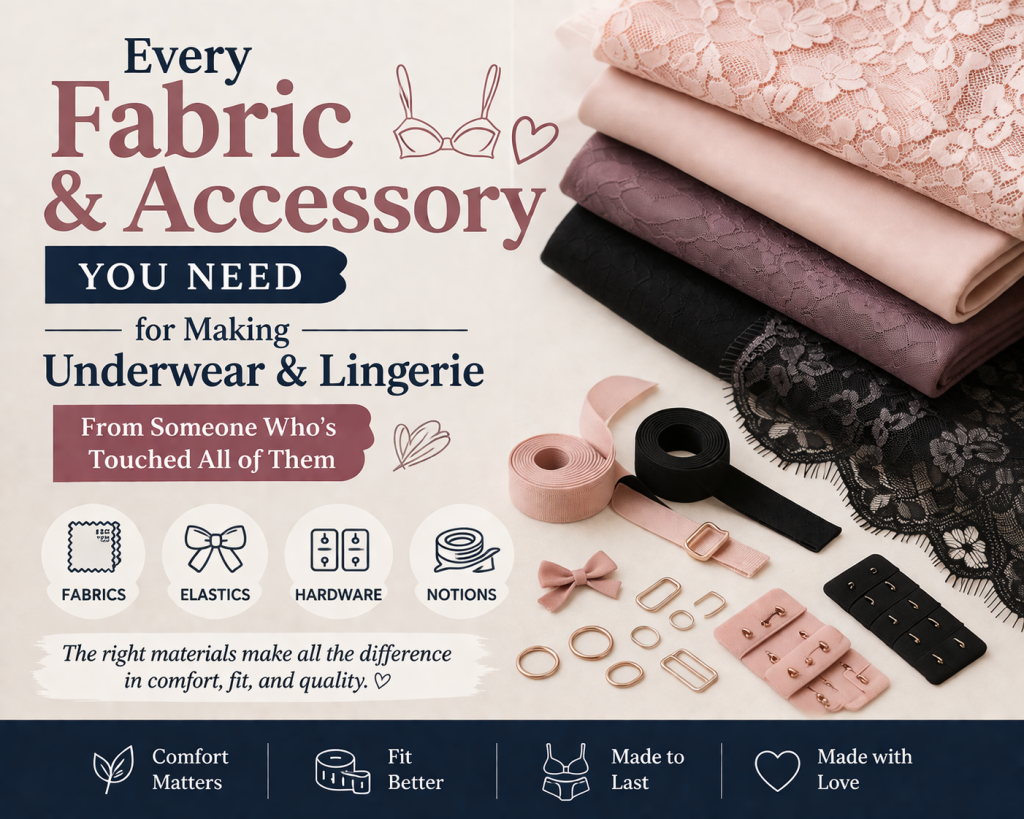
These are your foundation fabrics. They make up most of the garment. They sit against bodies all day. They matter more than anything else you’ll choose.
Cotton-spandex blends. Your everyday underwear fabric. Nothing glamorous about it but nothing needs to be. Cotton breathes. Cotton absorbs. Cotton doesn’t irritate. Add 5-10% spandex and now it stretches and recovers too. Most basic panties and men’s boxer briefs are cotton-spandex jersey knit. It’s cheap, it’s comfortable, it works. Don’t overthink it for basics.
The organic cotton version costs more. Customers who care about that really care about it. Customers who don’t won’t pay extra. Know your market.
Modal. This is what happened when someone said “what if cotton but silkier.” Made from beech tree pulp. Feels like a cloud decided to become fabric. Drapes instead of just hanging. Doesn’t pill. Doesn’t shrink much. Modal-spandex blends are what those $30-for-a-three-pack premium underwear brands use. The ones with minimalist packaging and Instagram ads showing people lounging in natural light. That fabric is modal.
Worth the upcharge? For the right brand positioning, absolutely. The hand feel difference between cotton and modal is immediately obvious to anyone who touches both.
Bamboo viscose. Similar vibe to modal. Soft, drapey, moisture-wicking. Gets marketed as “eco-friendly” which is complicated. The bamboo plant grows sustainably but turning it into fabric involves chemicals. It’s not as green as the marketing implies. But it’s not terrible either. Customers love the word “bamboo” though. It sells.
Microfiber. Nylon or polyester, knitted super fine. Smooth. Thin. Quick-drying. This is your seamless underwear fabric. Your “invisible under white pants” fabric. Your t-shirt bra fabric. Laser-cut edges that don’t fray. Disappears under clothing. Not the most breathable option for all-day wear but unbeatable for sleekness.
Silk. I almost don’t want to include this because it complicates everything. Silk is gorgeous. Silk is luxurious. Silk is also expensive, fragile, hard to sew, hard to care for, and a nightmare to manufacture at scale without quality inconsistencies. Silk charmeuse for the pretty side. Silk crepe de chine for lighter weight. Most brands use silk only for visible outer panels and line with something more practical underneath. Pure silk lingerie exists but the price point limits your market significantly.
Tencel/Lyocell. The sustainability darling. Wood pulp fiber made in a closed-loop process that recovers most of the chemicals used. Smooth, strong, biodegradable. Getting popular with brands that want genuine environmental credentials they can back up with certifications like GOTS or Bluesign. Not cheap. But the story sells.
Decorative Fabrics: What Makes Lingerie Look Like Lingerie
Strip away the lace and the mesh and the satin and lingerie is just underwear. These fabrics are the difference between functional and desirable.
Lace. Obviously. But “lace” is like saying “food.” It tells you almost nothing about what you’re actually getting. Let me break this down because the variety is enormous.
Stretch lace has elastane woven in. Moves with the body. Essential for anything that needs to fit without darts or seams doing all the shaping work. Most modern lingerie uses stretch lace.
Chantilly lace is fine, delicate, detailed floral patterns on a mesh ground. The romantic one. The one people picture when they think “lingerie.”
Guipure lace has no mesh background. The motifs connect directly to each other with thread bars. Looks more graphic and modern. Heavier hand.
Galloon lace has finished scalloped edges on both sides. You can cut a strip and use it as-is without hemming or finishing the edges. Saves production time. Looks intentional.
Rachel lace is machine-made, affordable, available in huge quantities. What mass-market lingerie uses. Not as refined as French lace but perfectly good for mid-range products.
And then there’s French lace from Calais or Caudry. The prestige stuff. Intricate patterns, beautiful hand, costs a fortune. What justifies a $200 bralette from a luxury brand. If you’re not selling at luxury price points, you don’t need it. But you should know it exists.
Mesh and tulle. Sheer, structured, everywhere in lingerie. Rigid tulle gives shape to bra cups. Stretch mesh (power mesh) creates supportive panels that you can see through. Soft tulle layers over other fabrics for that peek-a-boo effect. I’d estimate mesh shows up in 80% of all lingerie pieces in some form. It’s the utility player.
Satin. Glossy, smooth, catches light. Can be silk satin (expensive) or polyester satin (affordable and honestly looks almost as good in photos). Used for panels, trim, straps, bows, and that classic lingerie sheen that photographs so well. Duchess satin is heavier, more for corsetry and structured pieces.
Chiffon. Floaty, sheer, romantic. Robes. Babydoll skirts. Overlay panels. Purely decorative. Provides zero support or structure. Just vibes.
Velvet. Stretch velvet bralettes became a thing a few years ago and haven’t gone away. Rich texture. Looks expensive. Photographs beautifully in that moody editorial way. Usually polyester-spandex for stretch recovery.
Structure Fabrics: The Invisible Engineering
Nobody sees these. Everyone feels them. They’re why a $15 bra from a fast fashion brand feels different from a $60 bra from a proper lingerie company.
Power mesh. Firm stretch mesh. The skeleton of most bras. Makes up the band (wings), side panels, and any area that needs to hold things in place without looking bulky. Nylon-spandex. Does the actual work of supporting while the pretty fabrics get all the credit.
Duoplex. Foam sandwiched between two fabric layers. What molded bra cups are made from. Gives that smooth, seamless cup shape without visible seams or darts. Every t-shirt bra you’ve ever owned. That’s duoplex.
Spacer fabric. Relatively newer. 3D knitted with two fabric faces connected by monofilament threads with air space between. Breathable, lightweight, gives cup shape without foam. The “natural shape” alternative that brands market to customers who don’t want padded bras but do want some structure.
Underwire casing. Narrow fabric tube that holds the underwire in place. Needs to be soft against skin but tough enough that the wire end doesn’t poke through after fifty washes. Cotton or nylon usually. Seems insignificant until it fails and your customer has a metal wire stabbing her ribcage.
Hardware and Accessories: The Twenty Things You’ll Forget
This section is why I wrote this post. Because everyone remembers to order fabric. Nobody remembers all the hardware until they’re mid-production and the factory is asking “where are the sliders?”
Rings and sliders. Rings anchor straps. Sliders adjust strap length. Metal or plastic. Every finish you can imagine: nickel, gold, rose gold, matte black, gunmetal, antique brass. Size must match your strap elastic width. 10mm strap needs 10mm ring and slider. 12mm needs 12mm. Get this wrong and nothing fits together. I’ve seen it happen. It’s an expensive mistake when you’ve ordered 5,000 of the wrong size.
Underwires. Shaped metal wires coated in nylon. Come in standardized sizes matching cup/band combinations. Must match your cup pattern precisely. Wrong wire shape means poking, distortion, discomfort. Your product spec sheet needs to specify exact wire size and shape for each size in your range.
Hook-and-eye closures. The back closure on most bras. 1-hook for bralettes. 2-hook for standard bras. 3-hook for full-coverage and plus-size. 4-hook for longline styles. Multiple columns (usually 2-3) for band adjustment. Must be sewn perfectly flat or it digs into skin.
Boning. Steel spiral boning for real corsets. Steel flat boning for structure. Plastic boning (rigiline) for lighter support in bustiers and longline bras. Each needs casing channels and end caps so the cut ends don’t poke through fabric.
Garter clips. Spring-loaded metal clips with rubber grip nubs. For garter belts and suspender belts. Functional hardware that also needs to look good since it’s visible.
Snap tape. For bodysuit crotch closures. Needs to be flat, smooth, and not irritate extremely sensitive skin. Plastic snaps are softer than metal for this application.
Bows, charms, pendants. The finishing touches. A tiny satin bow at center front. A small metal charm on the gore. These cost almost nothing but add perceived value and brand identity.
Labels. Care labels are legally required in most markets. Fiber content, washing instructions, country of origin. Brand labels for identity. Size labels. Heat-transfer labels for seamless garments where sewn labels would irritate.
Elastic: It Deserves Its Own Section
Lingerie uses more elastic types than any other garment category. This isn’t an exaggeration.
Fold-over elastic (FOE). Folds over raw edges to encase them cleanly. Shiny side faces out, matte/plush side faces skin. Leg openings, waistbands, necklines. The workhorse.
Picot elastic. Decorative looped edge on one side. The classic “lingerie look” elastic. Pretty enough to be visible. Functional enough to hold.
Plush-back elastic. Brushed soft on the skin side. Firm on the outer side. For bra bands that sit against the body all day without digging or irritating.
Strap elastic. Narrow, firm, usually satin-faced. Specifically engineered to hold weight (breast weight, specifically) without stretching out or cutting into shoulders.
Gripper elastic. Silicone strips or dots on one side to grip skin. Strapless bra bands. Thigh-high stocking tops. Anything that needs to stay put without straps helping.
Channeling elastic. Wide, firm, with internal channels for inserting boning. Corsetry specific.
Sourcing All of This Without Losing Your Mind
Here’s the practical reality. A single lingerie style might require materials from four or five different suppliers. Fabric from one mill. Lace from another. Elastic from a third. Hardware from a fourth. Labels from a fifth. And all of it needs to arrive at your garment factory at the same time or production stalls.
Most of the world’s lingerie materials come from specific regions in China. Shantou and Chaoyang in Guangdong for lace. Yiwu for hardware. Various mills across Zhejiang and Jiangsu for base fabrics. The suppliers exist. Finding them isn’t hard. Coordinating them is.
OEKO-TEX Standard 100 certification is non-negotiable for intimate apparel. These fabrics sit against sensitive skin for 12+ hours. You need documentation proving they’re free from harmful substances. Any reputable supplier can provide this. If they can’t, they’re not reputable.
A sourcing agent who knows textiles can coordinate multiple suppliers, verify certifications, check quality before shipment, and make sure everything arrives at your garment factory on schedule. It’s not glamorous work but it’s the difference between launching on time and launching three months late because your elastic supplier ghosted you.
Get samples inspected before committing to bulk orders. Especially elastic. Stretch percentage and recovery vary between batches. A band elastic that stretches 80% in the sample but only 60% in production means every bra in that run fits too tight. Test before you commit.
Lingerie looks simple on a hanger. It’s not simple to make. Every fabric choice, every elastic width, every hardware finish contributes to how the final piece feels against skin, how long it lasts, and whether your customer reaches for it again tomorrow morning or shoves it to the back of the drawer.
Know your materials. Spec them precisely. Source them carefully. That’s how you build lingerie people actually want to wear.
Need help sourcing fabrics for making underwear and lingerie? eSourcingSolution works with certified textile mills, lace manufacturers, and accessory suppliers across China’s lingerie production hubs. Let’s talk about your line.
FAQ
What is the best fabric for everyday underwear?
Cotton-spandex blends (90-95% cotton, 5-10% spandex) remain the gold standard for daily wear. They breathe, absorb moisture, don’t irritate, and the spandex gives enough stretch for comfortable fit and recovery. Modal-spandex is the premium upgrade if your price point allows it.
How many different materials go into a single bra?
A standard underwire bra uses 8-15 different materials: main fabric, lining, lace or overlay, power mesh for the band, strap elastic, band elastic, underwire, underwire casing, rings, sliders, hook-and-eye closure, thread, and labels. Simpler bralettes use fewer. Corsets use more.
Where is most lingerie fabric manufactured?
China dominates global lingerie material production. Shantou and Chaoyang (Guangdong province) produce most of the world’s lingerie lace. Zhejiang and Jiangsu provinces house major fabric mills. Yiwu is the hub for hardware and accessories. European lace from France and Italy serves the luxury segment.
What certifications should lingerie fabrics have?
OEKO-TEX Standard 100 is the baseline. It certifies fabrics are free from harmful chemicals at levels safe for skin contact. GOTS applies to organic fibers. Bluesign covers sustainable manufacturing. For intimate apparel specifically, OEKO-TEX testing for the highest skin contact category (Class I or II) is what you want.
What’s the difference between stretch lace and rigid lace?
Stretch lace contains elastane fibers woven into the construction, allowing it to stretch 30-80% and recover. It conforms to body curves without darts or seams. Rigid lace has no stretch. It must be shaped through pattern cutting, darts, and seams. Most modern lingerie uses stretch lace for fit and comfort.