
Foshan China: Why Importers Keep Coming Back
Foshan China is one of those places that doesn’t get the international name recognition of Shenzhen or Shanghai, but quietly produces an absurd percentage of the world’s furniture and building materials. If you’ve ever bought ceramic tiles, a sofa, aluminum window frames, or bathroom fixtures, there’s a decent chance the stuff originated from a factory within this city’s borders.
I first visited Foshan about five years ago with a client who wanted to source office furniture for a hotel chain. We flew into Guangzhou, took a 25-minute train ride, and stepped into what felt like an entire city built around making things for homes and buildings. Furniture showrooms stretching for kilometers. Ceramic tile displays the size of aircraft hangars. Aluminum extrusion plants humming behind every other wall. The concentration of manufacturing in one geographic area was unlike anything I’d seen elsewhere in China.
Most importers and online sellers encounter Foshan products without realizing it. That “Made in PRC” label on your bathroom vanity or dining table? Trace it back and you’ll often land in Foshan Guangdong Province China, where old-school woodworking traditions have merged with modern CNC machinery and robotic assembly lines to create a manufacturing ecosystem that’s genuinely hard to replicate anywhere else.
Whether you’re a startup looking to source products from China for the first time, a wholesaler scaling up furniture imports, or an established brand diversifying your supply chain through global sourcing, understanding Foshan’s capabilities gives you a serious advantage. This guide covers everything: the city’s industrial strengths, specific markets and factory zones, practical sourcing tips, and what to watch out for.
Table of Contents
Location and Logistics: The Pearl River Delta Advantage
Foshan sits right in the heart of Guangdong Province within the Pearl River Delta economic zone. The geography matters enormously for sourcing because it determines how easily your products move from factory floor to shipping container to your warehouse.
The Guangzhou-Foshan connection is the most important logistical relationship. These two cities have essentially merged into one continuous urban area connected by metro lines, expressways, and high-speed rail. The distance from Guangzhou to Foshan is roughly 20-25 kilometers depending on which districts you’re measuring between. Door to door, you’re looking at 30 minutes by train or car in normal traffic.
Why does this matter for importers? Because Guangzhou has one of China’s busiest ports. Nansha Port in Guangzhou handles massive container volumes with direct shipping routes to every major global destination. Factories in Foshan can truck finished goods to port in under two hours. Shenzhen’s ports are also accessible within a similar timeframe heading east.
This port proximity means competitive shipping rates and frequent departures. You’re not stuck waiting for a weekly vessel like you might be sourcing from more inland Chinese cities. Daily container availability to North America, Europe, Southeast Asia, and the Middle East keeps lead times predictable.
I remember my first sourcing trip there. Landed at Guangzhou Baiyun Airport around 9 AM. By 10:30 I was walking through a furniture showroom in Foshan’s Lecong district. That accessibility makes factory visits and quality control inspections practical even on tight schedules. You can visit three or four factories in a single day without spending half your time in transit.
The climate is hot and humid year-round, subtropical weather that keeps factories operational every month without seasonal shutdowns due to extreme cold. Production runs continuously outside of Chinese New Year, which means consistent output and reliable delivery timelines for international buyers.
Infrastructure keeps expanding too. New metro lines, expressway connections, and logistics parks are under construction or recently completed. The local government clearly understands that manufacturing competitiveness depends on logistics efficiency and keeps investing accordingly.
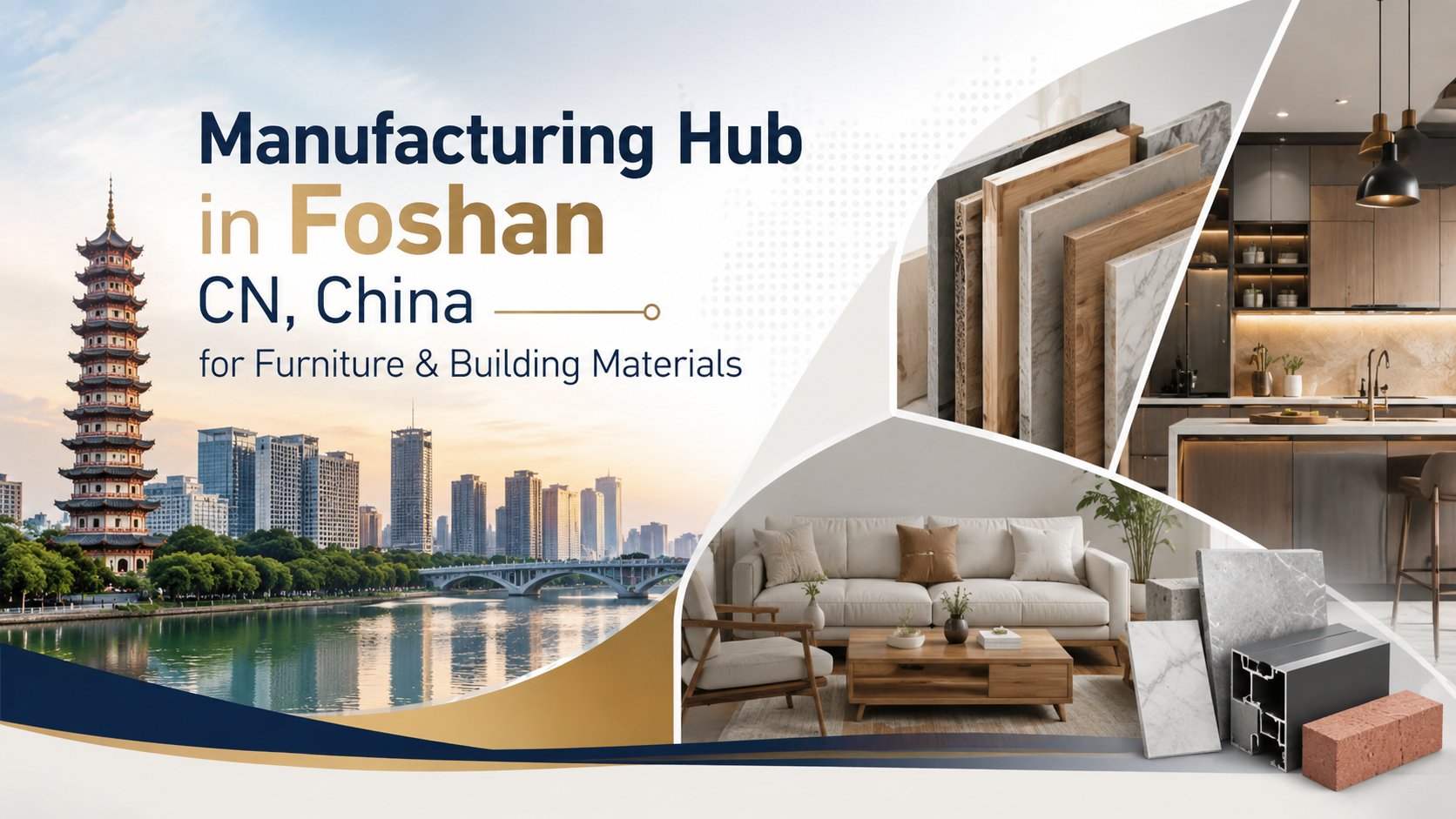
Key Economic Facts About Foshan
Numbers tell the story of why Foshan China commands attention from global buyers:
|
Metric |
Figure |
Context |
|
City Area |
~3,848 sq km |
Larger than many expect for a “manufacturing city” |
|
Population |
9.5+ million |
Massive labor pool for factories |
|
GDP |
Over 1.3 trillion RMB |
Third in Guangdong after Shenzhen and Guangzhou |
|
Manufacturing Share of GDP |
60%+ |
Unusually high even by Chinese standards |
|
Furniture Industry Employees |
150,000+ |
Concentrated in dedicated zones |
|
Ceramic Tile Output |
60%+ of China’s total |
Dominant global market share |
That manufacturing share of GDP is the standout number. Most Chinese cities have diversified heavily into services and tech over the past decade. Foshan doubled down on making physical things. Over 60% of the local economy comes from manufacturing. That means the entire city’s infrastructure, workforce training, government policy, and business culture revolves around production. When you source from Foshan, you’re tapping into a place where literally everything is optimized for manufacturing output.
Per-capita income runs high for a manufacturing-focused city, which means the workforce is experienced and stable. These aren’t desperate workers taking any job available. They’re skilled tradespeople, many with decades of experience in furniture joinery, ceramic glazing, or aluminum fabrication. That skill depth shows up in product quality.
The city ranks among China’s top manufacturing bases not just for furniture and building materials but also for home appliances (Midea is headquartered here), textiles, and machinery. This industrial diversity creates a robust supporting ecosystem. Need a custom motor for an adjustable desk mechanism? There’s probably a supplier within 20 kilometers. Need specialized packaging for fragile ceramic tiles? Multiple options nearby. That ecosystem density reduces costs and speeds up production for everyone operating within it.
The Furniture Manufacturing Legacy
Furniture production in Foshan China didn’t appear overnight. It grew from centuries of woodworking tradition into the industrial powerhouse it is today, and understanding that evolution helps explain why the quality and variety here surpasses most competing regions.
The roots go back to the Ming and Qing dynasties. Craftsmen in this region produced hardwood furniture prized across China for intricate carving, precise joinery, and exceptional durability. Rosewood chairs, elm cabinets, camphor wood chests. These weren’t mass-produced items. They were artisan pieces that took weeks or months to complete, passed down through family workshops across generations.
That heritage didn’t disappear when modern manufacturing arrived. It transformed. Today’s Foshan furniture factories blend CNC routing machines and robotic assembly with hand-finishing techniques that trace directly back to those traditional methods. A factory might use computer-controlled cutting for precision and speed, then have experienced workers hand-sand, hand-stain, and hand-inspect every piece before packaging.
I watched this firsthand at a factory in Shunde district that produces mid-range dining furniture. Automated saws cut panels to exact dimensions. Robotic arms drilled dowel holes with millimeter precision. Then the pieces moved to a finishing line where workers with 15-20 years of experience hand-applied lacquer, checked grain alignment, and felt for surface imperfections that machines can’t detect. That combination of speed and craftsmanship is what makes Foshan competitive against both cheaper producers (who lack the skill) and more expensive Western manufacturers (who lack the cost efficiency).
What Foshan Furniture Factories Produce Today
The range is genuinely staggering. Walking through Lecong’s showrooms, you’ll find:
Residential furniture: Sofas, beds, dining sets, wardrobes, TV units, bookshelves, coffee tables, side tables, dressers, nightstands. Every style from ultra-modern minimalist to ornate classical European reproduction to mid-century modern to industrial rustic.
Office furniture: Desks, conference tables, executive chairs, filing systems, reception counters, workstation partitions, ergonomic setups. Both budget commercial grade and premium executive quality.
Hospitality furniture: Hotel bedroom sets, restaurant seating, lobby pieces, outdoor furniture for resorts. Many factories specialize exclusively in hospitality projects with MOQs suited to hotel-scale orders.
Outdoor furniture: Rattan, aluminum, teak, and synthetic wicker pieces for gardens, patios, and commercial outdoor spaces.
Materials Available
Foshan CN factories work with essentially every material used in modern furniture:
|
Material Category |
Examples |
Typical Applications |
|
Solid woods |
Oak, walnut, ash, beech, rubber wood, acacia |
Premium tables, chairs, bed frames |
|
Engineered panels |
MDF, particle board, plywood, HDF |
Cabinets, wardrobes, shelving |
|
Metals |
Steel, aluminum, stainless steel, iron |
Frames, legs, industrial-style pieces |
|
Upholstery |
Leather (genuine and PU), fabric, velvet, linen |
Sofas, chairs, headboards |
|
Stone and glass |
Marble, sintered stone, tempered glass |
Table tops, TV units, shelving |
|
Synthetics |
Rattan, wicker, resin, acrylic |
Outdoor furniture, decorative pieces |
Nearby supply chains deliver these materials quickly and cheaply. A furniture factory in Foshan doesn’t need to import wood from across China or wait weeks for fabric deliveries. Most raw materials are available within the Pearl River Delta region, often from suppliers just a short drive away. That proximity keeps production costs down and turnaround times fast.
Top Furniture Markets in Foshan
The furniture market in Foshan China isn’t a single building. It’s an entire district-level ecosystem of showrooms, wholesale centers, and factory outlets that collectively form the world’s largest furniture trading zone. Here are the main ones:
Lecong International Furniture City
This is the big one. Lecong district contains over 5 kilometers of continuous furniture showrooms and wholesale markets. More than 3,000 furniture dealers and manufacturers display products here. You could spend a week walking through Lecong and still not see everything.
The scale is hard to convey without experiencing it. Imagine an entire neighborhood where every building, every floor, every unit is furniture. Sofas on one street. Bedroom sets on the next. Office furniture around the corner. Outdoor pieces down the road. It’s organized chaos that somehow works because buyers can compare hundreds of options in a single trip.
Louvre International Furniture Exhibition Center
The premium end of Foshan’s furniture scene. Louvre focuses on high-end, design-forward pieces with polished showroom presentations. If you’re sourcing for luxury hospitality projects or upscale retail, this is where you start. Prices run higher than Lecong’s wholesale zones, but the quality tier and presentation match.
Sunlink Furniture City
Massive wholesale-focused complex with strong variety across price points. Good for buyers who need volume at competitive pricing. Less polished than Louvre but more practical for commercial sourcing where cost matters as much as aesthetics.
Red Star Macalline
National chain with a strong Foshan presence. Well-organized displays, reliable brands, and a more curated selection than the sprawling wholesale markets. Useful for understanding what’s trending in the Chinese domestic market, which often predicts what international buyers will want 6-12 months later.
Shunde Furniture District
Adjacent to Lecong, Shunde focuses more on production than display. Many factories here welcome direct visits and offer factory-gate pricing for bulk orders. If you’re past the browsing stage and ready to place orders, Shunde’s factory showrooms cut out middlemen and connect you directly with manufacturers.
Building Materials: Ceramics, Tiles, and Beyond
Foshan China dominates building materials manufacturing with the same intensity it brings to furniture. The ceramics sector alone accounts for over 60% of China’s total tile production. That’s not a typo. More than half of all ceramic tiles made in China come from Foshan and its immediate surroundings.
Product Categories
|
Category |
Key Products |
Foshan’s Market Position |
|
Ceramic tiles |
Floor tiles, wall tiles, porcelain, marble-look, wood-look |
60%+ of China’s output |
|
Sanitary ware |
Toilets, basins, bathtubs, shower enclosures |
Major production base |
|
Aluminum products |
Window frames, door frames, curtain walls, profiles |
Leading extrusion hub |
|
Doors and windows |
Aluminum doors, wooden doors, composite systems |
Full-system manufacturing |
|
Hardware |
Hinges, handles, locks, drawer slides, fittings |
Supporting ecosystem |
|
Stone products |
Engineered quartz, sintered stone, marble processing |
Growing rapidly |
Why Foshan Dominates Ceramics
The ceramic tile industry here benefits from everything that makes Foshan work as a manufacturing base, plus some specific advantages:
Raw material access. Clay deposits in Guangdong and neighboring provinces feed the kilns. Transportation costs for heavy raw materials stay low because sources are regional.
Energy infrastructure. Ceramic production is energy-intensive. Foshan has natural gas pipelines and electrical capacity specifically built to support kiln operations running 24/7.
Technical expertise. Decades of ceramic production created a deep pool of engineers, technicians, and skilled workers who understand glazing chemistry, kiln temperature profiles, and quality grading at an expert level.
Equipment manufacturers nearby. The machines that make tiles, kilns, presses, glazing lines, polishing equipment, are also manufactured in the region. Maintenance, upgrades, and custom modifications happen fast.
Scale economics. When you’re producing billions of square meters of tiles annually across hundreds of factories, component costs drop, logistics optimize, and efficiency compounds.
Primary Building Materials Markets
China Ceramics City (Huaxia Ceramics Expo City): The largest ceramic tile trading center in Asia. Hundreds of brands display full product ranges. Floor tiles, wall tiles, mosaics, decorative pieces, outdoor pavers. Everything ceramic lives here.
Huayi Decoration Materials Market: Broader scope covering interior finishing materials. Flooring, wall panels, lighting, plumbing fixtures, paint, wallpaper. Good for buyers sourcing complete interior packages rather than single product categories.
Meiju International Building Materials Center: Wide selection of decorative and functional building products. Strong for hardware, doors, windows, and finishing accessories.
How to Source from Foshan Factories
Knowing Foshan exists is one thing. Actually sourcing from it effectively is another. Here’s what the process looks like in practice:
Step 1: Define Your Product Requirements
Before contacting any factory, get clear on what you need. Create a detailed product spec sheet covering dimensions, materials, finishes, colors, packaging requirements, and target price range. Foshan has thousands of suppliers. Without clear specifications, you’ll waste weeks getting quotes that don’t match your needs.
Step 2: Identify Potential Suppliers
Three main approaches work:
Visit markets directly. Fly into Guangzhou, take the train to Foshan, and walk the showrooms. This works best when you’re still exploring options and want to see physical products before committing. Budget 3-5 days minimum for a productive sourcing trip.
Use online platforms. Alibaba, Made-in-China, and Global Sources list thousands of Foshan manufacturers. Filter by location, product type, and certifications. Request samples before placing orders.
Work with a sourcing agent. A China sourcing agent who knows Foshan’s factory landscape can shortcut the process significantly. They’ve already vetted suppliers, know which factories deliver consistently, and can negotiate in Mandarin on your behalf. The cost is typically 3-10% of order value, which pays for itself in avoided mistakes and better pricing.
Step 3: Request Samples and Verify Quality
Never place a bulk order without samples first. Period. Foshan factories are generally willing to send samples, though you’ll pay for them plus shipping. Evaluate materials, construction quality, finish consistency, and packaging. Compare against your spec sheet.
Step 4: Negotiate Terms
Supplier negotiation in Foshan follows standard Chinese manufacturing norms. MOQs (minimum order quantities) vary wildly. Some furniture factories accept 10-piece orders for stock items. Custom designs might require 50-100 pieces minimum. Building materials typically have higher MOQs due to production batch sizes.
Payment terms usually start at 30% deposit with 70% before shipping for new customers. Established relationships can negotiate better terms over time.
Step 5: Arrange Quality Inspection
Before your order ships, have it inspected. Either visit personally or hire a third-party inspection service. Check dimensions against specs, verify material quality, test functionality (drawers open smoothly, hinges hold weight, tiles are flat and consistent), and confirm packaging protects against shipping damage.
This step alone saves more money than it costs. I’ve seen orders where 15-20% of units had issues that would have generated customer returns and negative reviews. Catching problems before shipping is infinitely cheaper than dealing with them after delivery. Proper quality control processes are non-negotiable for furniture and building materials where defects are immediately visible to end customers.
Step 6: Handle Logistics
Furniture and building materials are heavy, bulky, and fragile. Shipping costs form a significant percentage of landed cost. Work with freight forwarders experienced in these product categories. They’ll know how to consolidate shipments, choose appropriate container types (some furniture needs high-cube containers for height), and route through the most cost-effective ports.
From Foshan, goods typically truck to Nansha Port (Guangzhou) or Yantian Port (Shenzhen) for ocean freight. Transit times to US West Coast run 14-18 days. East Coast via Panama Canal is 25-30 days. Europe is 20-30 days depending on destination port.
Quality Control Considerations
Sourcing furniture and building materials from Foshan China requires specific quality awareness. These aren’t small, simple products. They’re large, heavy items where defects are immediately obvious and returns are expensive.
Common Issues to Watch For
|
Product Type |
Common Quality Issues |
What to Check |
|
Furniture (wood) |
Warping, uneven stain, loose joints, veneer bubbling |
Flatness, joint tightness, finish consistency |
|
Furniture (upholstered) |
Uneven padding, crooked stitching, fabric pilling |
Symmetry, stitch straightness, fabric quality |
|
Ceramic tiles |
Size variation, color inconsistency, surface defects |
Measure multiple tiles, compare colors across boxes |
|
Aluminum products |
Scratches, uneven anodizing, dimensional variance |
Surface inspection, measurement verification |
|
Sanitary ware |
Glaze defects, drainage issues, fitting alignment |
Visual inspection, water testing, fitting check |
Inspection Timing
For furniture, inspect after assembly but before packaging. Once items are boxed and palletized, checking individual pieces becomes impractical.
For tiles and building materials, inspect during production (in-line inspection) and after packaging (pre-shipment inspection). Color consistency between batches is the most common issue with ceramics. Tiles from different kiln runs can vary noticeably in shade.
Certifications to Request
Depending on your destination market, you may need specific certifications:
For US market: CARB compliance for wood products (formaldehyde emissions), ASTM standards for furniture safety, UL certification for any electrical components.
For EU market: CE marking, REACH compliance for chemicals, EN standards for furniture strength and stability.
For Australia: Australian Standards (AS/NZS) for furniture, WaterMark certification for plumbing products.
Discuss certification requirements with your supplier before production. Many Foshan factories already hold these certifications for their standard products. Custom items may need additional testing. Factor testing time and cost into your timeline. Working with experienced procurement outsourcing partners ensures certification requirements don’t become last-minute surprises that delay shipments.
Beyond Business: Culture and History in Foshan
People visiting Foshan Guangdong Province China on sourcing trips often discover the city has far more personality than they expected from an industrial hub. The cultural heritage here runs deep and offers genuine interest beyond factory visits.
Martial arts history. Foshan is the birthplace of Wing Chun kung fu, made globally famous through Bruce Lee (who studied under Ip Man, a Foshan native). The Ip Man Memorial Hall and various martial arts museums attract visitors from around the world. Wong Fei-hung, another legendary martial artist, also called Foshan home.
Cantonese opera. Foshan is considered one of the birthplaces of Cantonese opera, a traditional art form combining music, singing, martial arts, and acrobatics. Performances still happen regularly at local theaters and temples.
Ancestral Temple (Zumiao). A stunning 600-year-old temple complex in central Foshan featuring intricate wood carvings, ceramic roof decorations, and traditional architecture. Worth a few hours between factory meetings.
Nanfeng Ancient Kiln (Nanfeng Guzao). A 500-year-old dragon kiln that’s still operational, producing traditional ceramics using ancient firing techniques. Fascinating context for anyone sourcing modern ceramics from the same region.
Cantonese cuisine. Foshan’s food scene is excellent. Dim sum, roast meats, congee, and fresh seafood. After a long day of factory visits and negotiations, a proper Cantonese dinner is genuinely restorative.
For business travelers, mixing cultural exploration with sourcing trips makes the journey more enjoyable and provides useful context about the region’s manufacturing heritage. Understanding that today’s ceramic tile factories evolved from the same tradition as Nanfeng’s ancient kilns gives you appreciation for the depth of expertise embedded in this place.
Why Foshan Remains the Top Choice for Global Buyers in 2026
Several factors keep Foshan China at the top of the list for furniture and building materials sourcing despite rising competition from other regions:
Unmatched concentration. Nowhere else in the world offers this density of furniture and building materials manufacturers in one geographic area. The ability to visit dozens of suppliers in a single trip, compare products side by side, and negotiate with multiple options creates buyer leverage that dispersed manufacturing regions can’t match.
Full supply chain integration. Raw materials, components, finished goods, packaging, logistics. Everything exists within the Pearl River Delta. This integration reduces lead times, lowers costs, and simplifies coordination compared to sourcing from regions where different production stages happen in different cities or countries.
Price competitiveness. Scale economics, local material sourcing, and intense competition between manufacturers keep prices sharp. Foshan factories compete with each other daily, which benefits international buyers through competitive pricing without sacrificing quality.
Customization capability. Most Foshan furniture factories offer OEM and ODM services. Want to modify an existing design? Change dimensions, materials, colors, or hardware? Factories here handle customization routinely because their customer base demands it. MOQs for custom work are often surprisingly low compared to other manufacturing regions.
Export experience. Foshan factories have been serving international markets for decades. They understand export packaging requirements, shipping container loading optimization, documentation needs, and quality expectations of Western buyers. You’re not educating them about international trade. They’ve been doing it longer than most importers have been in business.
Continuous improvement. Factories here invest in new equipment, adopt new materials, and develop new designs constantly. The competitive pressure ensures nobody stands still. Visit the same factory two years apart and you’ll likely see upgraded machinery, expanded product lines, and improved processes.
For businesses ready to explore what Foshan offers, the benefits delivered by working with experienced sourcing partners include verified factory connections, negotiated pricing, quality oversight, and logistics coordination that makes the entire process manageable regardless of your experience level with Chinese manufacturing.
Frequently Asked Questions
What makes Foshan CN a top manufacturing hub?
Foshan stands out for furniture and building materials specifically because of its trained workforce (many with decades of specialized experience), robust infrastructure (ports, highways, rail), tight-knit factory zones where supporting suppliers cluster together, and competitive pricing driven by intense local competition between manufacturers. Over 60% of the city’s economy is manufacturing, meaning everything from government policy to workforce training is optimized for production.
How far is the distance from Guangzhou to Foshan?
The distance between central Guangzhou and central Foshan runs 20-30 kilometers depending on which districts you’re measuring between. By high-speed train or metro, the trip takes roughly 30 minutes. By car in normal traffic, similar timeframe. The two cities have effectively merged into one continuous urban area with seamless transportation connections. Guangzhou Baiyun International Airport is the closest major airport for international visitors heading to Foshan.
Which is the biggest furniture market in Foshan China?
The Lecong district holds the largest concentration of furniture showrooms and wholesale markets, stretching over 5 kilometers with more than 3,000 dealers and manufacturers. Within Lecong, the Louvre International Furniture Exhibition Center handles premium segments while Sunlink Furniture City covers broader wholesale needs. Together, they form the world’s largest furniture trading zone.
What types of building materials are produced in Foshan?
Foshan Guangdong Province China produces ceramic tiles (over 60% of China’s total output), porcelain products, sanitary ware (toilets, basins, bathtubs), aluminum profiles and extrusions (window frames, door frames, curtain walls), doors and windows (complete systems), hardware and fittings, engineered stone, and various interior finishing materials. The breadth means buyers can source complete building packages from a single region.
Are there interesting things to do in Foshan besides business?
Plenty. The Ancestral Temple (Zumiao) is a 600-year-old architectural treasure. Nanfeng Ancient Kiln offers hands-on ceramic experiences in a 500-year-old facility. Martial arts enthusiasts visit the Ip Man Memorial Hall and Wong Fei-hung Museum. Cantonese opera performances happen regularly. The food scene is outstanding, with some of Guangdong’s best dim sum restaurants. Liang’s Garden and Qinghui Garden provide peaceful traditional garden settings for downtime between meetings.
Why choose Foshan furniture factories for sourcing?
Foshan furniture factories deliver massive variety (every style, material, and price point), competitive pricing (driven by local competition and scale), consistent quality (experienced workforce with decades of furniture-specific skills), fast customization (OEM/ODM capabilities with reasonable MOQs), and export readiness (factories understand international packaging, documentation, and quality standards). The concentration of suppliers also gives buyers negotiating leverage since alternatives are always nearby.
How can buyers connect with suppliers in Foshan China?
Three main approaches: visit the markets directly during a sourcing trip (budget 3-5 days minimum), search online platforms like Alibaba filtered by Foshan location, or work with a sourcing agent who already has verified factory relationships in the region. For first-time buyers, a sourcing partner significantly reduces risk by pre-vetting suppliers, facilitating communication, and managing quality inspections. Contact us or book a conversation to discuss your specific sourcing needs.