
Product samples are an important part of making a big purchase decision. If you are importing products for the first time from China, you should request a sample. This allows you to see whether your chosen supplier can deliver on your requests. Chinese manufacturers are notorious for making bold claims about making anything you desire, but sometimes they fail to deliver an exceptional product.
Ordering product samples from China allows you to check the product quality and durability, and helps build trust in the supplier.
This comprehensive guide provides you with key insights into how to order product samples from China and which factors you must consider before investing millions.
What is a Product Sample
A product sample is a representation of a product that details the entire specifications. It’s requested by buyers before they place bulk orders. It helps buyers evaluate design, materials, dimensions, function, craftsmanship, and packaging.
Types of Product Samples
Samples also come in different versions. Choose the one that you require.
| Sample type | Best use | Main limitation |
| Stock sample | Fast check of basic construction and supplier responsiveness | May not match your material, color, logo, or packaging |
| Customized sample | Validating logo, color, dimensions, features, or packaging | Higher cost and longer lead time |
| Prototype | New product development or structural changes | Prototype materials or methods may differ from mass production |
| Pre-production sample | Final approval of specifications before production starts | Requires finalized components and packaging |
| Production sample | Checking a unit selected from the actual production batch | Problems found at this stage can delay shipment |
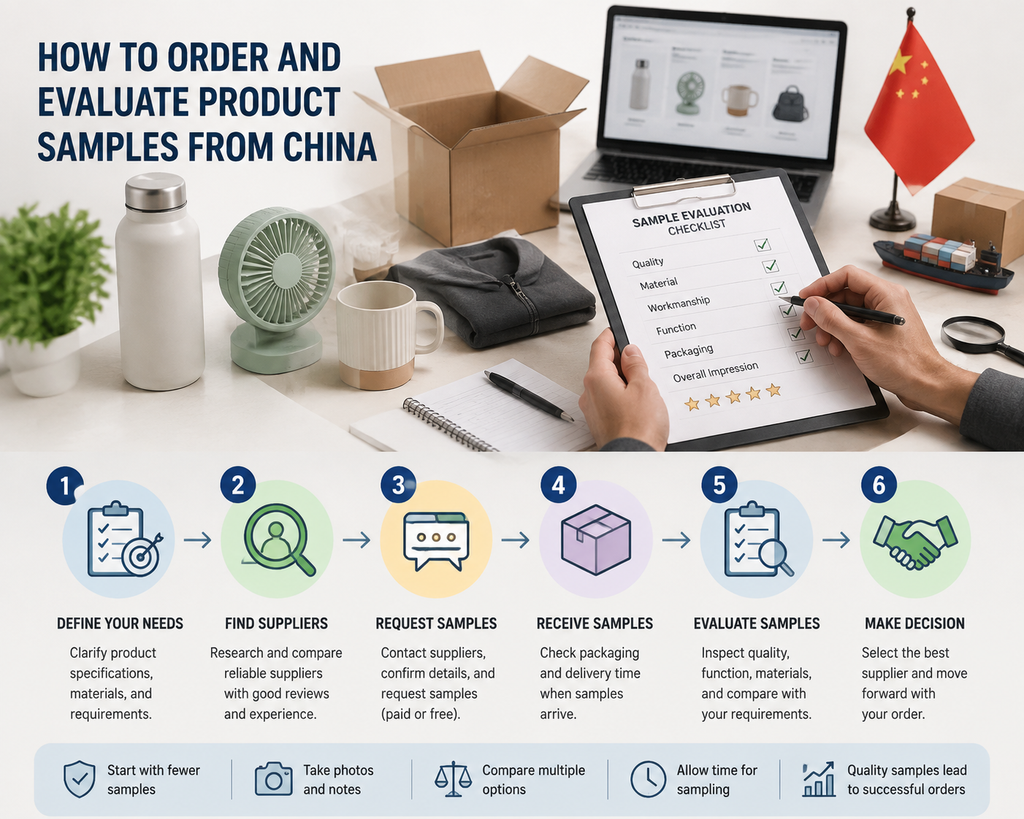
Step-by-Step Guide to Ordering Product Samples from China
- List Your Requirements
First things first, you need to have a clear idea of what you expect from the supplier. Note all the requirements like product specifications, quality, testing standards, etc. The more details you have, the easier it will be for suppliers to understand your requirements and deliver a perfect product.
- Connect with Suppliers
Source a list of suppliers you find appealing. Do not just go for low-budget suppliers. Check their testimonials and get a mix of both high-end and low ones. Share your requirements and budget with them. Ask for photos and videos of the products. Ask about the cost before requesting a product sample to get a better idea of how much expenses will incur in the long run. Set expectations clearly by asking about the exact pricing, MOQs, and shipping timelines.
- Discuss Shipment Charges
While you’re discussing the product costs, ask about shipping and fulfillment costs, as sometimes buyers are required to pay the shipping fee. Always ask if the supplier would be willing to cover the shipping costs. You should also confirm the mode of shipping before placing the order and ensure you’ll get tracking information.
Some countries like Australia or New Zealand incur customs and taxes, which are an additional expense you should consider.
- Inspect the sample
Once you receive the sample, inspect it carefully. Check whether it matches your product specifications. Keep these inspection tips in mind.
- Check the craftsmanship for any issues like weak joints and rough edges
- Make sure the finishing of the product is as per your standards
- Verify the quality of the material
Once you get the product, share the feedback with the supplier. If there are some changes to be made, make sure to communicate with them.
Product Sample Inspection Checklist
- Identity: Make sure the model, version, color, size, and supplier match the order.
- Dimensions and weight: Measure them against the required tolerances rather than relying on approximate descriptions.
- Materials: Check the material grade, thickness, composition, texture, and odor when relevant.
- Workmanship: Look for scratches, stains, gaps, burrs, loose threads, excess glue, poor alignment, and uneven finishes.
- Function: Test all features several times under normal use conditions.
- Branding: Check the logo design, color, position, durability, and readability.
- Packaging: Check the size, protection, barcode, warnings, inserts, and carton fit.
- Compliance: Request the relevant test reports and make sure they apply to the exact materials and model.
- Shipping resilience: Consider testing for drops, vibration, compression, leaks, moisture, or temperature changes, depending on the product.
- Place your Order
If you’re satisfied with the sample, negotiate with the supplier regarding price and place an order. Some suppliers may ask for payment upfront while others may offer installments.
Pro tip: You may take photos or videos of the sample and post them on your social media pages so when the product arrives, you can quickly ship it to the interested customers.
How Much Does a Product Sample Cost
Product sample costs vary from sample to sample. There is no set price. A sample may cost as much as an actual product’s retail price. A customized one can incur mold, material, or engineering costs as well.
Sample cost also depends on the type of product you want to purchase, how long it takes to manufacture them, and how they are shipped to you.
Sometimes, product samples may cost more than the products for several reasons. First, mass production is cheaper and more affordable than a single customized sample.
While you use samples to evaluate potential suppliers, suppliers are also using the sampling process to assess potential customers. If you’re unwilling to pay for samples or try to negotiate heavily on sample prices, they may assume that you don’t have the budget or purchasing capacity for a larger bulk order.
Mistakes Buyers Make When Requesting Product Samples
If you’re ordering samples for the first time from China, keep these factors in mind.
- Many buyers don’t communicate their requirements to the suppliers, and as a result, they send standardized samples that buyers assume represent the future customized order.
- Don’t rely on only one supplier, as you may miss out on variety, quality, and pricing.
- Always conduct packaging tests, as a good product can still arrive damaged or create high fulfillment costs.
- Repeat testing to reveal intermittent failures.
Final Thoughts
Quality control starts long before the products reach your customers. A sample gives you the opportunity to confirm that the supplier can actually deliver what you ordered, not just what they promised.
Check the product, materials, workmanship, function, branding, packaging, compliance, and ability to withstand shipping. Be specific about your requirements and measure everything against clear standards and tolerances.
A few hours spent carefully checking samples can save you from much bigger problems later, including defective products, customer complaints, returns, and financial losses. In short, don’t treat samples as a formality; use them to make sure you’re confident in your supplier before placing a bulk order.
If you are looking to source products from China, Book a free consultation or contact eSourcing Solution for exceptional products all across China.
FAQS
How do I order product samples from China?
You can source product samples via online wholesale websites, hiring a sourcing agent, or ordering through local border import services.
Why should I order a sample before a bulk order?
A sample lets you check the product’s quality, materials, dimensions, functionality, packaging, and overall accuracy before committing to a large order.
What should I check when inspecting a product sample?
Check the model, size, color, materials, workmanship, function, branding, packaging, and compliance documents. Compare everything with your original specifications.
Should I pay for product samples?
In most cases, yes. Paying for a sample is a small cost compared with the potential loss from receiving a large batch of defective or incorrect products.
How can I make sure the bulk order matches the sample?
Keep a record of the approved sample and your specifications. Clearly document measurements, materials, colors, branding, packaging, and acceptable tolerances in the purchase agreement.
Can a sample guarantee the quality of the bulk order?
No. A sample shows what the supplier can produce, but it does not guarantee that every unit will match. For larger orders, consider inspections and quality checks during production and before shipment.