
Importing goods? You’ll need a POA.
Your freight forwarder or customs broker can’t just waltz in and handle your shipment. They need legal permission to act on your behalf with customs, carriers, and other parties. That permission comes through a Power of Attorney document.
Skip it or fill it out wrong, and your shipment sits at the port racking up storage fees while you scramble to fix paperwork. Get it right from the start and everything flows smoothly.
Here’s exactly what POA means in shipping and how to fill it out correctly.
Table of Contents
| # | Topic | What You’ll Learn |
| 1 | What is POA in Shipping? | Definition and purpose |
| 2 | Why You Need a POA | Legal requirements and benefits |
| 3 | Types of Shipping POA | Limited vs unlimited POA |
| 4 | Who Needs a POA? | Required parties |
| 5 | Step-by-Step: How to Fill Out a POA | Complete instructions |
| 6 | Common Mistakes to Avoid | What goes wrong |
| 7 | POA Requirements by Country | International differences |
| 8 | Updating and Revoking a POA | Making changes |
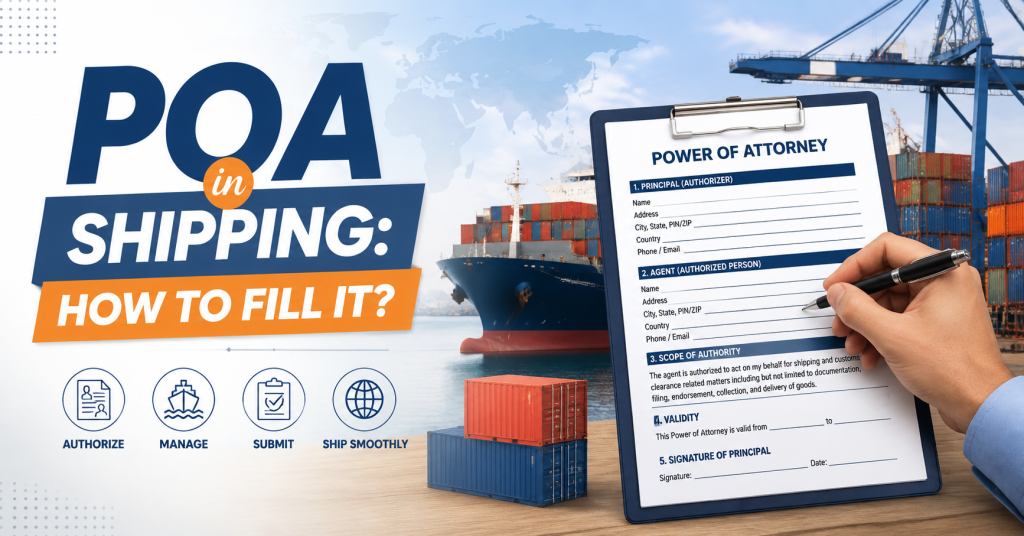
POA in Shipping: What is POA in Shipping?
POA stands for Power of Attorney. In shipping, it’s a legal document authorizing someone else to act on your behalf in customs and logistics matters.
Basic definition:
You (the importer) give your customs broker or freight forwarder legal authority to conduct business with customs, file paperwork, pay duties, and make declarations in your name.
What it allows:
File customs entries. Sign documents. Pay duties and fees on your behalf. Communicate with customs officials. Handle protests and disputes. Receive confidential customs information about your shipments.
Legal document:
This isn’t just a courtesy form. It’s a legally binding authorization. Customs won’t accept someone acting for you without proper POA on file.
One-time setup:
Usually you fill out a POA once when you start working with a customs broker or freight forwarder. It stays on file for ongoing shipments unless you revoke it or switch providers.
According to U.S. Customs and Border Protection, a valid POA must be on file before a broker can transact customs business on behalf of an importer. Without it, your shipments literally cannot clear customs.
When doing bulk product sourcing from China, you’ll need POAs for every customs broker or freight forwarder you work with.
Why You Need a POA
Can’t you just handle customs yourself? Technically yes, but practically no.
Legal requirement:
US Customs requires that anyone representing an importer must have written authorization. POA provides that authorization. No POA means no representation.
Complexity:
Customs clearance involves specialized knowledge, systems access, and procedures most importers don’t have. Brokers have licenses, training, software, and experience you probably don’t.
Speed:
Brokers clear shipments in hours. DIY customs clearance? Days or weeks while you figure out forms, codes, procedures. Time is money when containers are sitting at ports.
Liability protection:
POA clarifies who’s responsible for what. Protects both you and your broker. Without it, responsibility for errors and penalties gets messy legally.
Access to systems:
Customs brokers have access to government systems like ACE (Automated Commercial Environment) that individual importers typically don’t. POA authorizes them to use those systems on your behalf.
Duty payments:
Brokers can pay duties on your behalf when POA is on file. Without POA, you’d need to pay directly every time, slowing everything down.
Confidentiality waiver:
Customs won’t discuss your shipment details with third parties without authorization. POA provides that authorization so your broker can get information needed to clear shipments.
Bottom line: Professional customs clearance requires POA. Trying to import without it creates unnecessary headaches.
Types of Shipping POA
Not all POAs are the same. Two main categories:
Limited (Restricted) POA:
Authorizes broker to handle specific transactions or shipments only. You grant authority for particular entries or time periods. More control but more paperwork since you need new authorization for different situations.
Unlimited (General) POA:
Gives broker broad authority to handle all your customs business indefinitely. Most common type. Stays valid until you revoke it. Covers all shipments, all entry types, all customs activities within the broker’s normal scope.
What unlimited POA typically includes:
File consumption entries and warehouse entries. Make, endorse, sign declarations. Pay duties, taxes, fees on your behalf. Receive refunds and drawback payments. Correspond with customs. File claims and protests. Perform all acts you could do yourself related to customs.
What POA doesn’t include:
Brokers can’t make business decisions for you (like whether to accept a shipment). Can’t change your company structure or contracts. Can’t obligate you beyond normal customs activities. Authority is limited to customs and entry procedures.
Which to choose:
Most importers use unlimited POA with trusted brokers. Simpler, covers ongoing business. Limited POA makes sense if you’re testing a new broker or have concerns about granting broad authority.
Duration:
Unlimited POA typically remains valid until revoked. Some companies put expiration dates (1-3 years) requiring periodic renewal. Check what your specific POA states.
Who Needs a POA?
Several parties might need POA from you:
Customs Brokers:
Always need POA. They’re filing customs entries on your behalf. This is the most critical POA you’ll execute.
Freight Forwarders:
Often need POA if they’re handling customs clearance or filing documents. If they’re just arranging transportation without customs work, might not need full POA.
Third-Party Logistics Providers (3PLs):
If they handle customs clearance as part of their services, they’ll need POA. If they only do warehousing and transportation, probably don’t.
Consolidators:
When using consolidated shipping services, the consolidator might need limited POA to handle the customs portion.
Your Own Employees:
If you have in-house staff handling some customs activities, they might need POA to act on the company’s behalf.
Multiple POAs:
You can have POAs with multiple brokers simultaneously. Not uncommon for companies using different brokers at different ports or for different product types. Each needs their own POA on file.
When working with a China sourcing agent, they’ll direct you to the appropriate customs broker who’ll need your POA for destination clearance.
Step-by-Step: How to Fill Out a POA
Here’s how to complete a typical customs broker POA form correctly:
Step 1: Get the Right Form
Your customs broker provides their POA form. Don’t use random internet forms—each broker has their specific format. Some use CBP Form 5291 (standard US Customs form), others use their own versions covering the same information.
Step 2: Company Information
Fill in your legal business name exactly as registered. Match your IRS documentation. Include:
- Full legal company name
- Doing Business As (DBA) name if different
- Physical business address
- Mailing address if different
- Federal Tax ID (EIN number)
- Phone number and email
Step 3: Identify the Broker
Fill in the customs broker’s information:
- Broker’s legal company name
- License number
- Address
- Contact information
This section might be pre-filled by the broker.
Step 4: Specify POA Type
Check whether you’re granting limited or unlimited authority. Most forms have boxes to select. Unlimited is standard unless you have specific reasons to limit scope.
Step 5: List Authorized Signatures
Identify who in your company can authorize shipments and make decisions. Include:
- Full names
- Titles
- Signatures
Usually CEO, CFO, or Operations Manager. People who can legally bind the company.
Step 6: Corporate Officer Signature
An authorized corporate officer must sign. This person must have authority to legally bind the company. Include:
- Signature (original, not copied)
- Printed name
- Title
- Date
Step 7: Witness or Notarization (if required)
Some jurisdictions require witness signatures or notarization. Check your broker’s requirements. If notarization needed:
- Sign in front of notary
- Notary completes their section
- Notary seal and signature
Step 8: Effective Date
Some forms ask for start date. Usually immediate. Leave end date blank for unlimited POA or specify date for limited POA.
Step 9: Special Instructions
If you have specific limitations or requirements, note them. Most people leave this blank for standard unlimited POA.
Step 10: Review Everything
Double-check all information before submitting:
- Names spelled correctly
- EIN number correct
- Signatures original (not photocopied or stamped)
- Dates filled in
- No blank required fields
Step 11: Submit to Broker
Send completed form to broker. Keep copies for your records. Broker files with customs and their records.
According to National Customs Brokers & Forwarders Association of America, incorrect POA information is a leading cause of customs clearance delays. Accuracy matters.
Common Mistakes to Avoid
What typically goes wrong with POAs:
Using DBA instead of legal name:
Your company operates as “ABC Imports” but legal name is “ABC Trading LLC.” Use the legal name matching your EIN. DBA can be noted separately but legal name is what matters.
Wrong EIN number:
Typo in your Federal Tax ID number means customs can’t match the POA to your entries. Everything stops. Triple-check this number.
Photocopied signatures:
POA requires original signatures. Photocopying a signed form doesn’t work. Each POA needs fresh original signature.
Unauthorized person signing:
Only corporate officers with authority to bind the company can sign. Random employee signatures aren’t valid. If someone’s going to sign POAs, establish their authority properly.
Incomplete addresses:
“123 Main St” isn’t enough. Include city, state, ZIP code. PO Boxes need additional physical address for some purposes.
Leaving fields blank:
Every required field must be filled. Blank spots cause rejection. If something doesn’t apply, write “N/A” rather than leaving blank.
Old forms:
Using outdated POA forms. Forms change over time. Always use the current version from your broker.
Forgetting notarization:
If your state or situation requires notarization and you skip it, POA is invalid. Check requirements before signing.
Not keeping copies:
You submit original to broker and don’t keep copies. Later you can’t remember what you authorized. Always keep copies.
Multiple POAs conflicting:
Granting overlapping authority to different brokers with conflicting terms. Keep your POAs organized and clear about who handles what.
Wrong broker information:
If broker changed their company name or license number, old information won’t work. Use current information.
Expired POA:
If your POA had expiration date and nobody renewed it, shipments stop clearing. Calendar reminders help.
Using quality control practices for documentation prevents these errors from delaying shipments.
POA Requirements by Country
Requirements vary by country. Here’s what you need to know for major markets:
United States:
POA required for customs broker representation. Can use CBP Form 5291 or broker’s own form. Must include EIN, corporate signature. Unlimited POA most common. Filed electronically with CBP through broker.
Canada:
Similar to US. CBSA (Canada Border Services Agency) requires written authorization for brokers. Form B3-3 or broker’s form used. Business Number (BN) required instead of EIN.
European Union:
Customs representation authorization required. Rules vary slightly by member country. Often called “customs representative appointment” rather than POA. VAT number required.
United Kingdom (post-Brexit):
Customs agent authorization needed. EORI number (Economic Operators Registration and Identification) required. Similar process to EU but separate system.
Australia:
Customs broker authorization required. Australian Business Number (ABN) needed. Form can be electronic or paper.
China:
Different system. If you’re importing into China, your agent handles paperwork differently. Typically use business license copies and authorization letters rather than Western-style POA.
General pattern:
Most countries require some form of written authorization for customs representation. Specific forms, ID numbers, and procedures vary. Your broker guides you through their country’s requirements.
For global sourcing across multiple countries, you’ll need POAs complying with each destination country’s rules.
Updating and Revoking a POA
POAs aren’t permanent. Here’s how to make changes:
When to update:
Company name changes. Address changes. Tax ID changes. Authorized signers change. You want to modify scope of authority.
How to update:
Usually requires new POA form. Some brokers allow amendments for minor changes like addresses. Major changes need new POA. Submit new form, which supersedes the old one.
Revoking a POA:
Write formal revocation letter stating you’re withdrawing authority. Include:
- Your company information
- Broker’s information
- POA date being revoked
- Effective date of revocation
- Signature of authorized officer
Send to broker and any relevant customs offices. Keep proof of delivery.
Why revoke:
Switching brokers. Service issues. Company closing. No longer importing. Consolidating brokers.
Timing:
Give reasonable notice. Don’t revoke POA while shipments are in process unless necessary. Coordinate with new broker if switching.
Multiple broker coordination:
If you have POAs with multiple brokers and revoke one, make sure other brokers are aware which shipments they’re now handling.
Notifying customs:
Broker usually notifies customs when POA is revoked. But you can also notify customs directly to ensure your file is updated.
Records retention:
Keep copies of revoked POAs and revocation letters. Might need them for audits or disputes about shipments during the POA period.
FAQs About POA in Shipping
What does POA mean in shipping?
POA stands for Power of Attorney. It’s a legal document authorizing a customs broker or freight forwarder to act on your behalf in customs matters, including filing entries, paying duties, and communicating with customs officials.
Do I need a POA for every shipment?
No. You typically execute one POA with each customs broker you use. That POA covers all your future shipments with that broker until you revoke it. You don’t need separate POAs for each shipment.
Can I use the same POA for multiple brokers?
No. Each customs broker needs their own POA on file. You can have active POAs with multiple brokers simultaneously, but each requires their own document.
Who can sign a shipping POA?
A corporate officer with authority to legally bind the company must sign. Typically the CEO, President, CFO, or authorized Operations Manager. Random employees without proper authority can’t validly sign POAs.
Does a POA need to be notarized?
Depends on jurisdiction and broker requirements. US customs POAs don’t always require notarization but some brokers prefer it. Some states require notarization. Check with your specific broker about their requirements.
How long is a shipping POA valid?
Unlimited POAs typically remain valid until revoked. Some companies use POAs with expiration dates (1-3 years) requiring periodic renewal. Check your specific POA document for any expiration terms.
Can I revoke a POA?
Yes. You can revoke a POA at any time by submitting written revocation notice to the broker and customs. Give reasonable notice and don’t revoke while shipments are actively in process if possible.
What’s the difference between limited and unlimited POA?
Limited POA authorizes specific transactions or time periods only. Unlimited POA grants broad authority to handle all your customs business indefinitely. Most importers use unlimited POA with trusted brokers for simplicity.
What happens if I don’t have a POA on file?
Your customs broker cannot legally represent you without a valid POA on file. Your shipments cannot clear customs. Goods sit at the port accumulating storage fees until you provide proper POA documentation.
Do I need a POA if I’m using a freight forwarder?
Depends on their services. If the freight forwarder handles customs clearance, yes. If they only arrange transportation without customs work, maybe not. Ask your specific forwarder what they need.
Final Word on Shipping POA
A Power of Attorney seems like just another form to fill out. Easy to rush through or ignore details.
Don’t.
This document gives someone legal authority to act on your behalf with government agencies, sign documents in your name, and obligate your company financially for duties and fees. That’s serious legal stuff.
Fill it out wrong? Your shipments sit at the port while you fix the paperwork. Storage fees pile up. Customers wait for products. Revenue gets delayed. All because of a form you could’ve completed correctly the first time.
The good news: POA is one-time setup. Spend 15 minutes doing it right and you’re done for years. Your customs broker will guide you through their specific requirements. Ask questions if anything’s unclear.
Get it right once. Then focus on actually running your business instead of dealing with customs clearance headaches.
Need help navigating customs documentation and import requirements? Contact us to discuss your shipping needs. Want expert handling of all customs paperwork including POAs? Book a consultation and we’ll connect you with experienced customs professionals.