
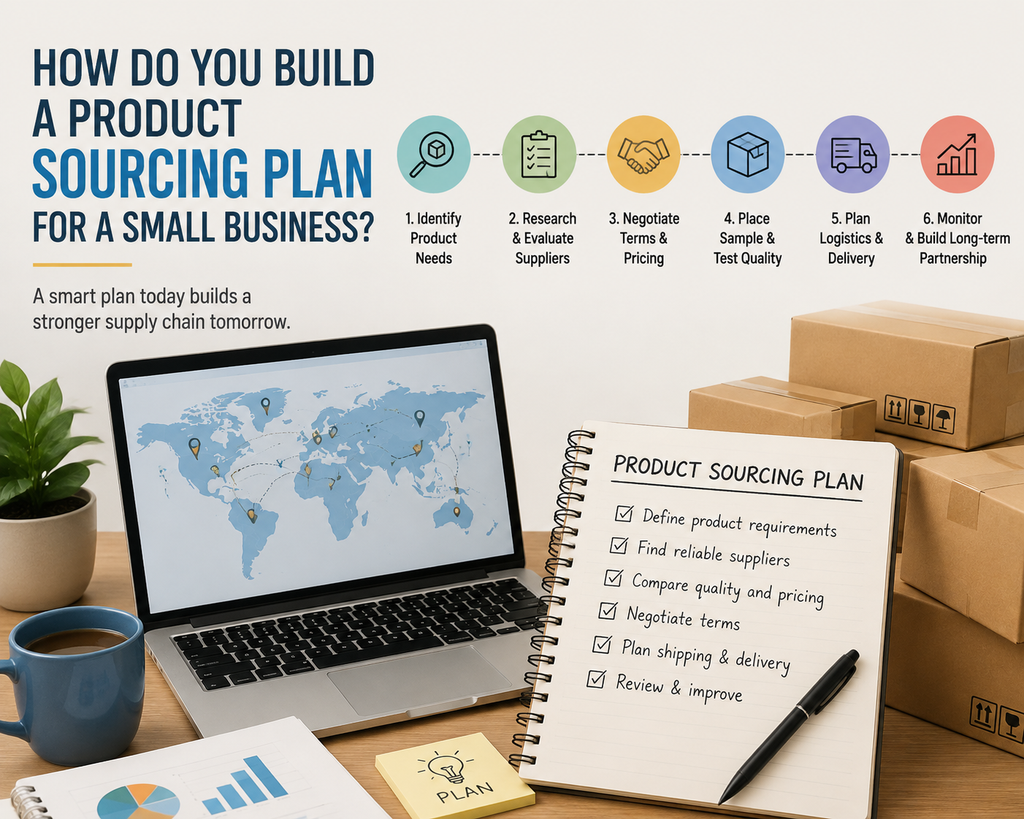
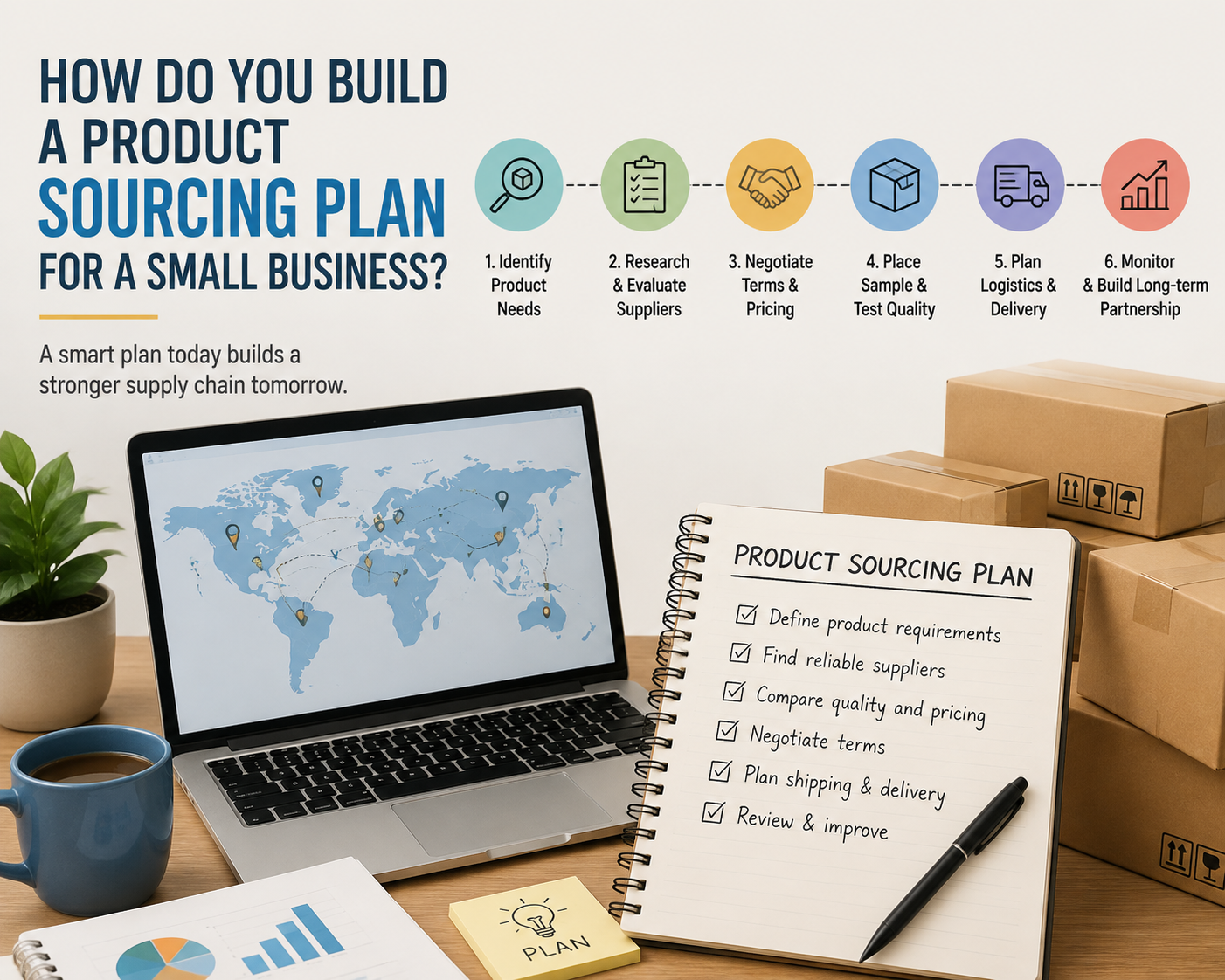
The best way to build a product sourcing plan for a small business is by creating a structured process that covers essential business components. These include listing product requirements, supplier research, cost analysis, logistics planning, and risk management. Having a robust product sourcing plan helps companies find trustworthy manufacturers, verify suppliers, reduce costs, and build a sustainable supply chain.
Creating a product sourcing plan for a small business is essential, as SMEs usually have limited budgets and lack supplier experience, which increases sourcing risks. A well-structured sourcing plan puts these risks at bay and allows businesses to scale their production.
For companies sourcing products from China, this process often involves identifying suitable manufacturing regions such as Shenzhen for electronics or Guangzhou for apparel and consumer goods.
This guide covers the step-by-step process of building a full-fledged product sourcing plan for a small business.
What is a Product Sourcing Plan?
A product sourcing plan is a structured process of carrying out several business functions. It involves learning where and how to procure raw materials and from whom to source products. Essentially, it covers:
- What materials you need to source
- The criteria you’ll use to select suppliers
- How you’ll engage and evaluate potential suppliers
- Key performance indicators (KPIs) to track supplier performance
- How to manage shipping and logistics
A sourcing plan should be aligned with your business goals and objectives. Having a solid one prevents wasting time, money, and space.
For example, a US ecommerce company launching private-label phone accessories may need:
- Electronics suppliers in Shenzhen
- Packaging manufacturers in Dongguan
- Quality inspections before shipment
- Sea freight planning to the United States
- Compliance testing for FCC requirements
How Do You Choose the Right Product Before Sourcing?
Product sourcing is not as simple as finding a new product, placing a bulk order, and adding it to your catalog. Before investing in inventory, you need to confirm that the product has real market demand, matches your target customers, and can generate a healthy profit margin.
For businesses sourcing from China, product selection should also consider where the product is manufactured. Different cities specialize in different industries. For example, Shenzhen is one of the world’s largest electronics manufacturing hubs, Guangzhou is well known for apparel and consumer goods, Yiwu is a major center for small commodities, and Ningbo has strong export manufacturing capabilities.
A successful sourcing process starts with research, supplier evaluation, product testing, and small-scale validation before moving into large production.
1. Research the Product and Market Demand
Before contacting suppliers, research whether the product is worth sourcing.
A good product research process should answer:
- Is there consistent customer demand?
- Who are the target buyers?
- What price are customers willing to pay?
- Who are the main competitors?
- Is the product growing, stable, or declining?
Start by analyzing:
- Online search trends
- Competitor listings
- Customer reviews
- Social media discussions
- Market pricing
- Seasonal demand changes
For example, if you are sourcing phone accessories from Shenzhen, you should not only check whether the product is popular today. You should also understand how quickly technology changes, whether newer products are replacing it, and whether profit margins remain attractive.
According to e-commerce market research, product categories with short life cycles, such as consumer electronics and fashion accessories, require more frequent product evaluation because customer preferences and technology trends change quickly.
A product that performed well last year may not generate the same results today.
Visit Trade Shows to Discover Products and Suppliers
Trade shows are another effective way to research products and connect with manufacturers.
Instead of contacting suppliers individually online, buyers can meet multiple factories, compare products, review samples, and discuss customization options in one location.
For businesses sourcing from China, popular sourcing events include:
Canton Fair – Guangzhou
Held in Guangzhou, the Canton Fair is one of the largest international trade exhibitions in China. It covers thousands of suppliers across industries such as:
- Electronics
- Home products
- Consumer goods
- Apparel
- Machinery
It allows buyers to compare different manufacturers and understand current market trends.
Global Sources – Hong Kong
Global Sources is especially popular among buyers looking for electronics suppliers from Shenzhen and surrounding manufacturing areas.
Shenzhen Manufacturing Markets
Shenzhen’s electronics markets, including Huaqiangbei, provide insights into:
- New product trends
- Component options
- Market pricing
- Supplier networks
Meeting suppliers in person helps businesses make better sourcing decisions before committing to large orders.
2. Contact and Compare Potential Suppliers
Once you identify a product opportunity, the next step is finding and evaluating suppliers.
Before contacting suppliers, define your purchasing requirements, including:
- Target unit price
- Expected order quantity
- Minimum order quantity (MOQ)
- Production timeline
- Packaging requirements
- Customization needs
- Shipping requirements
Clear requirements help suppliers provide accurate quotations and make negotiations more efficient.
3. Order Product Samples Before Placing a Large Order
Product samples are one of the most important steps in supplier evaluation.
Before placing a bulk order, request samples and carefully check:
Product Quality
Evaluate:
- Materials
- Product design
- Functionality
- Durability
- Appearance
Manufacturing Consistency
Check whether:
- The product matches your specifications
- Different samples have consistent quality
- There are any manufacturing defects
Packaging Quality
Review:
- Product protection
- Labels
- Instructions
- Branding requirements
For example, a US retailer sourcing private-label clothing from Guangzhou may approve the product design but discover issues with fabric quality or packaging during sample testing. Identifying these problems early prevents costly production mistakes.
Only move forward with serious supplier negotiations after the samples meet your quality expectations.
4. Run a Trial Order Before Scaling Up
After approving samples, place a small trial order before making a large investment.
A trial order helps you evaluate:
- Customer demand
- Product performance
- Supplier reliability
- Actual profit margins
For ecommerce businesses, a practical approach is to launch the product with limited inventory and measure customer response.
For example:
- Order 500–1,000 units
- Launch a test marketing campaign
- Collect customer reviews
- Analyze sales performance
For physical retailers, you can introduce the product in selected stores first instead of placing inventory across all locations.
5. Evaluate Suppliers and Maintain Backup Options
If both the product and supplier perform well, build a long-term relationship.
A reliable supplier should provide:
- Stable product quality
- Consistent delivery times
- Competitive pricing
- Good communication
However, businesses should avoid depending on only one supplier.
Keeping alternative suppliers is an important part of supply chain risk management.
For example, a company sourcing electronics from Shenzhen may maintain relationships with multiple qualified factories. If one factory experiences production delays or material shortages, the business can switch suppliers without interrupting sales. A strong sourcing strategy always includes a backup plan.
What Are the Benefits of a Sourcing Plan for a Small Business?
Here are the key benefits of creating a sourcing plan for a small business.
1. Reduce Product Costs and Improve Profit Margins
One of the biggest benefits of a sourcing plan is better cost control.
A sourcing plan allows businesses to compare multiple suppliers, negotiate pricing, and understand the full cost of bringing a product to market.
Instead of looking only at the factory price, businesses can evaluate:
- Unit cost
- Minimum order quantity (MOQ)
- Packaging costs
- Shipping expenses
- Import duties
- Quality inspection costs
For example, a small business sourcing electronics from Shenzhen, China, may compare several manufacturers to find the best balance between price, production capability, and quality. The cheapest supplier may not always provide the lowest overall cost if poor quality leads to returns or customer complaints.
2. Find Reliable Suppliers and Reduce Supply Risks
A sourcing plan helps businesses identify suppliers based on clear standards instead of choosing manufacturers randomly.
Supplier evaluation can include:
- Factory experience
- Production capacity
- Quality control systems
- Export history
- Customer references
- Communication ability
3. Improve Product Quality and Customer Satisfaction
Poor product quality can damage a small business quickly. A sourcing plan establishes quality expectations before production begins. It helps businesses define product specifications, material requirements, testing standards, inspection procedures, and packaging requirements
For example, a fashion brand sourcing clothing from Guangzhou can set requirements for fabric quality, stitching standards, sizing accuracy, and packaging before placing a large order.
4. Make Better Inventory Decisions
Small businesses often face challenges with limited cash flow and storage space. A sourcing plan helps determine how much inventory to purchase, how much stock is required, and where to invest more.
5. Support Business Growth and Scalability
A sourcing plan creates a repeatable process that supports future growth. When sales increase, businesses need suppliers that can support:
- Larger production volumes
- New product variations
- Custom packaging
- Private labeling
- Faster delivery
A supplier that works for a small test order may not always support large-scale growth.
By planning sourcing requirements early, businesses can build relationships with manufacturers that grow alongside their brand.
Final Thoughts
Building a sourcing plan for a small business offers a structured approach to finding products, selecting suppliers, controlling costs, and managing risks.
Instead of simply searching for the cheapest supplier, businesses can build a supply chain based on quality, reliability, and long-term growth.
A well-designed sourcing plan helps small businesses reduce uncertainty, protect profits, and create a stronger foundation for sustainable growth.
If you are looking to source products from China, Book a free consultation or contact eSourcing Solution for exceptional products all across China.
FAQS
What is the first step in building a product sourcing plan for a small business?
The first step is defining detailed product requirements, including specifications, materials, quality standards, and target costs. Clear requirements help businesses identify suitable suppliers.
How can a small business find reliable suppliers?
Small businesses can find reliable suppliers through trade shows, supplier platforms, industry networks, and professional sourcing agents who verify factories before cooperation.
Is China good for small business product sourcing?
Yes. China remains one of the world’s largest manufacturing centers, offering extensive supplier networks, competitive pricing, and manufacturing expertise across electronics, apparel, consumer goods, and industrial products.
Should small businesses use a sourcing agent?
A sourcing agent can be valuable for businesses without local supplier knowledge. They help reduce risks by managing supplier verification, negotiation, quality inspection, and logistics.