
So you spotted a sleek piece of stainless steel jewelry and the price made you do a double take. Way cheaper than gold or silver. Looks just as good in the photo. But now you’re wondering, what’s the catch?
Fair question. When something looks premium but costs a fraction of the price, your gut tells you to be suspicious. Is it going to turn your finger green? Will it tarnish in a month? Does it irritate sensitive skin? Is it just cheap junk dressed up to look fancy?
Here’s the thing. Stainless steel jewelry is one of the most misunderstood materials out there. Some of those worries are totally legit. Others are myths people repeat without checking. Whether you’re buying a piece for yourself or thinking about sourcing it for your own brand, you deserve straight answers.
Let’s clear it all up. Every question you’ve got about stainless steel jewelry, answered honestly.
Table of Contents
| # | Question | What You’ll Learn |
| 1 | What is Stainless Steel Jewelry? | The basics and composition |
| 2 | Is Stainless Steel Jewelry Good Quality? | Honest quality assessment |
| 3 | Does Stainless Steel Jewelry Tarnish? | Tarnishing and discoloration |
| 4 | Is It Safe for Sensitive Skin? | Allergies and skin reactions |
| 5 | Will It Turn Your Skin Green? | The green finger question |
| 6 | How Durable Is It? | Scratches, dents, longevity |
| 7 | Is It Waterproof? | Water, showers, swimming |
| 8 | Grades of Stainless Steel | 304 vs 316L explained |
| 9 | Stainless Steel vs Other Metals | How it compares |
| 10 | How to Care for It | Cleaning and maintenance |
| 11 | Is It Worth the Money? | Value analysis |
| 12 | Who Should Buy It? | Is it right for you |
What is Stainless Steel Jewelry?
Let’s start with the basics, because half the confusion comes from people not knowing what they’re actually buying.
Stainless steel is an alloy, which just means it’s a mix of metals. The main ingredient is iron, but the magic comes from chromium. That chromium creates a thin, invisible layer on the surface that protects the metal from rust and corrosion. That’s why it’s called “stainless.” It resists staining.
For jewelry, manufacturers usually add nickel and other elements to improve the look and feel. The result is a metal that’s tough, shiny, and holds up way better than you’d expect for the price.
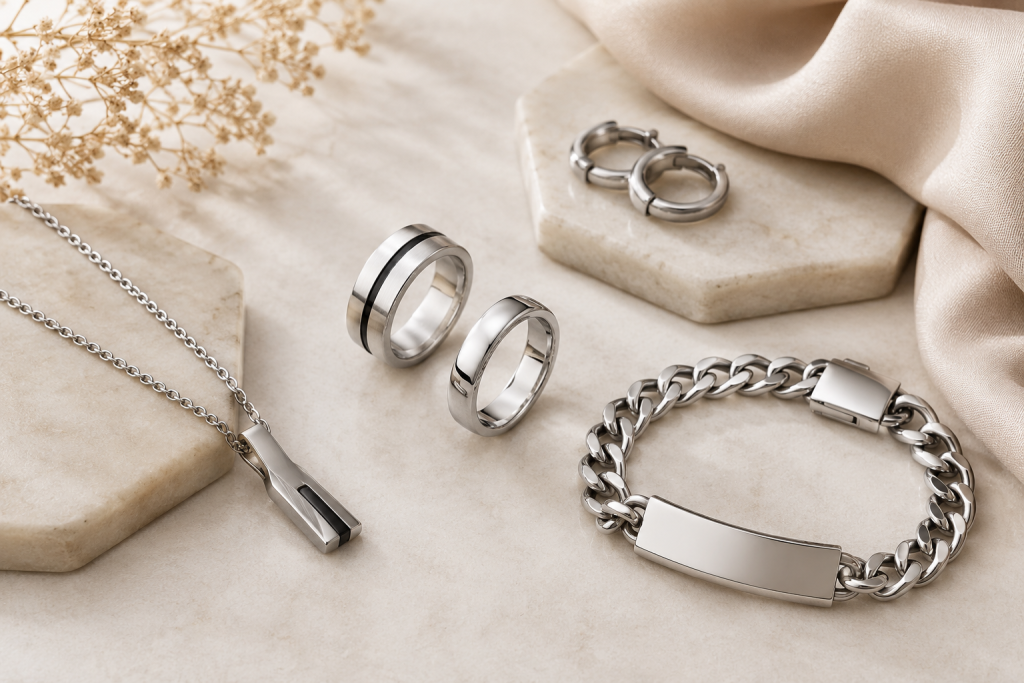
You’ll see it everywhere now. Rings, necklaces, bracelets, watches, earrings. It’s become hugely popular in fashion jewelry because it looks high-end without the high-end price tag.
The metal has a naturally cool, silvery sheen. Some pieces get coated with gold or rose gold tones (called PVD coating) to mimic precious metals. Done right, you honestly can’t tell the difference at a glance.
If you’re getting into bulk product sourcing from China, stainless steel jewelry is one of the hottest categories thanks to its margins and broad appeal.
Is Stainless Steel Jewelry Good Quality?
Short answer? Yes, when you get the right grade. But let’s not oversimplify.
Quality stainless steel jewelry, especially the 316L surgical grade, is genuinely good. It’s durable, doesn’t rust, resists scratches, and keeps its shine for years. Plenty of people wear the same stainless steel ring daily for a decade and it still looks great.
But here’s where it gets tricky. Not all stainless steel is created equal. Cheap manufacturers cut corners. They might use lower grades, sloppy finishing, or thin coatings that wear off fast. So a $3 ring from a sketchy seller and a $30 ring from a reputable brand can both be “stainless steel” while being worlds apart in quality.
What separates the good from the bad? The grade of steel (more on that later), the quality of the finish, the thickness of any coating, and the craftsmanship of the welds and joints.
According to the World Steel Association, stainless steel’s corrosion resistance and durability make it suitable for applications ranging from surgical instruments to architecture. That same toughness translates directly to jewelry that lasts.
So is it good quality? The material itself absolutely can be. Just make sure you’re buying from someone who isn’t cutting corners.
When working with a China sourcing agent, insist on verified material grades and request samples before committing to bulk orders.
Does Stainless Steel Jewelry Tarnish?
This is probably the number one question people ask, and the answer is reassuring.
No, quality stainless steel jewelry does not tarnish the way silver does. That chromium layer we talked about earlier? It actively fights off the oxidation that causes tarnishing. Your silver necklace turns black and needs constant polishing. Good stainless steel just keeps its shine.
That said, let’s be real about the nuances.
Lower-grade stainless steel can develop a slight dullness over time, especially if exposed to harsh chemicals constantly. And coated pieces (the gold-toned ones) can have the coating wear thin eventually, revealing the silver steel underneath. That’s not tarnishing exactly, but it changes the look.
Pure, uncoated 316L stainless steel is about as tarnish-resistant as jewelry gets in the affordable range. You can wear it daily, get it wet, sweat in it, and it’ll stay looking sharp.
Compare that to sterling silver, which tarnishes if you so much as look at it wrong, and you start to see why stainless steel has gotten so popular. Low maintenance is a huge selling point.
The bottom line: real stainless steel resists tarnishing remarkably well. Just don’t expect a thin gold coating to last forever.
Is It Safe for Sensitive Skin?
For most people, yes. For some, it depends.
Stainless steel is often marketed as hypoallergenic, and for the majority of folks, that’s accurate. The 316L surgical grade especially is used in medical implants and body piercings precisely because it’s so well tolerated by the body.
But here’s the catch that brands don’t always advertise. Stainless steel often contains nickel. And nickel is the most common metal allergy out there. Roughly 10 to 20% of people have some sensitivity to it.
Now, in high-quality stainless steel, the nickel is bound tightly within the alloy. It doesn’t leach out easily, so even many nickel-sensitive people can wear 316L without issues. But in cheaper grades or lower-quality pieces, nickel can release more readily and trigger reactions in sensitive individuals.
According to the American Academy of Dermatology, nickel allergy is one of the most common causes of contact dermatitis, and choosing hypoallergenic materials helps people who are affected.
If you have a known nickel allergy, look for jewelry specifically labeled “nickel-free” or stick to verified 316L surgical grade. Titanium and niobium are even safer alternatives if you react to everything.
For most buyers, though? Stainless steel sits comfortably on the skin without drama.
Will It Turn Your Skin Green?
The dreaded green finger. Let’s bust this myth right now.
Quality stainless steel will NOT turn your skin green. That green discoloration comes from copper reacting with your skin’s acids and sweat. Stainless steel doesn’t contain copper in any meaningful amount, so there’s nothing to cause that reaction.
That green stuff you’ve seen on cheap rings? That’s usually from copper-based alloys like brass or bronze, or from cheap “fashion” metals coated to look nice. People sometimes lump all cheap jewelry together and assume stainless steel does the same thing. It doesn’t.
This is honestly one of the biggest advantages of stainless steel. You can wear it every single day, sweat in it, shower in it, and your skin stays its normal color.
There’s a small asterisk here. If a piece is labeled stainless steel but is actually a cheap copper alloy with a thin steel-look coating, it could discolor once that coating wears off. That’s not stainless steel failing. That’s fraud or mislabeling.
Stick with genuine stainless steel and the green finger problem simply doesn’t exist. It’s one of the material’s best features.
How Durable Is It?
Tough. Really tough. This is where stainless steel shines compared to softer precious metals.
Gold and silver are beautiful but soft. They scratch, dent, and bend with regular wear. Stainless steel laughs at that kind of treatment. It’s significantly harder, which means it resists scratches and holds its shape through daily abuse.
Drop a stainless steel ring? Probably fine. Bang your bracelet against a desk? No big deal. Wear the same piece every day for years? It’ll keep looking good far longer than softer metals would.
This durability makes it perfect for people with active lifestyles or anyone who’s rough on their accessories. Gym-goers, outdoor workers, parents wrangling kids, you name it. Stainless steel takes a beating and keeps going.
It’s not literally indestructible, of course. Hard enough impacts can still scratch or dent it, and coated pieces can show wear on the coating. But compared to gold, silver, or fashion metals, it’s in a different league for toughness.
For a daily-wear piece that you don’t want to baby, stainless steel is hard to beat. That ruggedness is a big reason it’s exploded in popularity.
When doing quality control on jewelry orders, durability testing on welds and clasps catches the weak points before they reach customers.
Is It Waterproof?
Pretty much, yes. And this is another huge perk.
Stainless steel handles water beautifully. You can shower in it, wash dishes, get caught in the rain, none of that causes problems. The corrosion resistance that prevents rust also means water exposure isn’t an issue for the metal itself.
Swimming? Generally fine for short periods, but here’s a caveat. Chlorine in pools and salt in the ocean are harsher than regular water. Frequent, prolonged exposure to chlorinated or salt water can potentially affect lower-grade pieces or coated jewelry over time. The metal itself is tough, but constant chemical exposure isn’t ideal for anything.
For coated pieces (gold-toned PVD), water is fine but I’d avoid prolonged pool or ocean soaking to protect the coating’s lifespan.
Compare this to many other jewelry materials that you have to take off before washing your hands, and stainless steel’s water tolerance is a genuine convenience. No more forgetting your ring by the sink or fishing it out of the shower drain.
So while “waterproof” might be slightly generous for technical purists, in practical everyday terms? Yeah, your stainless steel jewelry handles water like a champ. Just rinse off chlorine or salt water afterward to keep it pristine.
Grades of Stainless Steel
Okay, this part actually matters a lot, so pay attention. The grade determines basically everything about quality.
You’ll mostly run into two grades in jewelry:
304 Stainless Steel:
The more common, more affordable grade. It’s still corrosion-resistant and durable, decent for fashion jewelry. But it contains slightly more nickel that can leach out, making it less ideal for sensitive skin. Fine for occasional-wear fashion pieces.
316L Stainless Steel:
The premium grade, often called “surgical steel” or “marine grade.” This is the good stuff. It has added molybdenum that boosts corrosion resistance even further, and the nickel is locked in more tightly, making it far better for sensitive skin. This is what’s used in medical implants and quality body jewelry.
The “L” in 316L means low carbon, which improves corrosion resistance and weldability.
If you’re buying jewelry to wear constantly or you’ve got sensitive skin, 316L is worth seeking out. If it’s a fashion piece for occasional wear, 304 is perfectly acceptable and cheaper.
Here’s the sourcing trap, though. Plenty of sellers claim “316L surgical steel” when they’re actually using cheaper 304 or worse. There’s no way to tell by looking. This is exactly why material verification matters when sourcing.
For global sourcing of jewelry, lab testing material composition protects you from suppliers who misrepresent their grades.
Stainless Steel vs Other Metals
How does it stack up against the alternatives? Let’s break it down honestly.
vs Gold:
Gold is precious, holds value, and has unmatched prestige. But it’s expensive, soft, and scratches easily. Stainless steel can’t match gold’s status or investment value, but it’s far cheaper, way more durable, and looks similar (especially gold-toned versions). For everyday wear without worry, steel wins. For luxury and value retention, gold wins.
vs Sterling Silver:
Silver looks beautiful but tarnishes constantly and needs regular polishing. It’s also fairly soft. Stainless steel keeps its shine with zero maintenance and is much tougher. Silver has more traditional jewelry prestige, but for low-maintenance daily wear, steel is more practical.
vs Titanium:
Titanium is even lighter and equally hypoallergenic, great for those with severe allergies. But it’s harder to work with, more expensive, and tougher to resize or engrave. Stainless steel is more affordable and versatile for most fashion jewelry.
vs Brass/Copper:
No contest. Brass and copper turn skin green, tarnish, and corrode. Stainless steel beats them in every practical category. The only reason brass exists in jewelry is it’s cheap and easy to cast into detailed shapes.
vs Tungsten:
Tungsten is extremely hard and scratch-resistant, even more than steel. But it’s brittle and can crack under hard impact, and it can’t be resized. Steel is more forgiving and versatile.
The takeaway? Stainless steel hits a sweet spot of durability, looks, skin-safety, and affordability that’s hard to match. It won’t replace gold for luxury buyers, but for practical everyday jewelry, it’s tough to beat.
How to Care for It
The beauty of stainless steel is how little care it actually needs. But a little attention keeps it looking its best.
Regular cleaning:
Warm water and mild soap. Gently scrub with a soft cloth or soft toothbrush to get into crevices. Rinse and dry thoroughly. That’s honestly all most pieces need.
For tougher grime:
A mix of baking soda and water makes a gentle paste. Rub it on, rinse off. Avoid anything abrasive that could scratch the finish.
Drying matters:
Always dry your jewelry after washing or swimming. While stainless steel resists rust, leaving water sitting in crevices isn’t ideal, especially for cheaper grades.
For coated pieces:
Be gentler. Avoid abrasive cleaners and harsh scrubbing that could wear down the PVD coating. Just soap, water, and a soft cloth.
Storage:
Keep pieces separate so they don’t scratch each other. A soft pouch or jewelry box compartment works great. Steel is tough, but other harder objects can still scratch it.
Avoid:
Harsh chemicals like bleach and chlorine when possible. Take jewelry off before heavy cleaning with strong chemicals. Don’t use abrasive scrubbers on polished or coated surfaces.
That’s it. No special polishes, no anti-tarnish strips, no constant maintenance. Compared to silver that needs polishing every few weeks, stainless steel is gloriously low-effort.
Is It Worth the Money?
For most people and most situations, absolutely yes.
Think about the value proposition. You get a durable, attractive, low-maintenance, skin-friendly piece of jewelry for a fraction of what gold or silver costs. It resists tarnishing, handles water, takes daily abuse, and keeps looking good for years. That’s a lot of value for the price.
Where it makes the most sense:
- Everyday wear pieces you don’t want to baby
- Fashion jewelry that follows trends (no point spending big on something you’ll swap out)
- Gifts where you want quality without huge expense
- People with active lifestyles
- Anyone who’s lost or damaged expensive jewelry before
Where it might not be the best fit:
- Investment or heirloom pieces (gold holds value, steel doesn’t)
- Ultra-luxury occasions where prestige matters
- People who specifically want precious metals for status or sentiment
In pure practical terms, the cost-to-durability ratio is excellent. You’re not paying for precious metal content, you’re paying for a tough, good-looking material that does its job well.
For the money, stainless steel delivers serious bang for your buck. It’s not trying to be gold. It’s offering a smart, practical alternative, and at that, it succeeds.
For supplier negotiation and cost optimization, stainless steel jewelry offers healthy margins because material costs stay low while perceived value stays high.
Who Should Buy It?
Let’s get specific about who stainless steel jewelry is perfect for, and who might want to look elsewhere.
Great for:
People with active lifestyles who need jewelry that survives gym sessions, outdoor work, and daily wear without scratching or breaking.
Anyone on a budget who wants attractive jewelry without dropping serious cash. You get the look without the precious-metal price.
Folks who hate maintenance. If polishing silver every few weeks sounds like a nightmare, stainless steel’s zero-fuss nature is a blessing.
People who lose or damage jewelry. If you’ve got a history of misplacing rings or banging up bracelets, why cry over a $20 piece instead of a $500 one?
Fashion-forward buyers who follow trends and want to switch up their look without major investment.
Many people with sensitive skin, especially with verified 316L grade (though severe nickel allergies should consider titanium).
Might want to look elsewhere:
Investment buyers who want jewelry that holds or grows in value. Gold is your answer, not steel.
People with severe nickel allergies who react even to small amounts. Titanium or niobium are safer bets.
Luxury and prestige seekers who specifically want the status of precious metals.
Those wanting heirloom pieces to pass down generations with sentimental and monetary value.
For the vast majority of everyday buyers? Stainless steel jewelry is a smart, practical, attractive choice that punches well above its price point.
FAQs About Stainless Steel Jewelry
Is stainless steel jewelry good for everyday wear?
Yes, stainless steel jewelry is excellent for everyday wear. It’s highly durable, resists scratches and tarnishing, handles water and sweat, and requires minimal maintenance. Quality 316L pieces can be worn daily for years while keeping their shine.
Does stainless steel jewelry rust?
No, quality stainless steel jewelry does not rust. The chromium in the alloy forms a protective layer that prevents rust and corrosion. This is exactly what makes it “stainless.” Even with regular water exposure, it won’t rust like regular steel or iron would.
Is stainless steel jewelry real or fake?
Stainless steel is a real, legitimate metal, not fake. It’s not a precious metal like gold or silver, but it’s a genuine, durable alloy widely used in everything from medical implants to jewelry. Calling it fake would be inaccurate. It’s simply an affordable alternative.
Can you shower with stainless steel jewelry?
Yes, you can shower with stainless steel jewelry without problems. It’s water-resistant and won’t rust or tarnish from regular water exposure. Just rinse off any soap residue and dry it afterward. For coated pieces, frequent showering may slowly wear the coating over time.
Does stainless steel jewelry contain nickel?
Most stainless steel jewelry contains some nickel as part of the alloy. However, in quality 316L surgical grade, the nickel is tightly bound and rarely causes reactions. People with severe nickel allergies should look for nickel-free options or consider titanium instead.
How long does stainless steel jewelry last?
Quality stainless steel jewelry can last many years, even decades, with proper care. The metal itself is extremely durable and resistant to tarnishing and corrosion. Coated pieces may show coating wear sooner, but the underlying steel remains intact for a very long time.
Is 316L stainless steel better than 304?
Yes, 316L is generally better for jewelry than 304. It has superior corrosion resistance thanks to added molybdenum, and the nickel is bound more tightly, making it safer for sensitive skin. 316L is the surgical-grade standard used in medical implants and quality jewelry.
Can stainless steel jewelry be resized?
Resizing stainless steel rings is difficult and often not possible because the metal is so hard. Unlike gold or silver, most jewelers can’t easily resize it. It’s best to buy the correct size from the start, or choose adjustable styles if sizing is uncertain.
Why is stainless steel jewelry so cheap?
Stainless steel jewelry is affordable because the material itself costs far less than precious metals like gold or silver. You’re not paying for precious metal content. Instead, you get a durable, attractive metal at a low price point, which is exactly why it offers such good value.
Does stainless steel jewelry tarnish or change color?
Quality stainless steel resists tarnishing and color change remarkably well. Pure, uncoated 316L keeps its silvery shine for years. Coated pieces (like gold-toned PVD) can have the coating wear thin over time, but this is coating wear, not tarnishing of the steel itself.
Is stainless steel jewelry hypoallergenic?
Stainless steel, especially 316L surgical grade, is often considered hypoallergenic and is well-tolerated by most people. However, it does contain nickel, so individuals with significant nickel allergies may still react. For those people, titanium or niobium are safer hypoallergenic alternatives.
Can stainless steel jewelry get wet in the ocean or pool?
Stainless steel handles water well, but chlorine and salt water are harsher than regular water. Brief swimming is generally fine, but frequent or prolonged exposure to chlorinated or salt water can affect lower grades or coated pieces over time. Rinse with fresh water afterward to be safe.
Final Word on Stainless Steel Jewelry
So, is stainless steel jewelry good? After all that, the answer is a confident yes, with the right expectations.
It’s not gold. It’s not trying to be. What it offers is a smart, practical package: tough as nails, easy on the wallet, low maintenance, water-friendly, and kind to most skin types. For everyday jewelry that looks great and survives real life, it’s genuinely hard to beat.
The key is buying smart. Go for verified 316L grade when you can, especially for daily wear or sensitive skin. Buy from sellers who don’t cut corners. And keep your expectations realistic about coated pieces, where the coating eventually wears even if the steel underneath stays solid.
The myths about turning your skin green or tarnishing instantly? Those apply to cheap copper alloys, not real stainless steel. Quality steel sidesteps those problems entirely.
For most people, stainless steel jewelry is a no-brainer. You get the look you want, the durability you need, and money left in your pocket. That’s a winning combination, whether you’re buying a single piece or sourcing thousands for a brand.
Know what you’re getting. Buy quality. Enjoy jewelry that just works.
Thinking about sourcing stainless steel jewelry for your brand? Contact us to talk through your product needs. Ready to verify suppliers and lock in quality 316L material? Book a consultation and we’ll help you find reliable manufacturers and set the right quality standards.